



Plastic Injection Mold: Design, Coût, and Manufacturing Checklist
Plastic injection mold projects succeed when buyers review design manufacturability, tooling cost drivers, supplier capability, and production timelines before steel cutting starts. Mold cost depends on complexity, Cavités, Tolérances, and steel type. Buyers should confirm CAD files, Sélection de la résine, inspection plans, and shipping expectations early to avoid redesign costs, launch delays, and production-quality problems.
A mold quote can look straightforward until production starts. Then hidden issues appear: design revisions, unclear tolerances, missed approvals, or tooling delays that push back launch schedules. Buyers who understand the manufacturing process early usually avoid the most expensive mistakes. This guide explains what affects tooling cost, what suppliers need before quoting, and what to check before approving production tooling.
What is a plastic injection mold and what does the buyer actually pay for?
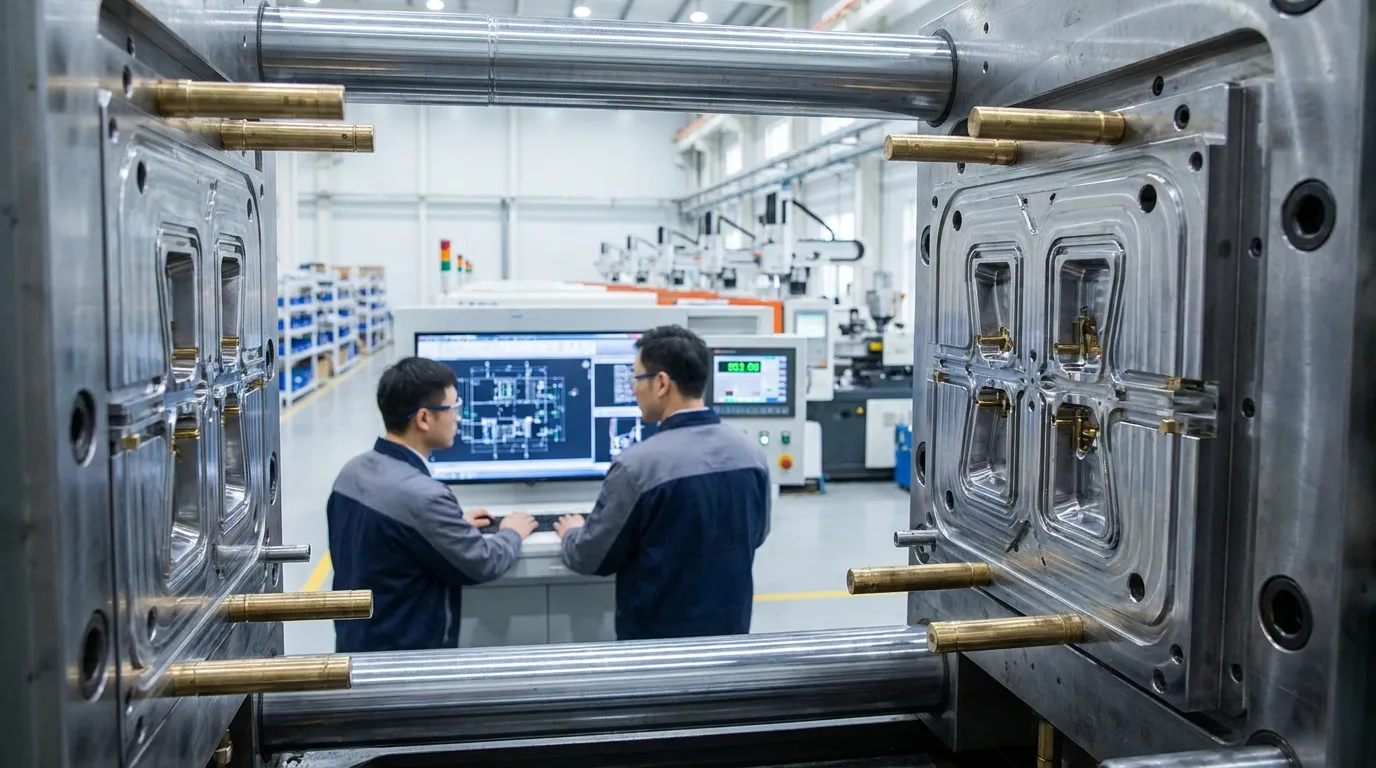
A plastic injection mold is the tooling system used to form plastic parts repeatedly at production scale. Buyers are paying for engineered tooling, Précision de l’usinage, cooling systems, Validation, and long-term production stability, not just a metal block.
A production mold includes far more than the cavity that shapes the part. It also includes cooling channels, Systèmes d’éjection, alignment components, machining work, Polissage, Validation, and process engineering. If you need a refresher on tooling terminology, Ceci Bases du moule d’injection guide explains the main systems in more detail.
Most suppliers also include design-for-manufacturing (DFM) review before cutting steel. Selon Guide de moldabilité de Protolabs, Géométrie des pièces, Épaisseur du mur, and gate placement directly affect manufacturability and tooling complexity.
Buyers are usually paying for these areas:
- Base du moule et composants en acier
- Usinage de noyau et cavité
- Systèmes de refroidissement et d’éjection
- Examen DFM et support technique
- Exécutions d’échantillonnage et de validation
- Finition de surface et polissage
- Essais de préparation à la production
Low-cost tooling is not always cheaper long term. A cheaper mold that requires repeated repairs or unstable production cycles often costs more over the life of the project.
How much does a plastic injection mold cost in 2026?
Plastic injection mold cost depends mainly on part complexity, Nombre de cavités, Qualité acier, Exigences de tolérance, et volume de production attendu. Simple prototype molds may cost far less than hardened multi-cavity production tools designed for long lifecycle manufacturing.
A small prototype mold with loose tolerances is very different from a hardened steel production tool running hundreds of thousands of cycles. Buyers sometimes compare quotes without realizing the suppliers are quoting different tooling standards.
What increases tooling cost fastest?
Part complexity usually drives pricing faster than part size. Sous-découpes, side actions, textured finishes, thin walls, and tight tolerances all increase machining time and validation work.
Multi-cavity molds are not automatically the best choice. They improve production output, but they also increase balancing requirements, cooling complexity, and repair costs.
Répartition des coûts des moules d’injection
| Type de moule | Utilisation typique | Nombre de cavités | Type en acier | Cycle de vie attendu | Coût relatif |
|---|---|---|---|---|---|
| Moule prototype | Premiers essais | 1 | Aluminium ou acier plus tendre | Faible volume | Lower |
| Outils de pont | Production de médium | 1-2 | Acier pré-trempé | Volume moyen | Moyen |
| Moule de production | Fabrication à long terme | 2-8 | Acier trempé | Volume élevé | Plus haut |
| Moule haute précision | Pièces à tolérance serrée | Multi-cavités | Acier trempé haut de gamme | Très haut volume | Plus haut |
A startup consumer electronics company may begin with a simpler prototype mold to validate fit and assembly. If annual demand grows later, they often move to hardened steel tooling with additional cavities for production efficiency.
Another common cost driver is design revision timing. A buyer who changes wall thickness after steel cutting may add weeks of machining revisions and extra validation cycles.
What design details should buyers review before approving tooling?
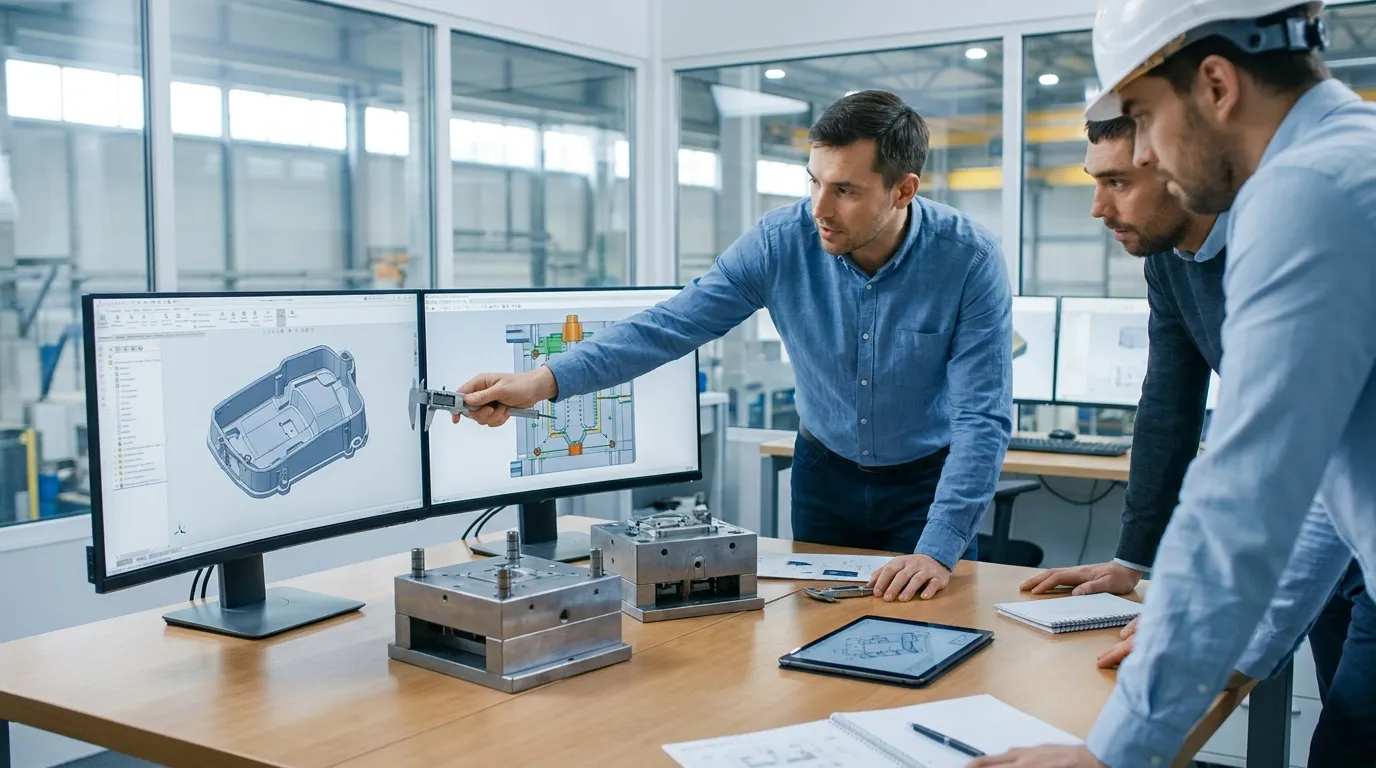
Buyers should review wall thickness consistency, Angles de tirage, Sous-coupes, rib dimensions, and parting line placement before tooling approval. Small design oversights before steel cutting often create the largest timeline and cost overruns later.
Most tooling delays begin with design decisions that looked harmless during CAD review. Once machining starts, even small geometry changes can require major tooling revisions.
Selon Conseils de conception pour le moulage par injection Protolabs, consistent wall thickness helps reduce warping, Marques de naufrage, and filling problems. Draft angles also help parts eject cleanly from the mold without surface damage.
Which design changes become expensive after steel cutting?
Undercut changes are one of the biggest risks. Side actions and slides require additional machining and alignment work. Moving a parting line late in the project can also force cavity rework.
Rib thickness is another common issue. Thick ribs may create sink marks or uneven cooling. Thin ribs can create filling problems. Buyers should review these details during DFM approval, not during production troubleshooting.
If your design uses internal support features, this guide on Conception des broches de noyau explains how pin geometry affects molding stability and cooling performance.
Liste de contrôle de la revue de conception avant l’approbation de l’outil
- Confirmez les angles de tirage sur les parois verticales
- Vérifiez la consistance de l’épaisseur des parois
- Identifier les sous-mines et les actions secondaires
- Vérifier les dimensions des nervures
- Confirmer l’emplacement des portes
- Examiner le placement de la ligne de départ
- Vérifiez les zones critiques pour la tolérance
- Confirmer les exigences esthétiques de surface
A buyer can sometimes reduce tooling cost significantly by simplifying undercuts or removing unnecessary side actions before machining starts.
What information should you send to an injection mold supplier?
Suppliers cannot provide accurate tooling feedback without complete CAD files, resin requirements, Volume de production attendu, Attentes en matière de tolérance, and cosmetic standards. Missing information often causes quote revisions, redesign work, and tooling delays.
The best supplier conversations happen before quoting starts. If the supplier receives incomplete information, the quote often includes assumptions that create problems later.
Buyers should provide:
- Fichiers CAO 3D
- Besoins en résine ou en matière de matériaux
- Volume annuel de production
- Attentes en matière de finition cosmétique
- Exigences de tolérance
- Détails de l’assemblage
- Exigences d’emballage
- Calendrier de production cible
A packaging supplier producing millions of parts per year may need hardened steel tooling and aggressive cooling systems. A startup building small pilot runs may not need the same tooling specification.
Alignment details also matter during early review. This article on Alignement des goupilles guides explains how alignment systems affect mold accuracy and long-term wear.
How long does plastic injection mold manufacturing usually take?
Most production injection mold projects take several weeks to several months depending on mold complexity, sampling rounds, design revisions, and production validation requirements. Delays often happen after tooling changes or incomplete approvals.
Simple tooling may move quickly, but production-grade molds often require multiple stages before launch approval. Selon Aperçu des délais d’anticipation d’Evok Poly, tooling complexity and validation cycles are major timeline factors.
Calendrier typique de fabrication de moules
| Scène | Activité typique |
|---|---|
| Critique du DFM | Examen de la fabricabilité et retour d’information sur la conception |
| Conception du moule | Noyau, cavité, Refroidissement, and gate planning |
| Découpe de l’acier | Usinage et travail en EDM |
| Assemblage | Ajustement et alignement du moule |
| Échantillonnage T1 | Premiers tirs d’essai |
| Cycle de révision | Ajustements d’outils si nécessaire |
| Validation | Approbation finale de production |
| Transport maritime | Fret et traitement des douanes |
Faster tooling timelines are not always safer. Some suppliers shorten validation time to appear competitive during quoting. That creates higher production-launch risk later.
What causes tooling delays most often?
Design revisions after steel cutting are one of the biggest causes. Sampling failures, incomplete approvals, material changes, and shipping paperwork problems also extend schedules.
A common example is a buyer approving CAD files before finalizing resin selection. If shrink rates change later, the supplier may need tooling adjustments before production approval.
What should buyers check before mold steel cutting starts?
Before steel cutting begins, buyers should confirm approved CAD files, Sélection de la résine, gate location, tolerance standards, inspection methods, and ownership terms. Fixing mistakes after machining starts is significantly more expensive and slower.
Steel cutting is the point where tooling moves from engineering review into expensive machining work. Buyers should treat this stage like a formal approval gate.
If tooling components need precision alignment and wear resistance, this article about Silents de moulage explains how these systems support mold accuracy and service life.
Liste de contrôle pour l’approbation avant la découpe de l’acier
| Point d’approbation | Pourquoi c’est important |
|---|---|
| Approbation finale de la CAO | Cela évite les coûts de révision de la géométrie |
| Confirmation de résine | Affecte la vitesse de retrait et le refroidissement |
| Approbation de localisation de la porte | Impacts du remplissage et des cosmétiques |
| Accord de tolérance | Évite les litiges d’inspection |
| Approbation de finition de surface | Évite les retards de repolissage |
| Plan d’inspection | Définit les critères d’acceptation |
| Attentes d’échantillonnage | Clarifie le processus de validation |
| Termes de propriété d’outils | Prévient de futurs litiges |
| Chronologie de la livraison | Réduit le risque de planification des lancements |
A supplier quote comparison can reveal major differences here. One supplier may include multiple sampling revisions, while another charges separately for each correction cycle. Buyers should compare these details before approval, not after production problems appear.
How do you compare injection mold suppliers effectively?
Supplier evaluation should focus on process control and communication quality, not only pricing. A lower quote may exclude validation work, production support, or tooling revisions.
Selon Liste de contrôle des approvisionnements du groupe Rodon, buyers should ask about quality systems, Propriété des outillages, validation procedures, and production experience early in the quoting process.
Liste de contrôle de la comparaison des fournisseurs
| Zone d’évaluation | Quelles questions les acheteurs devraient |
|---|---|
| Capacité d’outillage | Can they build similar molds? |
| Processus de validation | How many sampling rounds are included? |
| Systèmes de qualité | What inspection methods are used? |
| Communication | How quickly do they respond to revisions? |
| Entretien de la moisissure | Do they support long-term servicing? |
| Soutien au transfert | Can tooling move to another facility if needed? |
A buyer sourcing high-volume packaging parts may prioritize cycle-time optimization and cavity balancing. A medical-device startup may focus more on documentation and validation support.
Signes avant-coureurs lors de l’évaluation des fournisseurs
Slow engineering feedback is usually a bad sign. Suppliers who avoid detailed DFM discussions often create more production problems later.
Another warning sign is vague tooling specifications. If the quote does not clearly define steel type, included validation rounds, or tooling ownership terms, buyers should ask for clarification before approving the project.
For broader process context, Sunshine Pro's Procédé de fabrication des moules guide explains how tooling systems move from engineering into production.
What customs and shipping delays should buyers plan for?
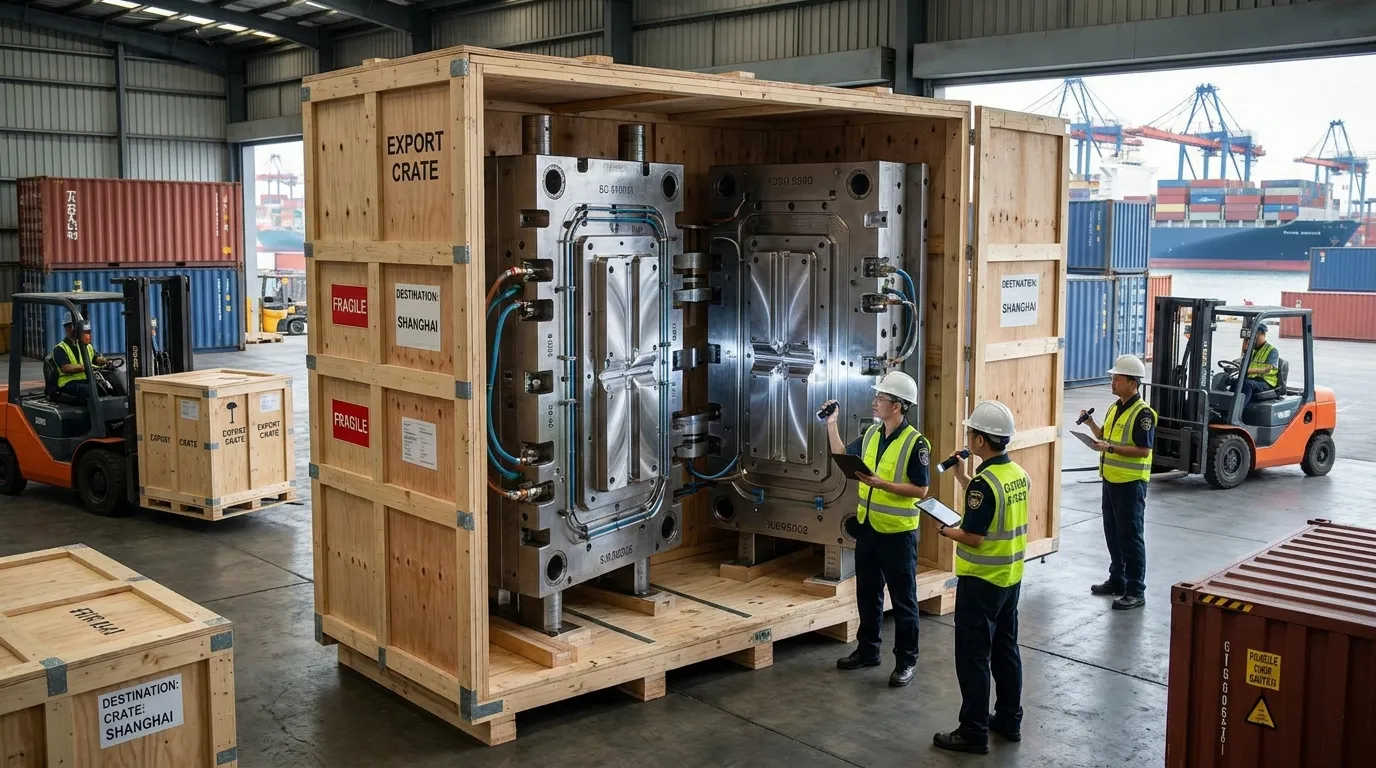
Injection mold delivery timelines can be affected by customs inspections, incomplete shipping paperwork, anti-dumping regulations, and freight delays. Buyers should build timeline buffers into launch schedules instead of relying on optimistic shipping estimates.
Many buyers plan around tooling completion dates but forget about shipping uncertainty. International mold shipments may face customs inspections, port delays, or missing documentation issues.
Trade rules can also affect import timing and costs. Exactement Référence antidumping shows how trade actions can affect imported manufacturing materials and components.
Liste de contrôle des risques liés à l’expédition et aux douanes
- Confirmer l’exactitude des factures commerciales
- Vérifier la documentation de propriété des outillages
- Consultez les conditions d’assurance expédition
- Intégrer le temps de lancement dans les plannings
- Confirmez les exigences en caisse et en emballage
- Suivre les documents douaniers avant le départ
A mold shipment delayed by customs paperwork can easily disrupt a production launch window. Buyers planning aggressive launch schedules should build contingency time into supplier agreements.
Liste de contrôle finale pour l’acheteur avant d’approuver un projet de moule d’injection plastique
Avant d’approuver les outillages, buyers should confirm technical requirements, supplier capability, validation scope, and delivery timing. Most expensive tooling mistakes happen because one of these areas was assumed instead of documented.
Use this final checklist before approval:
- Finaliser la sélection de la CAO et de la résine
- Confirmez le nombre de cavités et l’acier d’outillage
- Examinez attentivement les recommandations DFM
- Clarification inclut les révisions d’échantillonnage
- Définir les normes d’inspection et de validation
- Vérifier les termes de propriété des outils
- Confirmez la planification des expéditions et des douanes
- Examiner les attentes en matière de maintenance
- Alignez le calendrier de lancement avec des délais réalistes
Réussir la prochaine étape
A plastic injection mold project becomes easier to manage when buyers focus on manufacturability and communication before steel cutting starts. The strongest projects usually have clear documentation, realistic timelines, and detailed supplier reviews from the beginning.
If you're comparing suppliers or reviewing a new product launch, start with the engineering details first. Cost matters, but long-term tooling stability, validation support, and production readiness usually have a bigger impact on manufacturing success.
Vous pouvez aussi tester les Sunshine Pro Guide complet des composants du moule for a broader overview of mold systems and tooling components.
Questions fréquemment posées
How much does a plastic injection mold usually cost?
Plastic injection mold cost depends on part complexity, Nombre de cavités, Type en acier, Tolérances, et volume de production attendu. Prototype tooling is usually less expensive than hardened production molds designed for high-volume manufacturing.
How long does it take to manufacture an injection mold?
Injection mold manufacturing may take several weeks or months depending on tooling complexity, validation cycles, and supplier workload. Delays often happen when design changes are requested after machining begins.
Why is injection molding tooling expensive?
Tooling requires precision machining, Systèmes de refroidissement conçus, hardened steel components, et tests de validation. Higher-volume molds also need stronger materials and tighter tolerances to maintain stable production.
What information should I send to a mold supplier?
Buyers should provide CAD files, resin requirements, Volume annuel de production, Attentes en matière de tolérance, exigences cosmétiques, and assembly details. Incomplete information often leads to inaccurate quotes and tooling delays.
How long do injection molds last?
Mold lifespan depends on steel quality, Abrasivité de la résine, Pratiques de maintenance, et volume de production. Hardened production molds can support very high cycle counts when maintained properly.
What causes injection mold project delays?
Common delays include late design revisions, incomplete approvals, sampling failures, shipping problems, and customs inspections. Weak communication between buyer and supplier can extend timelines even further.
Partager:


Écrit par Sunshine
Au soleil, Nous sommes un fabricant et fournisseur professionnel de composants de moule de précision, proposant une large gamme de produits pour les applications de stampage et de moulage par injection. Notre objectif principal est le poinçage des coins, Goupilles et manchons d’éjection, et poteaux guides et bagues. Avec un usinage CNC avancé, Contrôle qualité strict, et de fortes capacités de production, Nous garantissons une fiabilité, Pièces de haute précision, ainsi que des composants standards en stock pour un approvisionnement mondial rapide et efficace.
ACTUALITÉS
OBTENIR UN SERVICE
Avec des pièces de qualité adaptées à tous les budgets et un personnel accueillant formé pour rendre votre visite informative et sans tracas.
