



Composants de moule en plastique: Pièces de base, Pièces personnalisées, et Utilisations
Plastic mold components include standard parts like ejector pins and guide bushings, plus custom-engineered parts built for specialized molds. Standard components reduce lead times and simplify maintenance, while custom components improve precision, Refroidissement, and geometry control for demanding applications such as automotive, Médical, and electronics manufacturing.
Choosing the right mold components affects more than tooling cost. It changes maintenance schedules, production downtime, replacement speed, and product quality. Some molds work perfectly with off-the-shelf components, while others need custom machining to hit strict tolerances or support complex part geometry. Understanding where each option fits helps buyers avoid unnecessary delays and expensive redesigns.
What are plastic mold components?
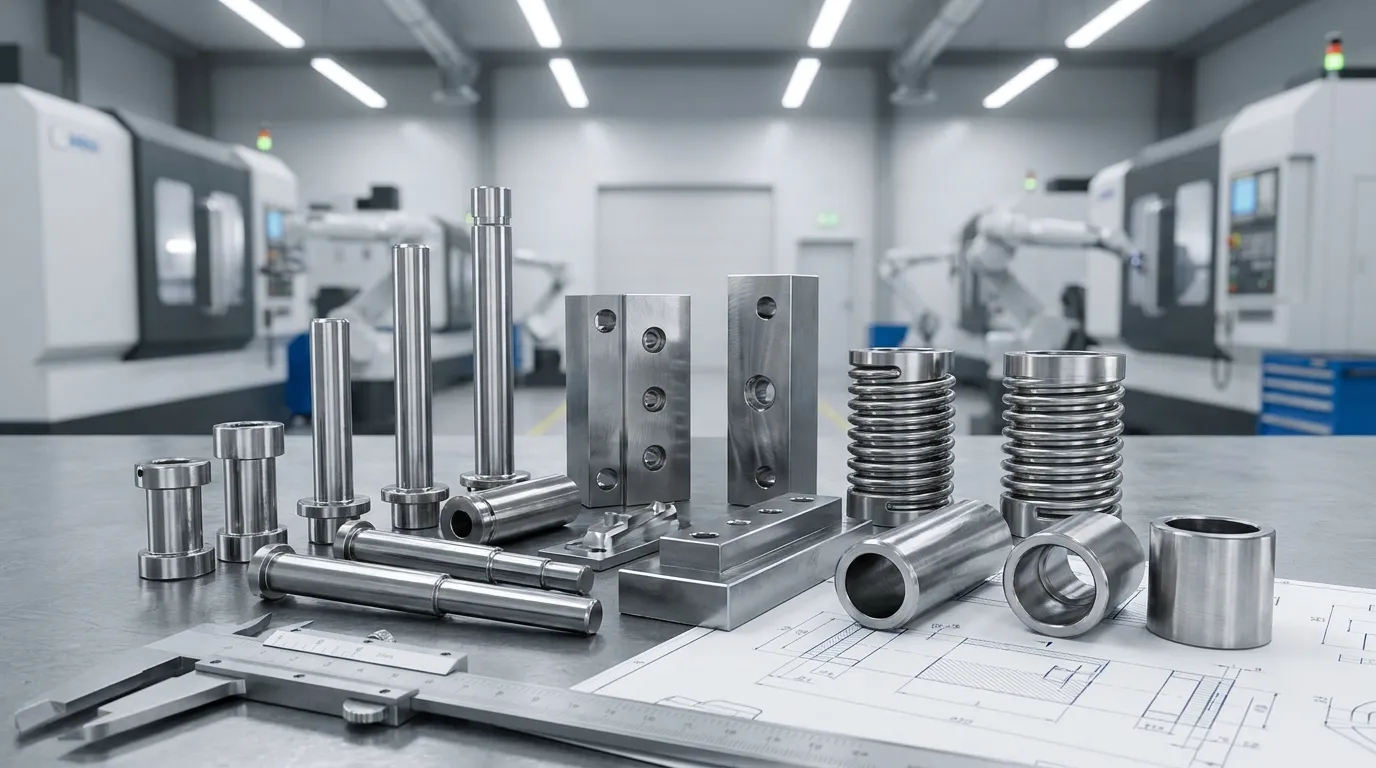
Plastic mold components are the individual precision parts that make up an injection mold system, including ejector pins, Silents guides, Inserts, sliders, and cooling elements. Their accuracy directly affects mold lifespan, production consistency, and finished part quality.
Every injection mold contains dozens or even hundreds of individual parts. Some guide mold movement, some release finished products, and others control cooling or alignment. These parts must work together with tight tolerances to prevent flash, Dérivation, ou une usure prématurée.
Common component categories include:
| Type de composant | Fonction principale |
|---|---|
| Goupilles éjecteurs | Poussez les pièces finies hors du moule |
| Poteaux guides et bagues | Gardez les moitiés du moule alignées |
| Inserts | Géométrie détaillée des pièces de forme |
| Glisseurs et lifters | Créer des éléments secondaires ou des sous-coupes |
| Canaux de refroidissement | Contrôler la température du moule |
| Manches | Supports des composants mobiles |
High-volume molds depend heavily on component consistency. A worn guide bushing or damaged ejector pin can stop production quickly. That’s why many manufacturers standardize replacement parts whenever possible.
For a broader breakdown of complete mold systems, Regarde ça Guide complet des composants du moule et explorer des informations connexes Systèmes de moule en plastique.
Which mold components are usually standard parts?
Standard mold components are mass-produced precision parts built to common industry dimensions. They reduce lead times, simplify maintenance, and make replacement easier during high-volume production.
Most injection molds use standard components for basic movement and alignment functions. These parts are widely available from industrial suppliers and usually come in pre-defined sizes and materials.
Common standard mold parts include:
| Composante standard | Pourquoi les fabricants l’utilisent |
|---|---|
| Goupilles éjecteurs | Remplacement facile pendant l’usure |
| Silents guides | Alignement cohérent |
| Poteaux guides | Approvisionnement rapide |
| Goupilles de retour | Taille standard fiable |
| Sources | Performance prévisible |
| Manches | Coûts d’usinage réduits |
Standardization matters most in molds with long production runs. If a guide post wears out after several million cycles, a replacement can often ship immediately instead of being custom-machined from scratch.
Standard components are not always the cheapest long-term option, though. In high-precision molds, repeated performance compromises can create more maintenance costs than a properly engineered custom part. Buyers sometimes focus too heavily on initial tooling savings and ignore future production stability.
Les fabricants qui fabriquent des produits de consommation de base dépendent souvent fortement de Pièces de moule standard because replacement speed matters more than aggressive optimization.
When are custom mold components necessary?
Custom mold components become necessary when standard parts cannot meet geometry, Tolérance, Refroidissement, or production requirements. Complex consumer electronics, Dispositifs médicaux, and automotive programs commonly require custom inserts, Couleurs, or sliders.
Custom components solve problems that standard parts cannot handle. Tight spaces, unusual product geometry, and strict tolerance requirements often force mold designers to create specialized tooling.
Applications à haute précision
Medical and automotive molds commonly use custom inserts or custom cooling layouts. These applications require tight dimensional consistency and stable cycle times. According to this guide on Exigences en moulage par injection médicale, medical programs often require stricter process validation and tooling precision than standard commercial products.
A medical device housing may need custom core geometry to maintain wall thickness tolerance across several cavities. Standard inserts alone may not provide enough control.
Géométrie complexe du moule
Consumer electronics molds often contain thin walls, Sous-coupes, and cosmetic surfaces that increase tooling complexity. A standard slider or insert may not fit the available space.
Par exemple, an automotive dashboard mold may use custom cooling inserts to reduce warpage across large plastic surfaces. Better cooling control can shorten cycle times and improve dimensional consistency.
Custom mold components are often unnecessary for low-volume consumer products. Many projects become over-engineered because buyers assume “custom” automatically means “better.” In reality, standard parts work well for many simple geometries.
If you need a deeper look at specialized tooling setups, explore Outillages de moule sur mesure.
Standard vs custom mold components: what is the real difference?
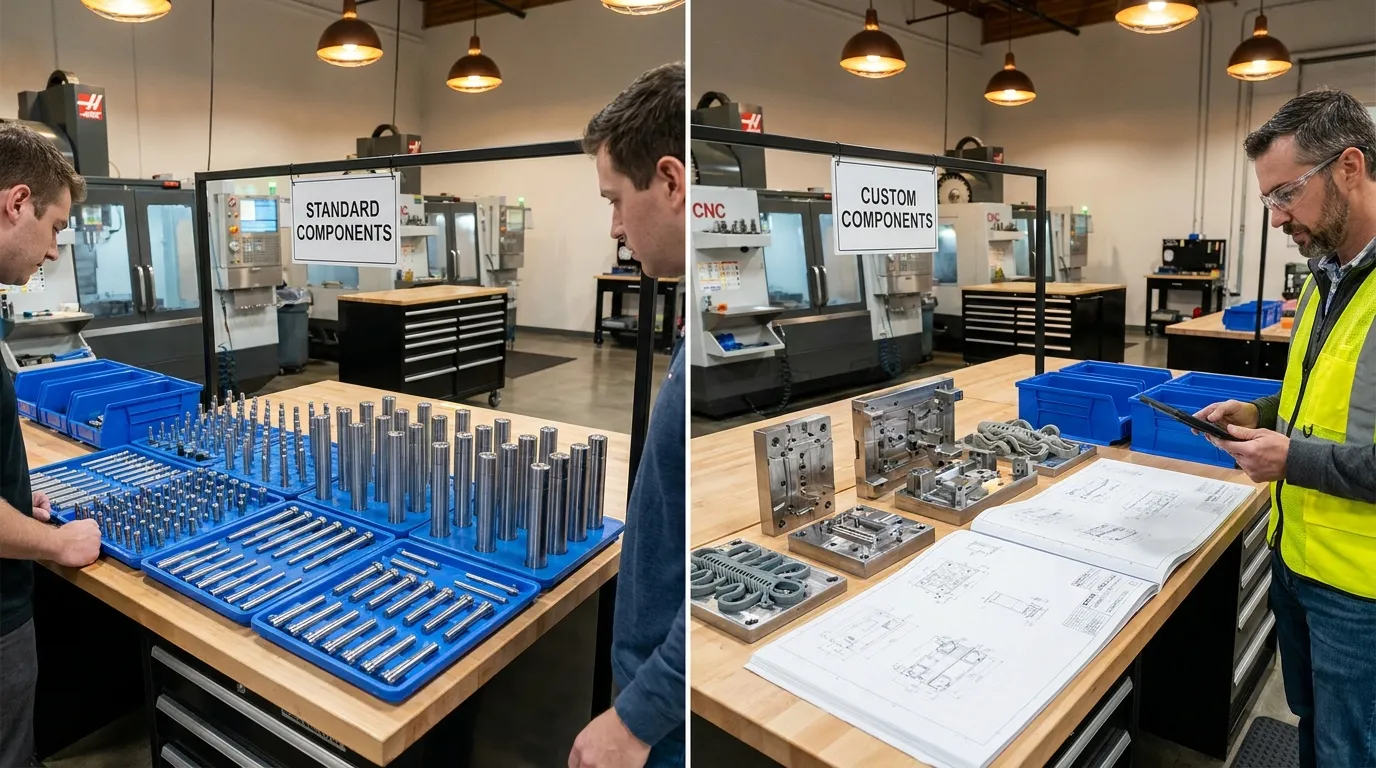
Standard mold components are faster and cheaper to source, while custom components offer better optimization for specialized mold designs. Le bon choix dépend du volume de production, Exigences de précision, and future maintenance priorities.
The biggest difference comes down to flexibility versus convenience. Standard parts simplify sourcing and repairs. Custom parts improve mold performance in situations where standard dimensions create limitations.
| Facteur | Composants standards | Composants personnalisés |
|---|---|---|
| Délai d’exécution | Plus court | Plus longtemps |
| Vitesse de remplacement | Presque | Plus lent |
| Coût initial | Lower | Plus haut |
| Flexibilité de conception | Limité | Haut |
| Entretien | Plus facile | Plus complexe |
| Optimisation de précision | Modéré | Plus haut |
A consumer packaging mold running millions of cycles per year may prioritize standard guide bushings because maintenance downtime costs more than small performance gains. En revanche,, a medical mold may accept longer lead times to achieve tighter process control.
Tableau de décision standard vs personnalisé
| Production Situation | Meilleure option | Raison |
|---|---|---|
| Produits de base à fort volume | Standard | Remplacement plus rapide |
| Pièces médicales à tolérance stricte | Coutumes | Meilleur contrôle précis |
| Outils prototypes | Standard | Coût de démarrage plus bas |
| Sous-mines complexes | Coutumes | Flexibilité géométrique |
| Environnements de maintenance fréquents | Standard | Planification des inventaires plus simple |
| Composants électroniques à paroi mince | Coutumes | Amélioration du refroidissement et du support |
Many buyers assume custom tooling always creates better molds. That’s not always true. Faster delivery matters more than extreme optimization in many production environments, especially when production schedules are tight.
For broader part selection guidance, Révisez ceci Sélection des pièces de moulage Ressource.
How do standard and custom parts affect lead times and maintenance?
Standard components usually shorten mold build and repair timelines because replacements are readily available. Custom components can improve mold performance, but they often increase machining time, supplier dependency, and maintenance planning complexity.
Lead time differences become obvious during mold repair or production emergencies. A standard ejector pin can often be replaced immediately from inventory. A custom-machined insert may require additional machining, Traitement thermique, and inspection before installation.
Selon cet article sur Délais de livraison pour le moulage par injection, tooling revisions and manufacturing complexity can significantly extend project schedules. Custom mold components increase that risk because every revision may require additional machining work.
Risques liés aux temps d’arrêt des remplacements
Maintenance planning becomes more difficult when molds depend heavily on custom components.
- Are replacement parts stocked locally?
- Does the supplier maintain machining capacity?
- Will heat treatment add delays?
- Are inspection approvals required before shipment?
- Can another supplier reproduce the part quickly?
A consumer electronics manufacturer using standard ejector pins can often source replacements globally. A custom insert with proprietary geometry may stop production for weeks if the original supplier cannot deliver quickly.
Import and customs issues can also affect schedules. Documentation or inspection problems may delay tooling shipments during international transport, especially for highly specialized mold components. The Bangladesh customs instruction update for 2025-2026 highlights how documentation handling can affect industrial import timelines.
Les fabricants qui priorisent la disponibilité conservent souvent des stocks de Pièces de moule de remplacement for high-wear components.
Which industries rely most on custom mold components?
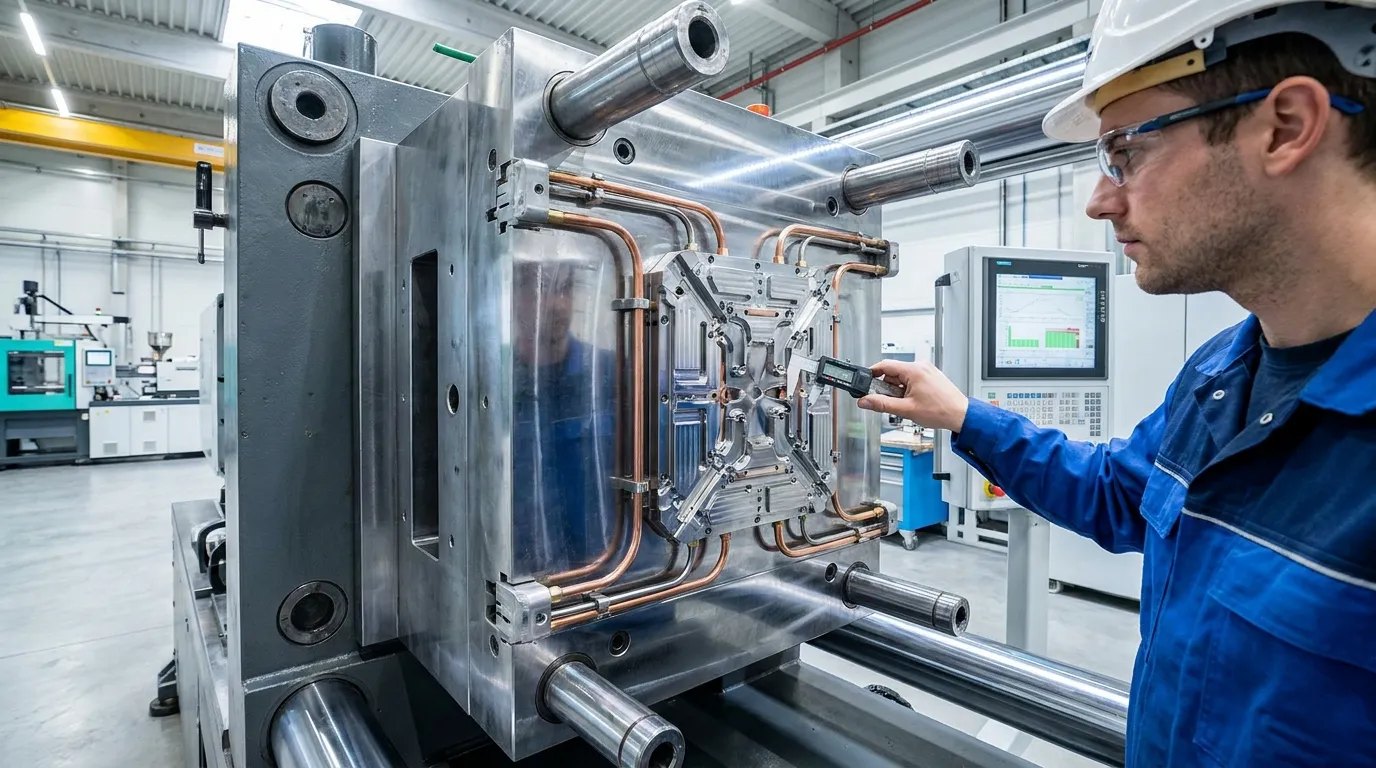
Different industries use different tooling strategies. High-volume commodity products often rely on standardization, while precision industries depend more heavily on custom engineering.
| Industrie | Stratégie typique des composants |
|---|---|
| Médical | Inserts personnalisés et refroidissement |
| Automobile | Géométrie personnalisée et durabilité |
| Électronique grand public | Outillages personnalisés à paroi mince |
| Emballage | Utilisation intensive de pièces standard |
| Produits ménagers | Principalement des composants standards |
| Aérospatiale | Outillages personnalisés de haute précision |
Medical molds need stable dimensional control and repeatability. Automotive tooling often requires custom cooling layouts to manage large molded surfaces and complex geometries.
Packaging manufacturers usually favor standard components because production speed and fast maintenance matter most. Replacing worn guide bushings quickly can prevent expensive line stoppages.
Vous pouvez explorer plus largement Applications dans les moules d’injection to see how tooling strategies change across industries.
How should buyers choose between standard and custom mold components?
Buyers should prioritize standard components when fast replacement, lower cost, and shorter lead times matter most. Custom components make more sense when production demands specialized geometry, Tolérances plus strictes, or optimized mold performance.
The best choice depends on production goals, maintenance expectations, and product complexity. Many successful molds use a mix of standard and custom parts instead of choosing only one approach.
Organigramme de sélection des composants du moule
| If Your Priority Is... | Choose... |
|---|---|
| Réparations plus rapides | Composants standards |
| Coût de démarrage plus bas | Composants standards |
| Tolérances strictes | Composants personnalisés |
| Géométrie complexe | Composants personnalisés |
| Gestion des stocks plus facile | Composants standards |
| Optimisation cycle-temps | Composants personnalisés |
Questions à poser à votre fournisseur de moisissures
Before approving tooling, buyers should ask practical sourcing questions:
- Can replacement parts be sourced globally?
- Which components are fully custom?
- What are the expected replacement lead times?
- Are spare inserts recommended?
- Which parts experience the most wear?
Selon ce guide de sources de Le groupe Rodon, supplier communication and tooling planning directly affect production reliability and long-term costs.
A balanced tooling strategy often works best. Standard guide components can reduce maintenance delays, while custom inserts handle specialized geometry or cooling demands.
For broader tooling decisions and mold architecture planning, Révisez ceci Guide pour moule d’injection plastique et les éléments connexes Guide des composants du moule.
Réussir la prochaine étape
Choosing the right plastic mold components is less about following a fixed rule and more about matching tooling decisions to production reality. Standard parts simplify sourcing, repairs, and inventory planning. Custom parts improve performance when molds require tighter tolerances, specialized cooling, or difficult geometry.
Many successful projects combine both approaches. Standard components handle wear and maintenance efficiency, while custom inserts or sliders solve design-specific problems. Before approving tooling, review replacement timelines, maintenance risks, and long-term production goals with your supplier. That process usually prevents more problems than chasing the lowest upfront tooling cost.
Questions fréquemment posées
What are the most common plastic mold components?
The most common plastic mold components include ejector pins, Poteaux guides, Silents, Manches, Inserts, Conduits de refroidissement, and sliders. These parts guide, cool, align, and release molded products during production cycles.
Are custom mold components more expensive?
Oui, custom mold components usually cost more because they require specialized machining, engineering, and inspection work. They can still provide value when a project needs tighter tolerances or specialized mold geometry.
Can standard mold components be replaced easily?
Standard mold components are easier to replace because they follow common industry dimensions and are widely available from suppliers. This helps reduce downtime during mold maintenance and emergency repairs.
Which industries use custom mold components most often?
Médical, automotive, and consumer electronics manufacturers commonly use custom mold components. These industries often require tighter tolerances, specialized cooling, or complex product geometry that standard parts cannot support.
Do custom mold parts increase lead times?
Custom mold parts often increase lead times because they require machining, Traitement thermique, and additional inspection processes. Design revisions can extend schedules even further during mold manufacturing.
Quels composants de moulage s’usent le plus rapidement?
Goupilles éjecteurs, sliders, Silents guides, and other moving wear surfaces typically wear out fastest because they experience constant friction during mold cycles. Proper maintenance and material selection help extend service life.
Partager:


Écrit par Sunshine
Au soleil, Nous sommes un fabricant et fournisseur professionnel de composants de moule de précision, proposant une large gamme de produits pour les applications de stampage et de moulage par injection. Notre objectif principal est le poinçage des coins, Goupilles et manchons d’éjection, et poteaux guides et bagues. Avec un usinage CNC avancé, Contrôle qualité strict, et de fortes capacités de production, Nous garantissons une fiabilité, Pièces de haute précision, ainsi que des composants standards en stock pour un approvisionnement mondial rapide et efficace.
ACTUALITÉS
OBTENIR UN SERVICE
Avec des pièces de qualité adaptées à tous les budgets et un personnel accueillant formé pour rendre votre visite informative et sans tracas.
