Precision CNC Machining for Robot Arm Links
Usinage CNC à bras robotisé
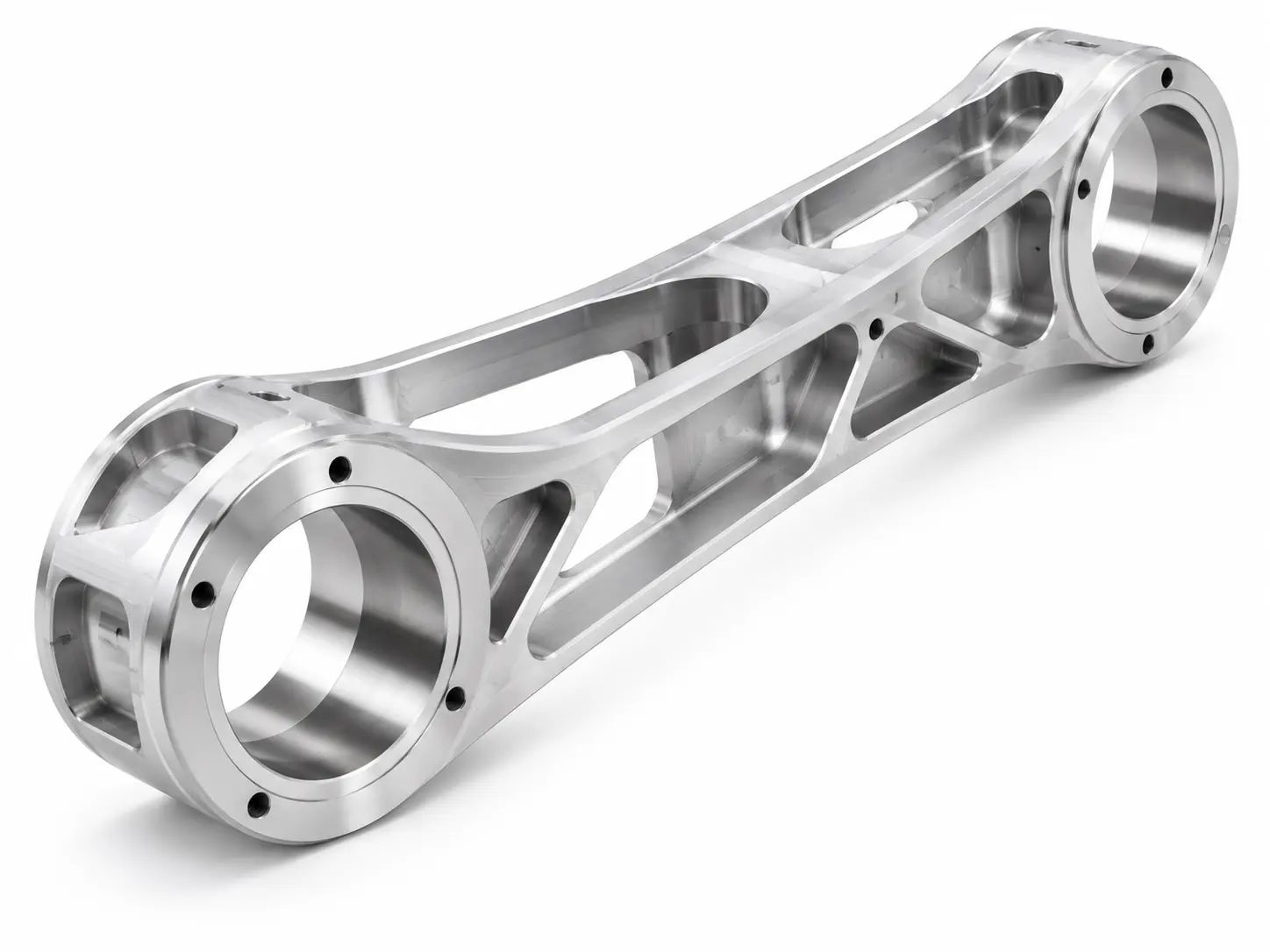
Precision CNC machining for robot arm links with lightweight pockets, reinforcing ribs, large joint bores, Interfaces actionneurs, cable channels, et des datums de montage critiques. Prend en charge l’usinage sur 5 axes, GD serré&T, Matériaux légers, et production de prototypes à faible volume.
- 5-Axis CNC for Lightweight Arm Links
- Precision Joint Bores & Alignement des axes
- Pocketed / Ribbed / Thin-Wall Structures
- 6061 / 7075 Aluminium / Titane
- Prototype & Production à faible volume
Description du produit
Introduction
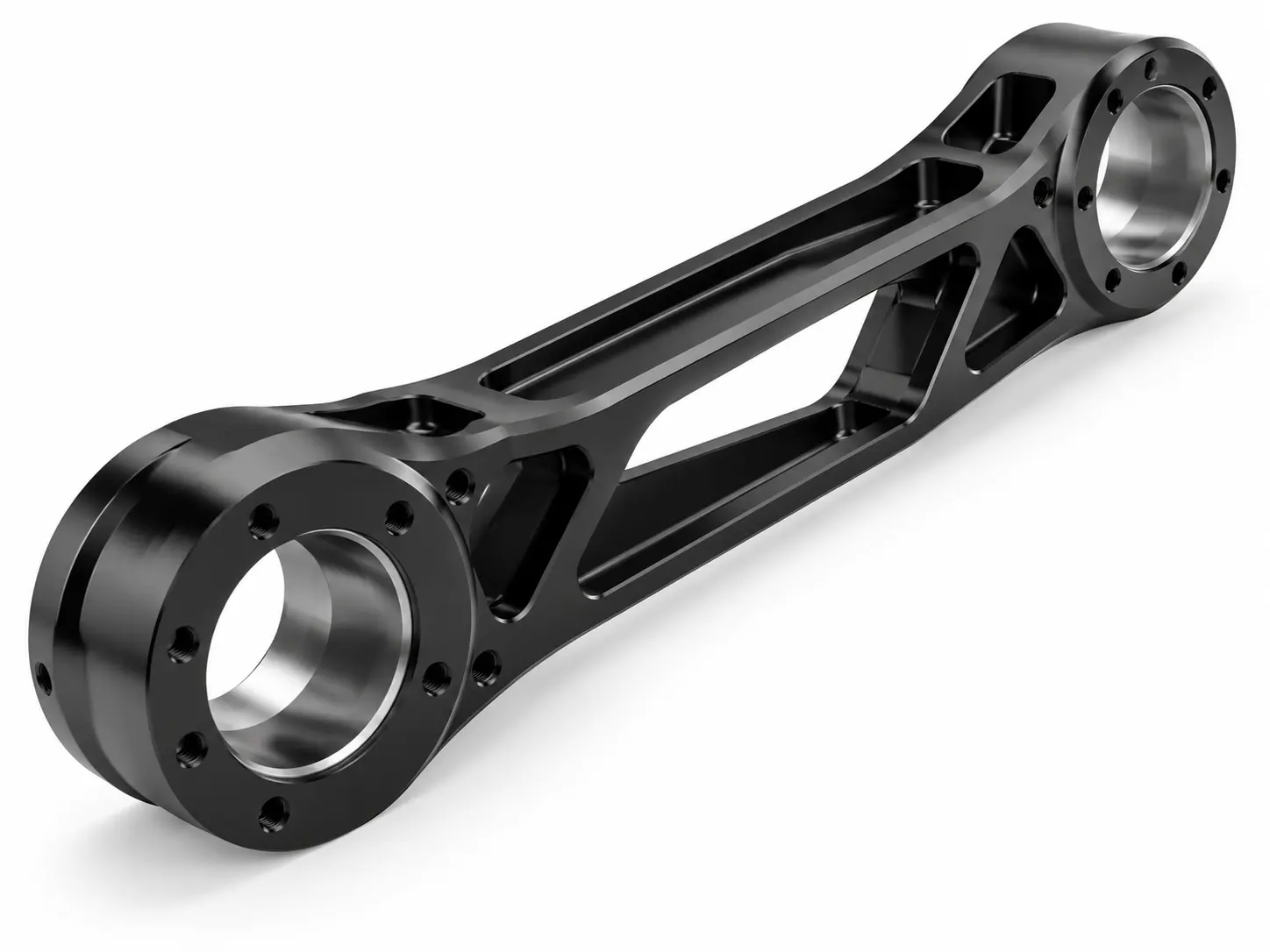
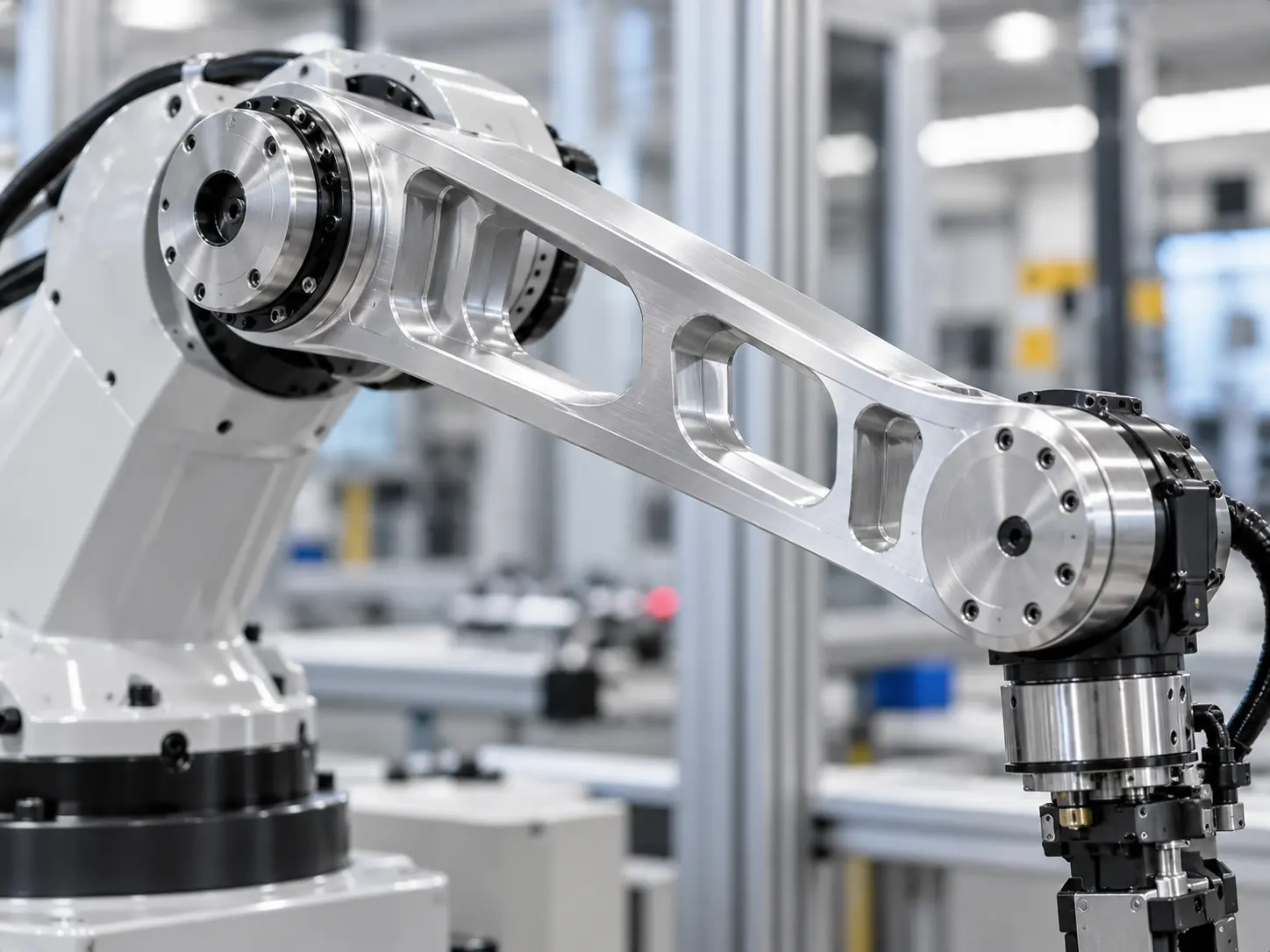
Robot Arm Link CNC Machining is used to manufacture lightweight structural links that connect joints, Actionneurs, wrist modules, and other motion components within robotic systems. These parts require a careful balance of low mass, Rigidité structurelle, Stabilité dimensionnelle, and accurate joint alignment to support fast and repeatable robotic motion.
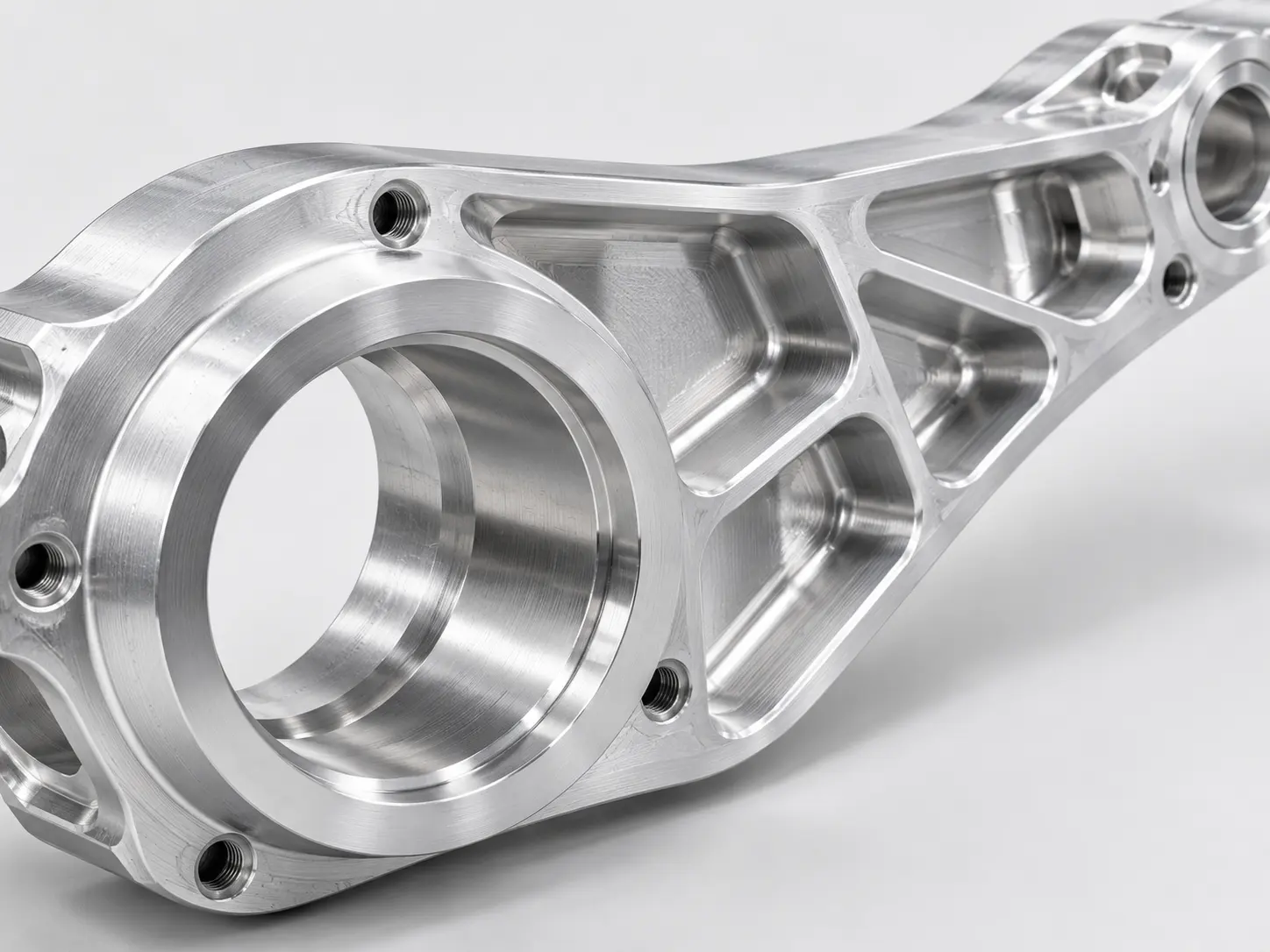
Robot arm links often contain large joint bores, bearing or actuator interfaces, precision mounting faces, poches légères, reinforcing ribs, cable-routing channels, Sections à murs minces, et des fonctions de montage multidirectionnel. Petites écarts dans la position du canon, Parallélisme, Platitude, or joint-to-joint alignment can affect assembly accuracy, motion repeatability, Vibration, and load distribution across the robot arm.
Nos capacités d’usinage CNC incluent la 3 axes, 4 axes, et fraisage à 5 axes, ennuyeux, Forage, Filetage, tapping, Usinage en poche, et finition de précision. Stratégies d’usinage, Conception des luminaires, Contrôle des données, material removal sequence, and inspection methods are selected according to link length, Épaisseur du mur, critical joint interfaces, GD&Exigences en T, and distortion risk.
Robot arm links can be machined from 6061 aluminum, 7075 aluminium, Titan, Acier inoxydable, et d’autres matériaux d’ingénierie, avec anodise, Anodisation dure, Passivation, Polissage, Revêtement, et autres processus secondaires disponibles. Prototype, Exemple d’ingénierie, et la production à faible volume peut être prise en charge selon les plans clients.
Caractéristiques techniques
| Objet | Spécification |
|---|---|
| Nom du produit | Usinage CNC à bras robotisé |
| Matériel | 6061 Aluminum / 7075 Aluminum / Titanium / Stainless Steel / Custom |
| Procédé de fabrication | Fraisage / Tournage / Alésage / Perçage / Filetage / Taraudage / Finition de précision |
| Géométrie des pièces | Long Structure / Thin-Wall / Ribbed / Pocketed / Hollow / Complex Multi-Surface |
| Tolérance | Jusqu’à ±0.005 mm / Selon le dessin |
| Finition de surface | Anodisation / Anodisation dure / Passivation / Placage / Revêtement |
| Couleur | Naturel / Noir / Dépendant du matériau |
| Production Volume | Production de prototypes et de faible volume |
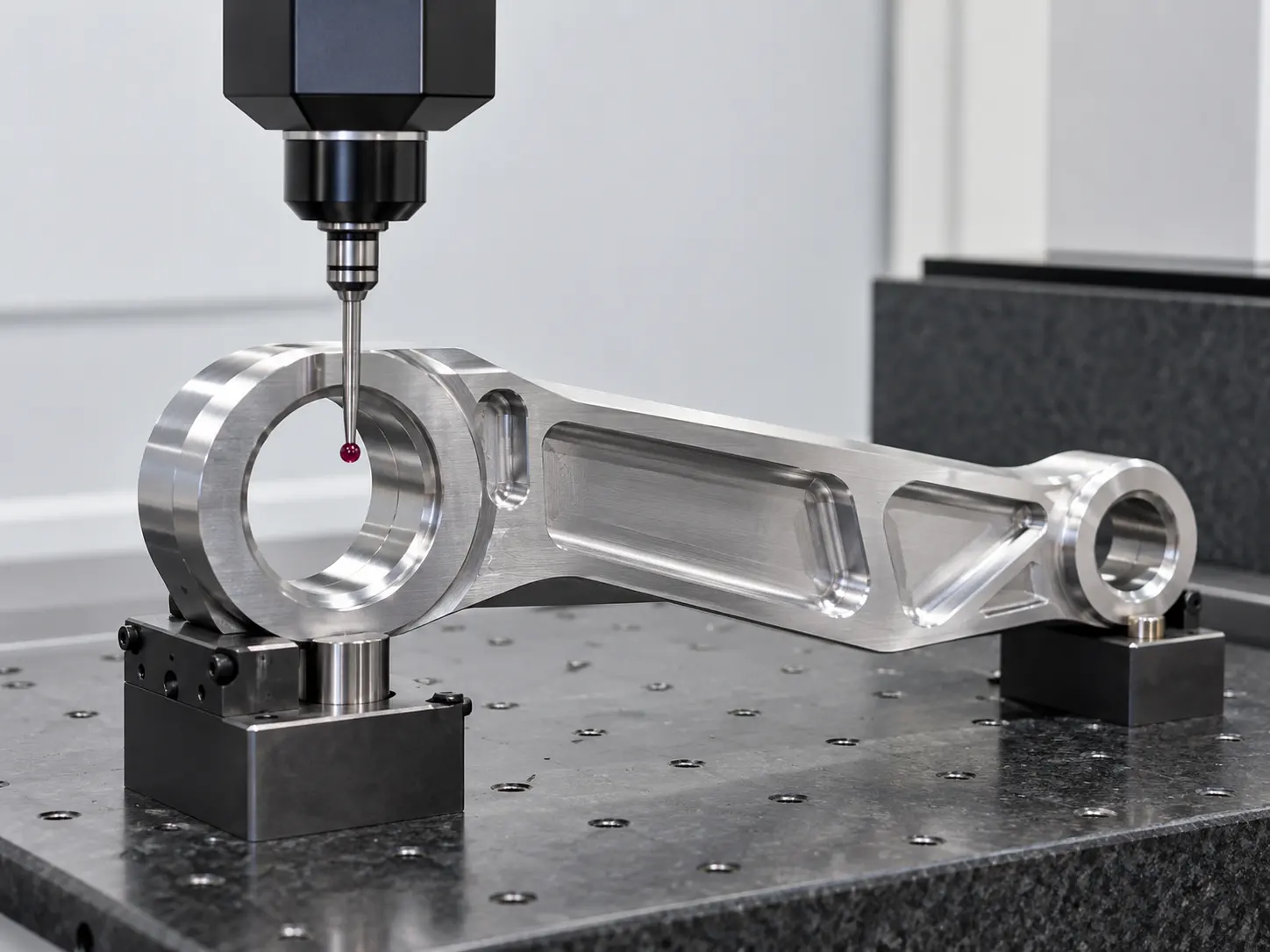
| Inspection | CMM / Jauge de hauteur / Micromètre / Étrier / Plan d’inspection personnalisé |
| Documentation | Rapports d’inspection et documents matériels sur demande |
| Applications | Robots humanoïdes / robots collaboratifs / robots industriels / actionneurs robotiques / systèmes de mouvement de précision |
| Service personnalisé | Pris en charge par l’OEM et l’ODM |
Trois aspects clés de la personnalisation, Adapté à vos besoins
Solutions d’usinage CNC personnalisées pour des composants robotiques complexes et des exigences d’assemblage de précision.
Fabrication de précision, Qualité excellente
Usinage structurel léger
Multi-axis CNC machining supports deep pockets, reinforcing ribs, internal cutouts, and thin-wall structures to reduce arm-link mass while maintaining the rigidity required for robotic motion.
Precision Joint Bore Machining
Large joint bores, bearing interfaces, and actuator mounting features are carefully machined to maintain accurate positioning between connected robotic joints.
Long-Part Distortion Control
Machining sequence, Maintien du travail, datum strategy, and material removal are planned to help control distortion in long, Fin, or heavily pocketed components.
Inspection multi-surfaces
CMM, Calibres d’alésage, Micromètres, Jauges de rondeur, et d’autres équipements d’inspection peuvent vérifier la taille du forage, Poste, Concentricité, runout, Platitude, and critical mounting dimensions.
Service raffiné, Délai de livraison réduit
De la revue de conception à la livraison, Nous proposons un suivi personnalisé dédié tout au long du processus.
Consultation → Fournir des plans → une revue de conception & Devis → traitement des commandes → inspection qualité → livraison à temps → suivi après-vente
Nos avantages
Soutenu par plus de 25 ans d’expérience en ingénierie, Notre équipe propose des services complets — de la conception personnalisée des moules et l’usinage de précision à la production à grande échelle — soutenus par un système d’assurance qualité robuste et un service client proactif. Certifié sous ISO9001, ISO14001, et IATF 16949, Nous visons continuellement l’excellence en matière de qualité, Innovation, et la satisfaction client.
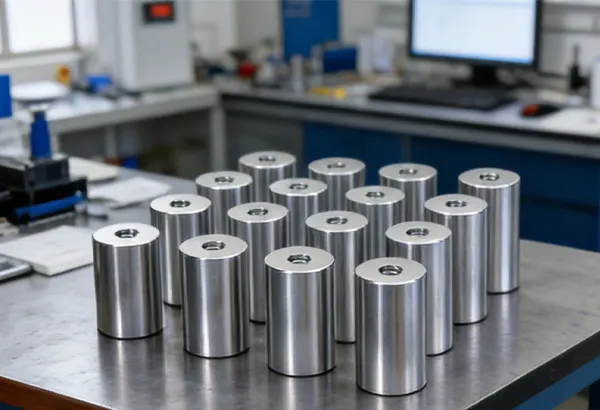
Plus de 100,000 Unités en stock, avec un envoi en 2 heures pour les produits standards.
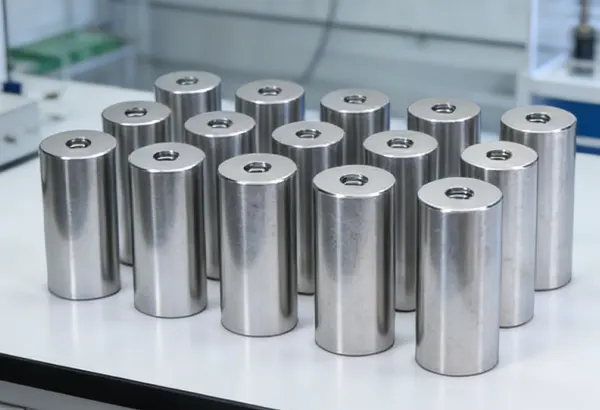
Mise en œuvre d’un système d’inspection en trois étapes — vérification initiale des matériaux, Inspection en cours de processus, et inspection finale.
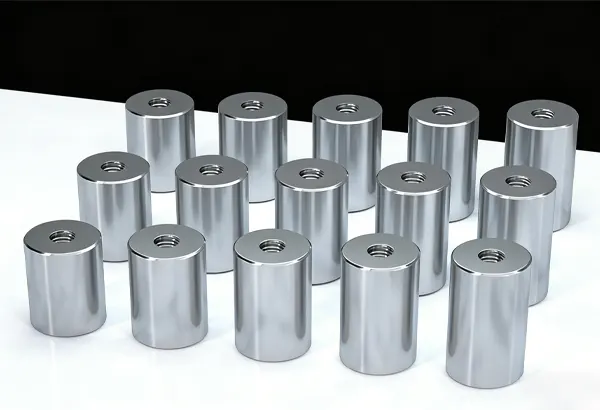
Inventaire important et délais rapides, Garantir une livraison à temps avec une inspection 100 % des produits.
Champ d’application
Le choix privilégié dans divers secteurs.
FAQ
Q1: What is a robot arm link?
A robot arm link is the structural member connecting two robotic joints or motion modules, transferring loads while maintaining the required geometry between rotational axes.
Q2: Why are robot arm links designed with pockets and ribs?
Pockets and cutouts reduce mass and rotational inertia, while ribs help retain structural stiffness in areas where loads are transferred between joints.
Q3:What materials are commonly used for robot arm links?
6061 and 7075 aluminum are commonly used for lightweight structures, while titanium or stainless steel may be selected where higher strength, Rigidité, or environmental resistance is required.
Q4: Why is joint bore alignment important?
The relationship between joint bores and mounting interfaces influences robotic axis alignment, Précision de l’assemblage, Répartition de la charge, et la répétabilité du mouvement.
Q5: How do you control distortion in lightweight arm links?
Fixture strategy, Séquence d’usinage, balanced material removal, intermediate inspection, and appropriate finishing allowances can be used according to the geometry and material.