



Fabricants de moules d’injection: Comment choisir un fournisseur fiable
Injection mold manufacturers should be evaluated based on engineering capability, tolerance control, Qualité de la communication, Fiabilité dans les délais de livraison, and export support. A reliable supplier explains its mold trial process, Méthodes d’inspection, revision handling, and shipping timelines before production starts. Buyers who compare lifecycle value instead of only mold price usually avoid costly delays, tooling failures, and unstable production runs.
Choosing the wrong mold supplier can delay a product launch for months. A low quote may look attractive early on, but weak communication, poor sampling control, or missed tolerances often create larger problems later. This guide explains how to compare injection mold manufacturers based on real production factors, including tooling capability, Délais d’exécution, export readiness, and long-term support.
What should you look for in an injection mold manufacturer?
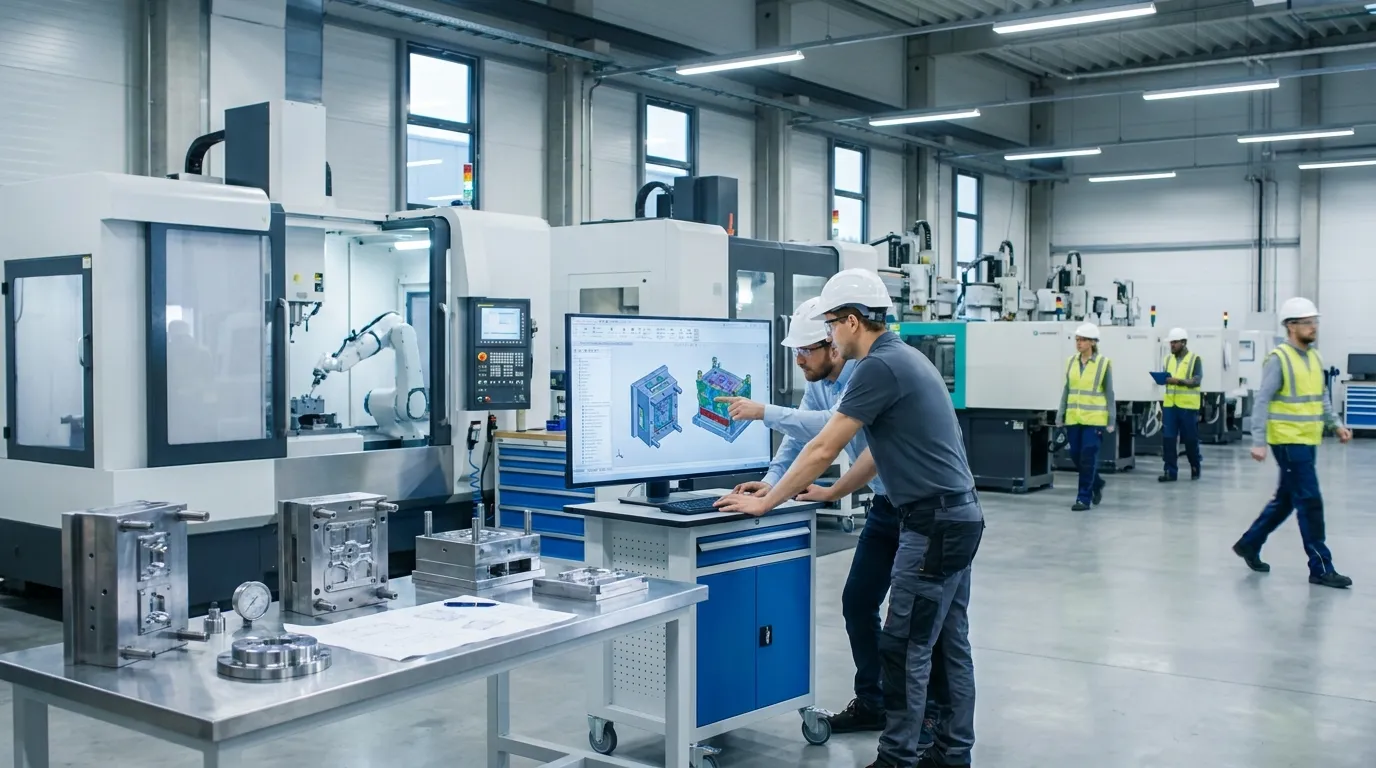
Reliable injection mold manufacturers should demonstrate technical capability, stable quality control, realistic lead times, and responsive communication before quoting price. Buyers should evaluate tooling experience, export readiness, and project management support instead of comparing mold cost alone.
A good supplier should be able to explain how your mold will be built, tested, inspected, and maintained. If a manufacturer gives vague answers during the quoting stage, that usually becomes a larger problem once production begins.
For buyers new to tooling projects, it helps to understand the broader manufacturing process before comparing suppliers. Exactement Aperçu du moulage par injection plastique explains how tooling, molding, and production fit together.
The strongest suppliers usually perform well in five areas:
- Support technique lors de la révision des RFQ
- Processus de tolérance stable et d’inspection
- Planification réaliste des délais d’avance
- Communication claire lors des révisions
- Coordination exportation et logistique
Table d’évaluation des fournisseurs de moules d’injection
| Zone d’évaluation | Quelles questions les acheteurs devraient | Bon exemple de réponse | Exemple de drapeau rouge |
|---|---|---|---|
| Soutien technique | Can you review DFM risks before tooling? | Le fournisseur explique les angles de tirage et le placement des portes | Le fournisseur ne discute que du prix |
| Contrôle des tolérances | How do you verify dimensions? | Fournit des rapports de flux de travail d’inspection et d’échantillonnage | Il dit que les tolérances ne sont « pas de problème » sans détails |
| Planification des délais | What affects delivery timing? | Explains tooling, trials, Révisions, and shipping | Promet une livraison exceptionnellement rapide sans détails de processus |
| Communication | How often are project updates sent? | Mises à jour hebdomadaires avec suivi des révisions | Réponses lentes lors des citations |
| Soutien à l’exportation | How do you manage international shipment? | Explique l’emballage et la préparation douanière | Aucune expérience en coordination à l’exportation |
A manufacturer with advanced machines is not automatically reliable. Process control, inspection discipline, and communication quality matter more than equipment lists alone.
How do you verify manufacturing capability before placing an order?
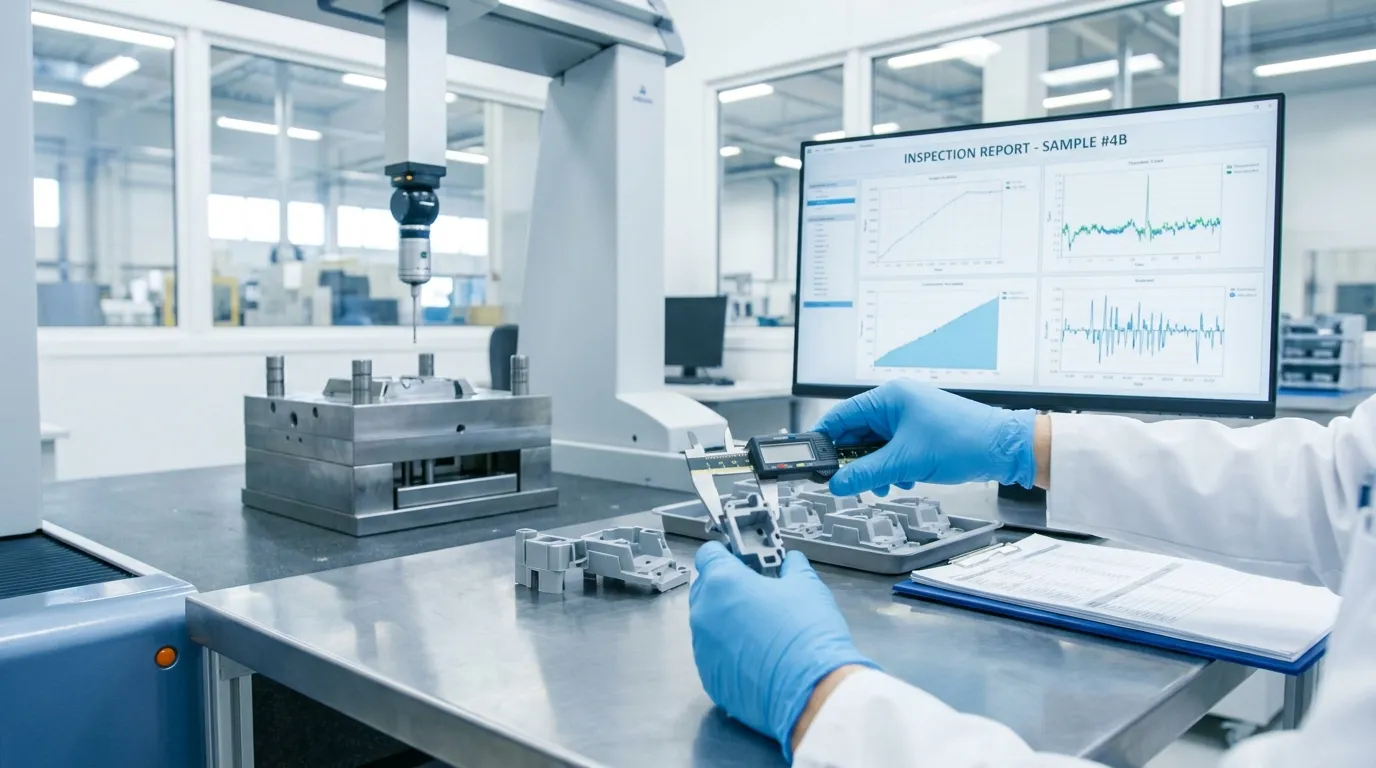
Buyers should verify machine range, tolerance capability, tooling experience, and mold testing procedures before approving a supplier. A strong manufacturer can explain inspection methods, trial processes, and corrective actions clearly during RFQ discussions.
Many sourcing problems begin because buyers approve a supplier before checking real production capability. A polished website does not confirm that the supplier can hold tolerances consistently or manage revisions correctly.
Ask suppliers for examples of similar tooling projects. If your product requires thin walls, cosmetic finishes, or tight dimensional control, the manufacturer should explain how those requirements affect tooling design and mold trials.
Vous devriez également revoir le Processus de production des moules before final approval. This helps buyers understand how tooling moves from design to sampling and production validation.
Liste de contrôle des capacités techniques
| Zone de capacité | Que vérifier |
|---|---|
| Capacité de la machine | Gamme de tonnes et compatibilité de taille de pièces |
| Contrôle des tolérances | Équipement d’inspection et méthode d’échantillonnage |
| Expérience des outillages | Industries ou catégories de produits similaires |
| Essais de moisissure | Processus d’essai et flux de travail de correction |
| Systèmes de qualité | Rapports et documentation d’inspection |
| Gestion des révisions | Gestion du changement après la coupe de l’acier |
A medical-device buyer may reject a low-cost supplier if the manufacturer cannot explain sampling validation clearly. That situation happens often with suppliers focused only on fast quoting.
Another common mistake is choosing based on machine size alone. A supplier with fewer machines but better inspection systems may produce more stable results than a larger factory with weak process control.
Quels délais les acheteurs doivent-ils raisonnablement attendre?
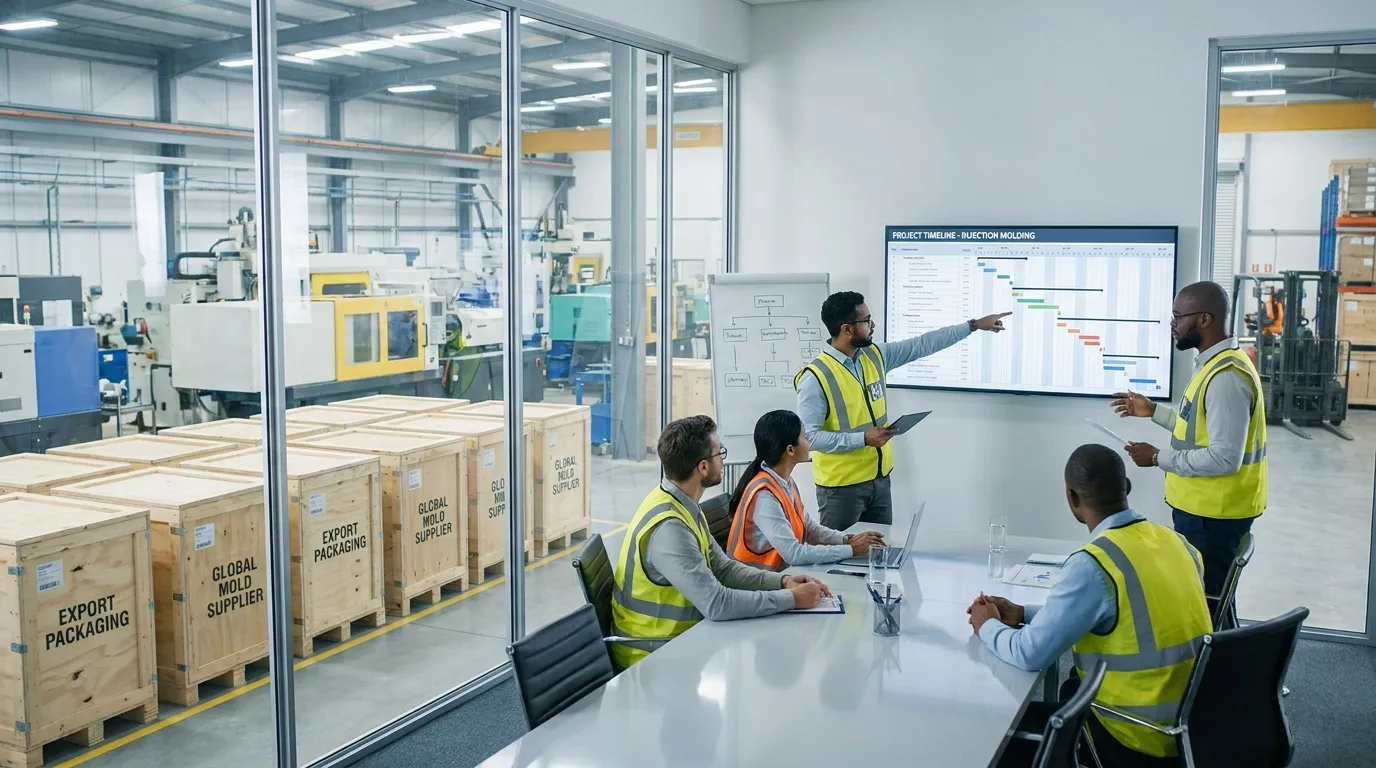
Injection mold lead times depend on mold complexity, Révisions, sampling cycles, and shipping coordination. Buyers should expect tooling, Validation, and logistics to affect schedules more than machine production time alone.
Production tooling rarely moves in a straight line. Even a simple mold may require design revisions, Corrections d’échantillonnage, or packaging adjustments before shipment approval.
Selon Décomposition des délais d’exécution d’EvokPoly, tooling schedules usually include design review, Usinage, Assemblage, Essais de moisissure, and validation before production starts. Buyers who only ask for “delivery date” often miss the stages that create delays.
A startup launching a 5,000-unit pilot run may choose aluminum tooling to shorten the schedule and reduce upfront cost. Hardened steel tooling usually makes more sense for long production runs, but it requires longer machining and validation time.
What causes unexpected mold delays?
Several issues regularly extend tooling timelines:
- Modifications de conception après la coupe de l’acier
- Essais de moisissure ratés
- Corrections d’échantillonnage
- Révisions de l’emballage
- Problèmes de documentation d’exportation
- Délais de dédouanement
Analyse du calendrier du projet Ulite explains how revisions after steel cutting can significantly extend schedules. Even small CAD changes may require additional machining or tooling adjustments.
International shipments can create another delay point. Discussions récentes sur la conformité douanière show that documentation errors can slow international cargo even when factory production is complete.
Liste de contrôle des risques de délai d’exécution
| Zone à risque | Pourquoi c’est important |
|---|---|
| Statut de gel de conception | Les révisions en cours retardent l’usinage |
| Cycles d’échantillonnage | Les essais ratés nécessitent des corrections |
| Documentation d’exportation | Des papiers manquants retardent l’expédition |
| Approbation de l’emballage | Un emballage incorrect peut bloquer l’exportation |
| Méthode d’expédition | Le fret maritime augmente le risque de calendrier |
| Préparation des douanes | Les problèmes de conformité peuvent retarder la livraison |
Fast tooling timelines only work when the product design is stable. If revisions continue after steel cutting, aggressive delivery promises usually become unrealistic.
Pourquoi la qualité de la communication compte autant que la qualité des outils
Poor communication often creates larger project delays than machining problems. Reliable injection mold manufacturers provide clear revision tracking, fast engineering feedback, and consistent project updates throughout tooling and sampling.
A supplier that communicates poorly during the RFQ stage rarely improves later. Slow replies, vague engineering answers, or missing revision records often lead to production delays once tooling begins.
Good communication usually includes:
- Retour clair du DFM
- Suivi des révisions
- Mises à jour prévues du projet
- Clarification rapide en ingénierie
- Rapports d’échantillonnage transparents
A company may accept a slightly higher tooling quote because the supplier provides structured updates, trial reports, and maintenance planning. That decision often reduces production disruption later.
Communication quality also affects export coordination. If packaging requirements, labeling, or shipping approvals are unclear, customs delays become more likely during shipment preparation.
What are the biggest red flags when comparing mold manufacturers?
Red flags include unrealistic timelines, unclear quality documentation, vague tolerance claims, and slow engineering responses during quoting. Buyers should treat inconsistent communication before the order as a warning sign for future production support problems.
Some suppliers promise extremely fast delivery to win projects. That approach creates risk if the tooling schedule ignores sampling, Révisions, or export coordination.
Another warning sign is vague quality language. If a supplier says “high precision” without explaining measurement methods or inspection systems, buyers should ask deeper technical questions.
Le Sélection du type de moule process also affects tooling reliability. Different mold structures require different maintenance plans, tooling materials, and production strategies.
Signaux d’alerte courants chez les fournisseurs
- Promesses de délai irréalistes
- Communication d’ingénierie faible
- Aucune documentation d’échantillonnage
- Expérience limitée à l’exportation
- Processus de révision peu clair
- Mauvais rapport d’inspection
- Citation générique avec peu de revue technique
Lowest-price tooling is not always the safest sourcing decision. A supplier with slower quoting but stronger engineering communication often creates fewer production problems later.
Is the lowest mold quote usually the best option?
The cheapest injection mold quote can become the most expensive option if poor tooling quality causes production delays, rework, or maintenance problems. Buyers should compare lifecycle value instead of upfront tooling cost alone.
Low-cost quotes sometimes exclude inspection support, mold validation, or maintenance planning. Buyers may save money initially but lose more later through rework, Production instable, or missed launch schedules.
Exactement Bases du moule d’injection resource explains how tooling quality affects long-term molding performance and production consistency.
Comparaison entre devis bas et fournisseur fiable
| Facteur | Fournisseur à faible coût | Fournisseur fiable |
|---|---|---|
| Coût initial de l’outillage | Lower | Plus haut |
| Revue technique | Limité | Détaillé |
| Support de l’échantillonnage | Minimal | Structuré |
| Communication | Incohérent | Mises à jour programmées |
| Entretien des moisissures | Souvent exclus | Généralement planifié |
| Stabilité de la production | Risque plus élevé | Plus prévisible |
A consumer electronics company may lose three weeks after approving a cheap supplier that cannot handle CAD revisions correctly. The original quote looked attractive, but production delays increased the total project cost.
Lifecycle value matters more than initial tooling price. Buyers should evaluate how the supplier supports production after the mold ships.
What should happen before final supplier approval?
Final supplier approval should happen only after tooling validation, sampling review, inspection checks, and export preparation are complete. Buyers who skip these steps often discover problems after production starts.
The supplier should complete mold trials and provide dimensional inspection results before mass production approval. Buyers should confirm that sampled parts match the approved CAD files and cosmetic requirements.
Exactement Contrôles de qualité des outillages guide explains how inspection and validation fit into the broader tooling workflow.
Documents que les acheteurs doivent demander
- Rapports d’essais sur la moisissure
- Résultats d’inspection dimensionnelle
- Confirmation matérielle
- Spécifications d’emballage
- Documentation d’exportation
- Archives de révision
A buyer shipping internationally should also confirm export preparation before the mold leaves the factory. Emballage, labeling, and customs paperwork should all be reviewed in advance.
One practical example involves a company reducing customs delays by confirming shipping documentation before mold shipment approval. The supplier completed production on time, but missing export paperwork could have delayed delivery for weeks.
Que faire ensuite
Choosing injection mold manufacturers should feel like a technical and operational decision, not only a price negotiation. Strong suppliers explain their tooling process clearly, communicate consistently, and help buyers manage production risk from design review through shipment.
If you’re comparing suppliers now, start by reviewing engineering communication, Procédures d’échantillonnage, and inspection methods before focusing on quote price. A reliable partner usually creates fewer delays, fewer corrections, and more stable long-term production.
For broader process education, Révisez ceci Guide complet du moulage par injection before final supplier selection.
Questions fréquemment posées
Combien de temps faut-il pour fabriquer un moule d’injection ??
Most production molds require several weeks for design, Usinage, Essais, and validation before mass production begins. Complex tooling, Révisions de la conception, and export coordination can extend the timeline further.
What questions should I ask an injection molding company?
Buyers should ask about tolerance capability, mold trial procedures, Systèmes d’inspection, machine capacity, revision handling, and export experience. These questions help identify whether the supplier can support long-term production stability.
Should injection mold tooling be aluminum or steel?
Aluminum tooling works well for prototypes and lower-volume production because it reduces tooling time and upfront cost. Steel molds usually provide better durability and production consistency for long manufacturing runs.
Quelles sont les causes des retards dans le projet de moule d’injection?
Révisions de conception après la coupe de l’acier, failed sampling trials, tooling corrections, and customs documentation issues commonly delay projects. Weak communication can also slow approvals and production scheduling.
How do you know if a mold manufacturer is reliable?
Reliable manufacturers provide clear inspection documentation, realistic schedules, structured project updates, and transparent engineering communication during quoting. Consistent responsiveness before production usually predicts better long-term support.
Why do cheap mold quotes sometimes fail?
Low-cost tooling quotes may exclude validation support, inspection processes, engineering review, or maintenance planning. Buyers often face higher costs later through rework, Retards, or unstable production quality.
Partager:


Écrit par Sunshine
Au soleil, Nous sommes un fabricant et fournisseur professionnel de composants de moule de précision, proposant une large gamme de produits pour les applications de stampage et de moulage par injection. Notre objectif principal est le poinçage des coins, Goupilles et manchons d’éjection, et poteaux guides et bagues. Avec un usinage CNC avancé, Contrôle qualité strict, et de fortes capacités de production, Nous garantissons une fiabilité, Pièces de haute précision, ainsi que des composants standards en stock pour un approvisionnement mondial rapide et efficace.
ACTUALITÉS
OBTENIR UN SERVICE
Avec des pièces de qualité adaptées à tous les budgets et un personnel accueillant formé pour rendre votre visite informative et sans tracas.
