



Coût du moule d’injection: Principaux facteurs de prix que les acheteurs doivent connaître
The cost of injection mold projects usually ranges from about $1,000 for simple prototype tooling to more than $100,000 for complex production molds. Mold steel type, Nombre de cavités, Géométrie des pièces, Tolérances, Finition de surface, and production volume have the biggest impact on price. Buyers should also factor in testing, shipping, Tarifs, Retards douaniers, and future maintenance before approving a tooling quote.
Injection mold pricing can feel inconsistent until you understand what suppliers are actually quoting. A low-cost mold may work for a short production run, while a more expensive tool could reduce downtime, Ferraille, and long-term part cost. This guide breaks down the main cost drivers so you can compare quotes with more confidence and avoid expensive surprises later.
How much does an injection mold cost?
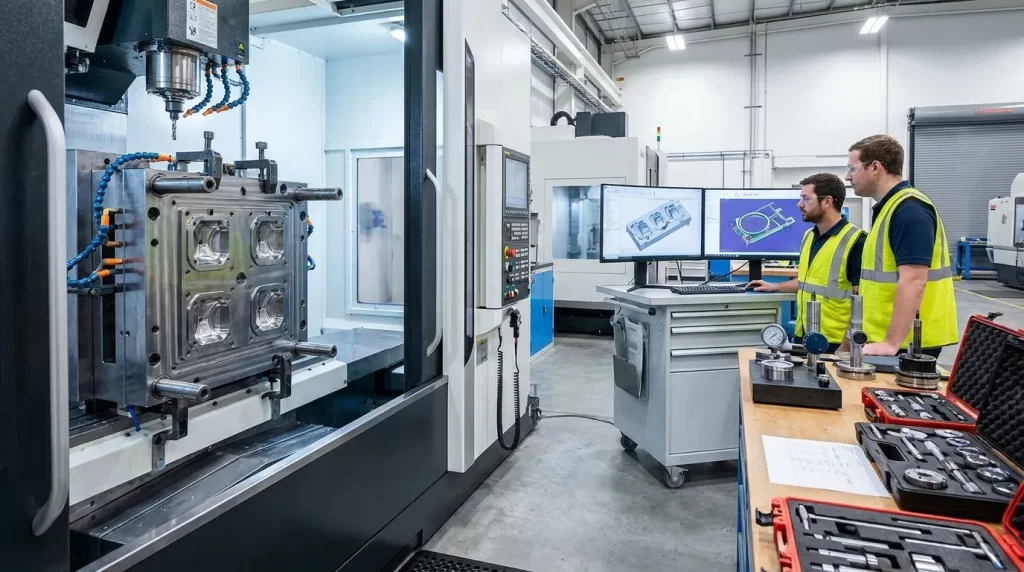
Injection mold cost typically ranges from about $1,000 for simple prototype tooling to more than $100,000 for complex hardened steel production molds. Géométrie des pièces, Nombre de cavités, Tolérance, finish quality, and expected production volume are the main factors driving price.
Simple prototype molds made from aluminum or softer steel often stay in the lower price range. These tools are usually built for product testing, pilot runs, or low-volume production. A basic single-cavity mold for a small plastic part may cost a few thousand dollars if the geometry is simple and tolerances are loose.
Production tooling costs rise quickly when buyers need hardened steel, multiple cavities, Finitions texturées, or tight tolerances. Selon Formlabs, large production molds can exceed six figures depending on complexity and expected output.
| Type de moule | Fourchette de coût typique | Usage courant |
|---|---|---|
| Prototype de moule en aluminium | $1,000 to $5,000 | Tests produits |
| Moule simple en acier | $5,000 to $20,000 | Production faible à moyenne |
| Moule de production multi-cavités | $20,000 to $100,000+ | Production à grande échelle |
If you need a broader overview of tooling structure and mold systems, le Guide du moule d’injection explains the core components and production setup in more detail.
What factors increase injection mold cost the most?
The biggest drivers of injection mold cost are mold complexity, Nombre de cavités, Qualité acier, Exigences de tolérance, and surface finish expectations. Small specification changes can add significant machining, Polissage, and validation time to the project.
The part design has the biggest effect on tooling cost. Côtes profondes, Sous-coupes, Fils, and sharp corners often require additional machining or moving mold components. Complex geometries also increase engineering time and mold testing requirements.
Material selection matters too. Hardened steel molds cost more because they take longer to machine and are built for higher production volumes. Softer steel or aluminum tooling lowers upfront cost but usually has a shorter lifespan.
| Facteur de coût | Scénario à moindre coût | Scénario à coût élevé | Impact sur les coûts |
|---|---|---|---|
| Géométrie des pièces | Forme simple | Sous-découpes et caractéristiques complexes | Haut |
| Type en acier | Aluminium ou acier P20 | Acier H13 trempé | Haut |
| Cavités | Cavité unique | 8 cavités | Haut |
| Finition de surface | Finition standard | Polissage ou texture miroir | Moyen à Élevé |
| Tolérances | Tolérances standard | Tolérances de précision strictes | Haut |
For buyers still refining product geometry, reviewing some basic Bases de la conception du moule before requesting quotes can help avoid unnecessary tooling complexity.
Comment le nombre de cavités modifie le coût des outillages
Multi-cavity molds produce more parts per cycle, but they require more machining precision and balanced flow control. An 8-cavity mold is not simply eight times the price of a single-cavity tool, but it does require more engineering, tooling steel, et travail de validation.
A higher cavity count makes sense when annual production volume is high enough to offset the upfront tooling investment. For smaller production programs, a simpler mold may provide a better return.
Pourquoi des tolérances serrées augmentent le temps d’usinage
Tight tolerances increase machining, Inspection, et exigences de validation. Médical, Automobile, and electronics parts often need higher dimensional accuracy, which increases tooling complexity.
Surface finish can raise cost too. High-gloss cosmetic parts require extensive polishing, while textured finishes may require additional processing steps. Those finishing hours directly affect tooling price.
Is aluminum tooling or steel tooling the better investment?
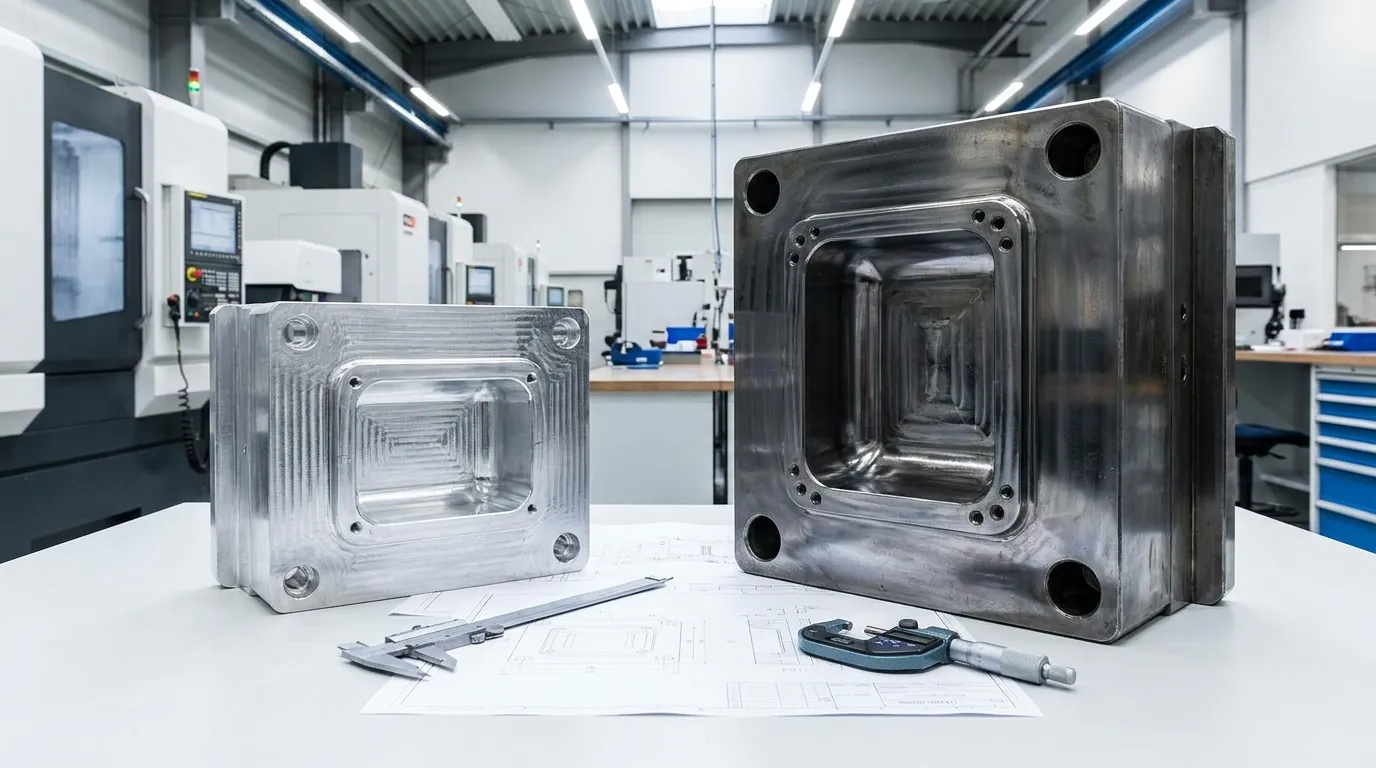
Aluminum tooling reduces upfront cost and shortens lead time for low-volume production, while hardened steel molds cost more initially but provide longer tool life and better stability for high-volume manufacturing.
Aluminum tooling is commonly used for prototype programs and smaller production runs. It machines faster than hardened steel, which lowers tooling cost and reduces lead time. Startups and product development teams often choose aluminum molds when they need fast market testing.
A consumer electronics startup producing 10,000 test units may choose aluminum tooling because the lower upfront investment reduces financial risk during product validation.
Steel molds work better for long production cycles and higher output. They resist wear more effectively and maintain dimensional consistency over time. Automotive and industrial programs usually depend on hardened steel because downtime and maintenance issues become expensive at scale.
Cheap tooling is not always cheaper long term. A lower-cost mold can increase maintenance, Ferraille, and production interruptions if the tool life does not match the expected production volume.
| Type d’outillage | Meilleur pour | Avantages | Compromis |
|---|---|---|---|
| Outillages en aluminium | Séries prototypes et à faible volume | Coût réduit, faster lead times | Durée de vie plus courte |
| Outillages en acier trempé | Production en grande quantité | Durée de vie de l’outil plus longue, better stability | Investissement initial plus élevé |
Les équipes produit en phase de démarrage peuvent réduire les coûts d’outillage inutiles grâce à de meilleures Planification DFM before steel cutting begins.
Why do multi-cavity molds cost more upfront but lower part cost later?
Multi-cavity molds increase tooling cost because they require more machining precision and balanced flow design, but they reduce per-part production cost at higher volumes by producing more parts in each cycle.
A single-cavity mold produces one part per cycle, while a multi-cavity mold produces several parts at once. That increases mold complexity, but it also improves production efficiency.
For low annual volumes, a single-cavity mold is often the smarter choice. Multi-cavity molds are not automatically the best option. If production demand is modest, the added tooling cost may never pay for itself.
Comparaison du ROI à une seule et à cavité multiple
| Volume annuel | Type d’outillage | Coût estimé de l’outil | Production par cycle | Option recommandée |
|---|---|---|---|---|
| 10,000 Parties | Cavité unique | $8,000 | 1 partie | Cavité unique |
| 100,000 Parties | Moule à 4 cavités | $28,000 | 4 parties | Multi-cavités |
| 500,000Parties | Acier trempé à 8 cavités | $70,000+ | 8 parties | Multi-cavités |
An automotive supplier producing more than 500,000 parts annually may justify an 8-cavity hardened steel mold because the lower per-part cost offsets the higher tooling investment over time.
If you want a better understanding of cycle efficiency and production flow, le Procédé de cycle de moulage covers how tooling design affects manufacturing output.
What hidden costs do buyers often miss?
Many buyers focus only on the mold fabrication quote and overlook validation runs, engineering changes, shipping, customs fees, Tarifs, et les coûts de réparation. These hidden expenses can significantly increase total project cost and delay production launch.
Tooling quotes do not always include every project expense. Some suppliers separate mold testing, spare components, shipping, or engineering revisions into additional charges after production starts.
Engineering changes become especially expensive after steel cutting begins. A small design revision that looks minor on a CAD file may require re-machining large mold sections or replacing inserts entirely.
Liste de contrôle cachée des coûts
- Essais et validations de moisissures
- Révisions de conception après le début des outils
- Inserts de rechange et composants de rechange
- Transport maritime et assurance
- Tarifs et frais de dédouanement
- Travaux d’entretien et de réparation
- Opérations secondaires de finition
Risques douaniers et tarifaires en 2025-2026
Overseas tooling can still lower upfront cost, but customs delays and tariff changes create scheduling risk. Selon Moisissure du milieu de l’État et TechNH, manufacturers continue to face supply chain uncertainty tied to international sourcing and trade policy.
A buyer sourcing a mold offshore may save money initially but lose weeks during customs clearance or shipping disruptions. For time-sensitive product launches, that delay can outweigh the original tooling savings.
Les acheteurs qui envisagent un nouveau programme devraient les examiner Directives du projet de moulage before approving international tooling.
Are overseas molds still cheaper in 2025 and 2026?
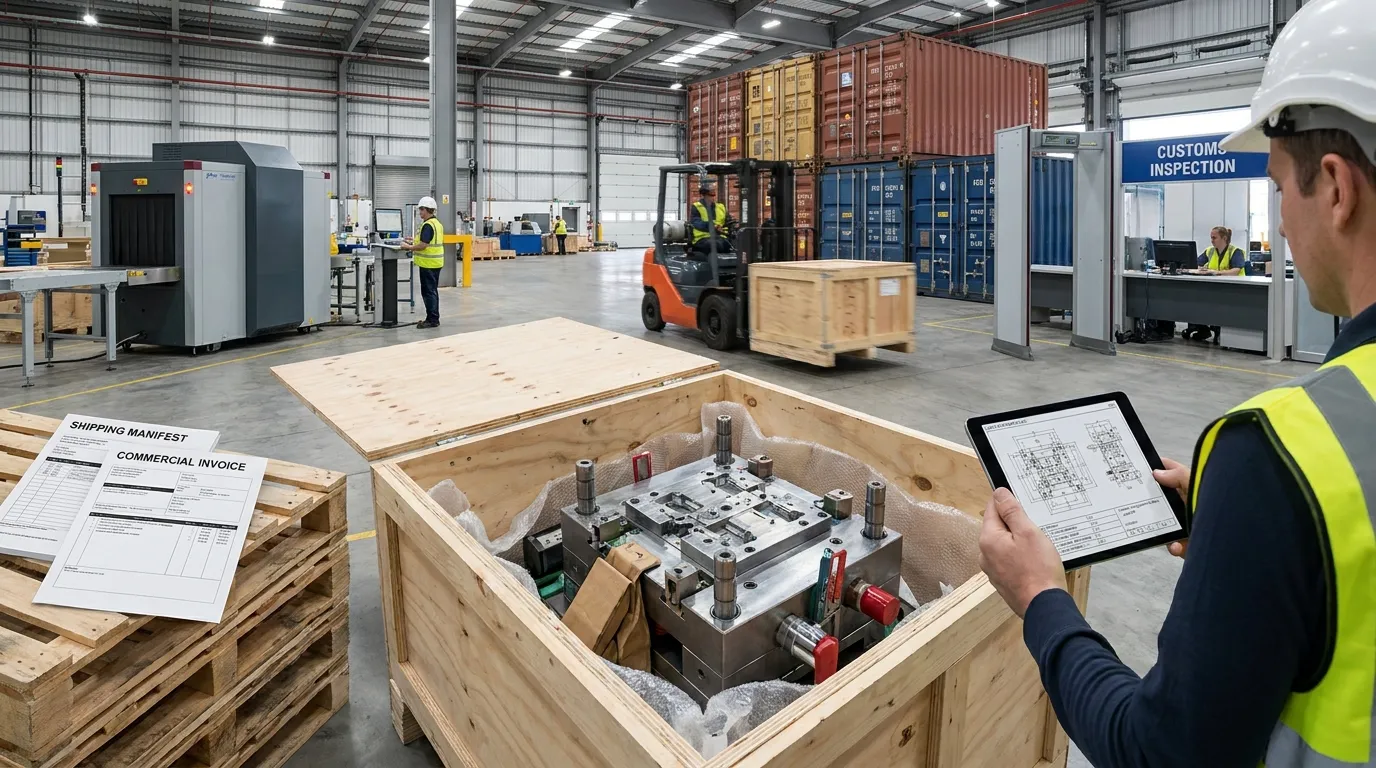
Overseas molds can reduce upfront tooling cost, especially for simple projects, but tariffs, Retards douaniers, shipping costs, communication delays, and revision risks can reduce or eliminate the savings for complex or time-sensitive programs.
Offshore suppliers often offer lower labor and machining costs, which helps reduce the initial mold quote. For straightforward plastic parts with stable designs, overseas tooling can still provide meaningful savings.
The challenge appears when revisions, Réparations, or production changes become necessary. Communication delays and international shipping can slow engineering updates significantly. A domestic supplier may cost more upfront but resolve tooling adjustments much faster.
Tool ownership is another issue buyers sometimes overlook. Selon Harris Sliwoski, tooling contracts should clearly define ownership rights, Responsabilité de maintenance, and transfer conditions.
| Facteur | Outillage à l’étranger | Outillages domestiques |
|---|---|---|
| Coût initial de l’outillage | Généralement plus bas | Généralement plus haut |
| Délai d’expédition | Plus longtemps | Plus court |
| Vitesse de révision | Plus lent | Plus vite |
| Exposition tarifaire | Plus haut | Lower |
| Communication | Variable | Coordination plus facile |
A medical device manufacturer with tight tolerances and frequent engineering updates may benefit more from domestic tooling support, even if the upfront quote is higher.
How should buyers compare injection mold quotes?
Tooling quotes should be compared line by line, not just by total price. Two suppliers may quote similar molds with very different steel grades, Attentes en matière de maintenance, validation processes, or ownership terms.
A low quote sometimes excludes critical services such as sampling, mold testing, or replacement components. Buyers should confirm exactly what is included before approving production.
Questions à poser avant d’approuver les outils.
- What steel grade is included?
- How many production cycles is the tool designed for?
- Are sampling and validation included?
- Who owns the mold after payment?
- What repair or warranty support is included?
- How are engineering changes handled after approval?
Un détail Revue de l’ingénierie des moules before tooling approval can reduce revision costs and clarify supplier expectations early in the project.
Higher-cost tooling is not always overpriced. Dans de nombreux cas, the more expensive quote includes stronger steel, better cooling design, longer tool life, or tighter quality control. Those upgrades can reduce downtime and scrap during long production runs.
What information should you prepare before requesting a mold quote?
Accurate quotes depend on accurate project information. Missing details often lead to revised pricing, longer lead times, or tooling redesigns later.
Suppliers usually need CAD files, estimated production volume, Sélection de la résine, Attentes en matière de tolérance, and cosmetic finish requirements before preparing a reliable quote. Annual volume matters because it affects steel selection, Nombre de cavités, and mold life planning.
Liste de contrôle pour la préparation des devis de moisissure
- Fichiers CAO 3D ou dessins techniques
- Volume annuel de production attendu
- Résine ou choix de matériau
- Exigences de finition de surface
- Attentes en matière de tolérance
- Délai d’exécution cible
- Exigences d’emballage ou d’assemblage
Better upfront documentation usually reduces engineering revisions later. Fort Planification de la fabricabilité can also help identify unnecessary complexity before tooling starts.
Que faire ensuite
The best injection mold decision depends on production volume, Complexité des parties, timeline, et objectifs de fabrication à long terme. A lower upfront quote may work for short pilot runs, while a more durable production tool can reduce cost per part over time.
Before approving any tooling project, compare quotes carefully and confirm what is included. Ask about steel type, Nombre de cavités, Validation, Entretien, et conditions de propriété. If you're evaluating the cost of injection mold programs for a new product, getting the engineering details right early usually saves far more money than choosing the cheapest quote.
Questions fréquemment posées
How much does an injection mold usually cost?
Injection mold cost can range from roughly $1,000 for simple prototype tooling to more than $100,000 for complex multi-cavity hardened steel molds. Final pricing depends on part complexity, Nombre de cavités, Tolérances, et volume de production attendu.
Pourquoi les outils de moulage par injection sont-ils coûteux?
Injection molding tooling is expensive because molds require precision engineering, Usinage, Polissage, et validation. Tight tolerances and complex geometries increase manufacturing time and tooling complexity, which raises the total project cost.
Is aluminum tooling cheaper than steel tooling?
Aluminum tooling is generally cheaper than hardened steel tooling. It also shortens lead times for low-volume production, while steel molds provide longer tool life and better dimensional stability for high-volume manufacturing.
Combien de temps faut-il pour construire un moule d’injection ??
Injection mold manufacturing often takes between 8 and 20 weeks depending on complexity, Exigences de validation, et la charge de travail des fournisseurs. Engineering changes after steel cutting can extend the timeline further.
Are Chinese injection molds cheaper?
Chinese injection molds are often cheaper upfront, especially for simpler projects. Cependant, Tarifs, Retards douaniers, shipping costs, and revision challenges can reduce the overall savings.
What increases injection mold cost the most?
Cavity count, Qualité acier, Complexité des parties, Tolérances strictes, and surface finish requirements are major mold cost drivers. These factors increase machining time, polishing work, validation needs, and long-term maintenance demands.
Partager:


Écrit par Sunshine
Au soleil, Nous sommes un fabricant et fournisseur professionnel de composants de moule de précision, proposant une large gamme de produits pour les applications de stampage et de moulage par injection. Notre objectif principal est le poinçage des coins, Goupilles et manchons d’éjection, et poteaux guides et bagues. Avec un usinage CNC avancé, Contrôle qualité strict, et de fortes capacités de production, Nous garantissons une fiabilité, Pièces de haute précision, ainsi que des composants standards en stock pour un approvisionnement mondial rapide et efficace.
ACTUALITÉS
OBTENIR UN SERVICE
Avec des pièces de qualité adaptées à tous les budgets et un personnel accueillant formé pour rendre votre visite informative et sans tracas.
