



Matrices de poinçon: Types, Matériaux, Tolérances, and Buying Guide
Punching dies are precision tooling systems used for cutting, shaping, and forming sheet materials in industrial manufacturing. Buyers should compare die types, tool steel vs carbide materials, tolerance capability, clearance control, supplier machining standards, and logistics readiness before ordering. The best punching die setup depends on production volume, Dureté du matériau, required accuracy, Attentes en matière de maintenance, and supplier quality control.
Choosing the wrong die setup can increase scrap rates, shorten tool life, and delay production schedules. Buyers also face pressure to balance cost, precision, and lead time, especially when sourcing custom tooling from overseas suppliers. This guide explains how punching dies work, quels matériaux fonctionnent le mieux, how tolerances affect quality, and what to check before placing an order.
What are punching dies and how do they work?
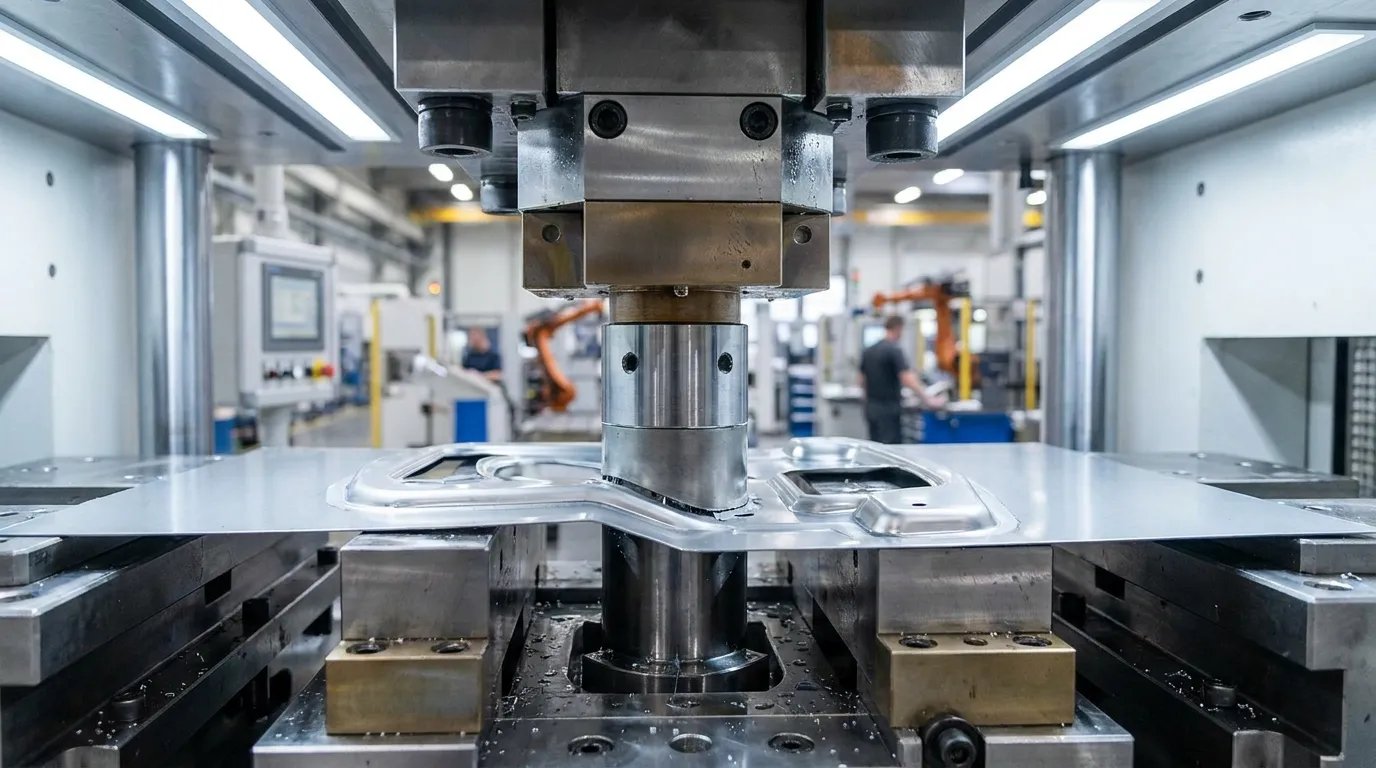
Punching dies are tooling systems used to cut, shape, or form material through controlled force and precision alignment. The punch applies pressure while the die receives and shapes the material, allowing consistent high-volume production in stamping and forming operations.
A punching die system includes two core components: the punch and the die. The punch presses into the material, while the die supports the material and controls the final shape. This process is common in sheet metal stamping, Fabrication de pièces automobiles, Production électronique, and appliance components.
The accuracy of the tooling directly affects edge quality, burr formation, and repeatability. Even small alignment issues can create uneven cuts or excessive wear. That’s why manufacturers focus heavily on machining precision, Traitement thermique, and clearance control during production.
Les acheteurs qui ont besoin d’une vue d’ensemble plus large des systèmes d’outillage industriel peuvent consulter cela Guide des composants du moule Parallèlement aux bases de l’outillage expliquées dans Bases des composants du die.
La terminologie industrielle autour des poinçons et matrices est clairement expliquée par Guide de terminologie punch and die de MISUMI.
Which types of punching dies are used in manufacturing?
Progressive dies support high-volume automated production, while compound dies combine multiple cutting operations in one stroke. The best choice depends on production speed, Complexité, material thickness, et exigeait une précision.
Different punching die designs are built for different manufacturing goals. A low-volume fabrication shop may prioritize lower tooling cost and easier maintenance. A high-speed automotive supplier usually focuses on cycle time, Constance, et résistance à l’usure.
| Le Type | Meilleure utilisation | Principal avantage | Limitation |
|---|---|---|---|
| Die progressif | Production en grande quantité | Traitement automatisé rapide | Complexité d’outillage plus élevée |
| Matrice composée | Opérations multiples de coupe | Haute précision en un seul coup | Moins flexible pour le formage complexe |
| Coin de blanking | Découpe de pièces plates | Production de blanks propres | Capacité de formage limitée |
| Coin de formage | Flexion et façonnage | Les poignées formaient les composants | Plus de variations de réglage |
Matrices de poinçon progressive vs matrices à poinçons composés
Progressive dies move material through several stations in sequence. Each station performs a separate operation, which improves production speed for large manufacturing runs. These dies are common in automotive and electronics manufacturing.
Compound dies perform multiple cutting operations at the same station during one press stroke. They’re often used when part accuracy matters more than production speed. Selon Référence de la matrice composée de MISUMI, compound tooling structures are commonly paired with hardened tool steels such as SKD11.
For buyers comparing broader tooling categories, Les systèmes d’outillages provides additional manufacturing context.
What materials are best for punching dies?
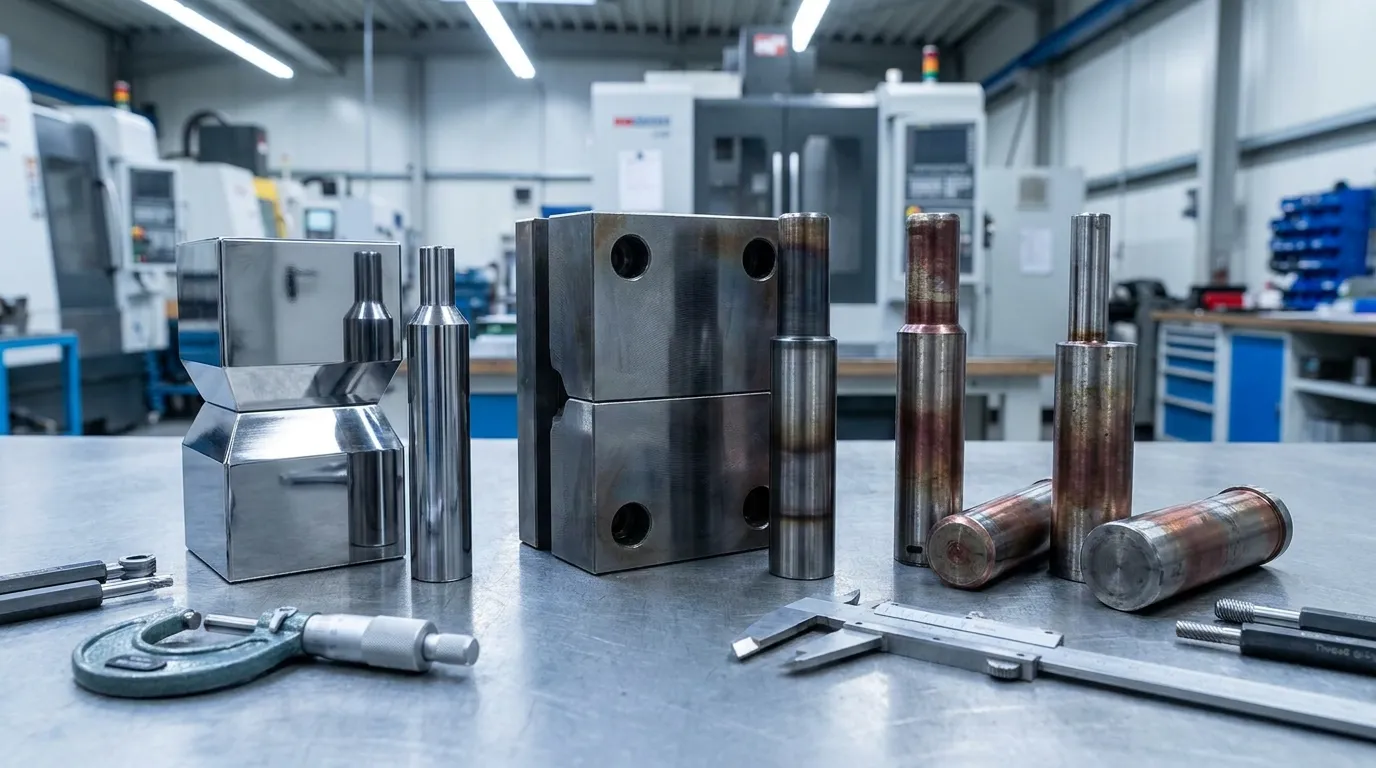
Tool steel punching dies balance durability and cost for many industrial applications, while carbide dies offer superior wear resistance for high-volume production. Material choice should match production cycles, sheet material hardness, et attentes en matière de maintenance.
Tool material affects wear resistance, sharpening frequency, edge quality, and overall operating cost. Buyers should match material selection to actual production conditions instead of assuming the hardest material is always the best choice.
Carbide punching dies are not always the best option. They last longer in high-volume production, but tool steel is often easier and cheaper to maintain for shorter production runs or moderate workloads.
Table de sélection des matériaux des coins de poinçage
| Matériel | Résistance à l’usure | Niveau de coût | Meilleur volume de production | Fréquence de maintenance |
|---|---|---|---|---|
| Acier à outils D2 | Moyen-Haut | Moyen | Séries de volume moyen | Modéré |
| SKD11 | Haut | Moyen-Haut | Estampage de précision | Modéré |
| Carbe | Très haut | Haut | Production en grande quantité | Low |
| Acier à grande vitesse | Moyen | Moyen | Usage industriel général | Modéré |
A factory producing thin stainless steel brackets for automotive use may benefit from carbide tooling because downtime costs are high. In contrast, a smaller fabrication company producing limited batches may save money with tool steel dies that are easier to sharpen and replace.
Quand le carbure vaut le coût plus élevé
Carbide becomes more practical when production volumes are high and materials are abrasive. It performs well with stainless steel, electrical steel, and other harder materials that increase wear rates.
Extremely tight tolerance claims are not automatically better. Over-specifying tolerances can raise tooling costs without improving production quality. Buyers should request tolerances that match the actual application and production environment.
Les fabricants comparant les matériaux et composants des outillages peuvent également examiner Matériaux d’outillage de précision for additional component references.
Why do punch and die tolerances matter?
Punch and die tolerances directly affect cut quality, burr formation, tool wear, et la cohérence de la production. Proper clearance helps maintain cleaner edges and longer tooling life while reducing scrap and maintenance costs.
Tolerance control determines how accurately the punch and die interact during production. Poor clearance settings can create rough edges, excessive burrs, or premature chipping. Au fil du temps, these issues increase scrap rates and maintenance costs.
Punch and die clearance refers to the gap between the cutting edges during operation. Selon Guide de dégagement de MISUMI, proper clearance improves cutting performance and extends tooling life.
What is punch and die clearance?
Clearance settings vary based on material thickness and hardness. Thin aluminum sheets need different clearance than thick stainless steel plates. Buyers should confirm that suppliers understand the target material before approving production drawings.
A practical example is burr reduction in thin sheet production. One manufacturer reduced secondary finishing work after adjusting clearance for thinner stainless steel stock. Cleaner edges reduced polishing time and improved consistency across production batches.
Liste de contrôle de tolérance et de qualité
- Confirmez l’épaisseur du matériau avant de définir le jeu
- Ajuster les niveaux de tolérance aux besoins réels de l’application
- Vérifier la capacité d’usinage EDM et CNC
- Demander des rapports d’inspection pour les dimensions critiques
- Examiner les procédures d’aiguisage et d’entretien
Maintenance planning also matters because worn tooling can slowly change clearance values over time. Buyers sourcing long-term replacement components can review Pièces de rechange pour outillages for ongoing tooling support.
How do you choose the right punching die supplier?
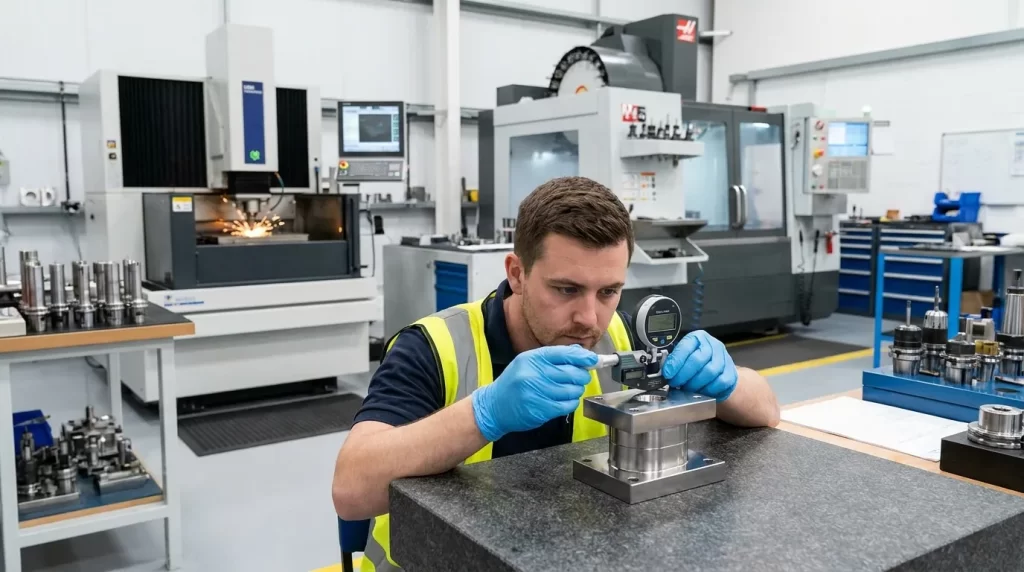
A reliable punching die supplier should provide verified material specifications, machining capabilities, tolerance controls, and quality inspection procedures. Buyers should also confirm lead times, production capacity, and experience with similar applications.
Supplier selection affects more than price. Weak machining standards or inconsistent inspection procedures can increase scrap, Temps morts, and replacement costs long after delivery.
The cheapest overseas punching die supplier can create higher long-term costs if documentation, clearance control, or quality inspection standards are inconsistent. Buyers should compare supplier capability, not just quotation pricing.
Liste de contrôle pour l’évaluation du fournisseur de matrices de poinçage
| Zone d’évaluation | Que confirmer |
|---|---|
| Capacité CNC | Capacité d’usinage de précision |
| Capacité de l’EDM filaire | Précision de la coupe fine |
| Certification des matériaux | Catégories d’acier ou de carbure vérifiées |
| Documentation du contrôle qualité | Rapports d’inspection et tolérances |
| Fiabilité des délais d’exécution | Calendrier réaliste de la production |
| Soutien à l’exportation | Coordination de l’emballage et de l’expédition |
A strong supplier should also understand the buyer’s industry requirements. An automotive stamping supplier may need different tolerances than an appliance manufacturer or electronics producer.
If you’re evaluating broader tooling manufacturing experience, Expertise en fabrication de matrices provides additional context about industrial die production capabilities.
What should buyers include in a punching die RFQ?
A detailed RFQ helps suppliers quote accurately and reduces production misunderstandings. Missing technical details often lead to delayed revisions, incorrect tolerances, or tooling redesigns after production begins.
An effective punching die RFQ should include:
- Dessins CAD ou fichiers 3D
- Spécifications des matériaux
- Tolérances requises
- Estimations du volume de production
- Attentes pour la finition de surface
- Délai d’exécution cible
- Pressez les informations sur la machine si c’est pertinent
A common sourcing mistake happens when buyers provide drawings without tolerance details. One supplier may quote for standard machining tolerance, while another assumes ultra-precision requirements. That difference can change pricing and lead time significantly.
For projects involving custom tooling configurations, Solutions de puces personnalisées can help buyers compare available options before requesting quotations.
How can buyers reduce customs and shipping delays for punching dies?
Codes HS incorrects, incomplete invoices, and missing compliance documents are common causes of customs delays for industrial tooling shipments. Buyers can reduce delays by confirming classification accuracy and documentation requirements before shipment.
International tooling shipments often move through multiple customs checks before delivery. Even accurate tooling production can become a problem if shipping paperwork is incomplete or incorrectly classified.
Selon Référence du code HS de FreightAmigo, industrial tooling classifications must match the actual product category and intended use. Documentation errors are also identified as a common cause of customs delays in Guide des délais douaniers d’EximAgent.
Liste de contrôle pour la prévention des retards douaniers
- Vérifier la classification du code HS avant l’expédition
- Utilisez des descriptions détaillées des produits sur les factures
- Inclure la documentation du pays d’origine
- Confirmez que l’emballage correspond aux documents d’expédition
- Examiner les exigences d’importation avec les partenaires de transport
- Conservez les registres de communication avec les fournisseurs et les douanes
One imported tooling shipment experienced delays because the invoice described the product only as “metal tooling.” Customs officers requested additional classification details, which delayed delivery and production scheduling. A more detailed invoice could have prevented the issue.
What maintenance practices extend punching die lifespan?
Regular maintenance reduces wear, Améliore la régularité, and protects tooling accuracy over time. Even high-quality dies lose performance when sharpening schedules and inspections are ignored.
A preventive maintenance approach usually costs less than replacing damaged tooling unexpectedly. Buyers should confirm that maintenance procedures are realistic for their production environment before selecting tooling materials.
Liste de contrôle pour l’entretien des coins de poinçage
- Inspectez régulièrement les arêtes de coupe
- Surveillez la formation des meules pendant la production
- Suivez les intervalles d’aiguisage programmés
- Store tooling in dry, protected conditions
- Vérifiez l’alignement et le dégagement pendant la maintenance
- Remplacez rapidement les composants de guidage usés
A small production facility using tool steel dies may sharpen tooling more often but spend less on replacement costs overall. High-volume manufacturers often accept higher carbide tooling costs because fewer production stoppages offset the investment.
Les fabricants planifiant des plannings de maintenance à long terme peuvent explorer Pièces d’entretien des outillages for replacement component support.
Réussir la prochaine étape
The best punching dies are the ones that match your production reality. Material hardness, Volume de production, Exigences de tolérance, and supplier capability all affect long-term performance and operating cost.
Before placing an order, confirm machining standards, Procédures d’inspection, material certification, and shipping documentation requirements. A lower upfront price does not always mean lower production cost over time.
If your team is comparing broader tooling systems or manufacturing applications, reviewing an Applications dans les moules d’injection resource can also help connect punching die selection with larger production planning decisions.
Questions fréquemment posées
Quelle est la différence entre un poinçon et un dé?
A punch applies force while the die shapes and supports the material. Both components work together to create accurate cuts, holes, or formed shapes during stamping and punching operations.
What materials are commonly used for punching dies?
Tool steel and carbide are the most common punching die materials. Tool steel balances durability and cost, while carbide performs better in high-volume or high-wear manufacturing environments.
What is punch and die clearance?
Punch and die clearance is the controlled gap between cutting components. Proper clearance improves edge quality, reduces burr formation, and helps extend tooling lifespan during production.
Which punching die type is best for high-volume production?
Progressive dies are widely used for high-volume production. They perform multiple operations in sequence, which improves speed, Constance, and automation efficiency in large manufacturing runs.
What causes punching dies to wear out quickly?
Incorrect clearance and poor maintenance are major causes of punching die wear. Excessive production load, improper material selection, and delayed sharpening schedules can also shorten tooling lifespan.
What documents help avoid customs delays for industrial tooling?
Accurate shipping and classification documents help reduce customs delays. Commercial invoices, HS codes, and origin documentation should all match the actual tooling being imported.
Partager:


Écrit par Sunshine
Au soleil, Nous sommes un fabricant et fournisseur professionnel de composants de moule de précision, proposant une large gamme de produits pour les applications de stampage et de moulage par injection. Notre objectif principal est le poinçage des coins, Goupilles et manchons d’éjection, et poteaux guides et bagues. Avec un usinage CNC avancé, Contrôle qualité strict, et de fortes capacités de production, Nous garantissons une fiabilité, Pièces de haute précision, ainsi que des composants standards en stock pour un approvisionnement mondial rapide et efficace.
ACTUALITÉS
OBTENIR UN SERVICE
Avec des pièces de qualité adaptées à tous les budgets et un personnel accueillant formé pour rendre votre visite informative et sans tracas.
