



Die Components Guide: Coups de poing, Épingles, Silents, and Wear Parts
TL;DR
Die components are the working parts inside a stamping die that control cutting, Alignement, guiding, stripping, et résistance à l’usure. Common die components include punches, die pins, Poteaux guides, Silents, wear plates, and stripper systems. Choosing the right materials, Tolérances, and replacement strategy helps reduce downtime, improve stamping accuracy, and extend tool life in high-volume production environments.
Stamping dies depend on precision. A worn punch, loose bushing, or misaligned guide post can quickly affect part quality and production speed. This guide explains the most common die components, what each one does, which parts wear out fastest, and how to avoid common failure problems in real production environments.
What are die components and why do they matter in stamping dies?
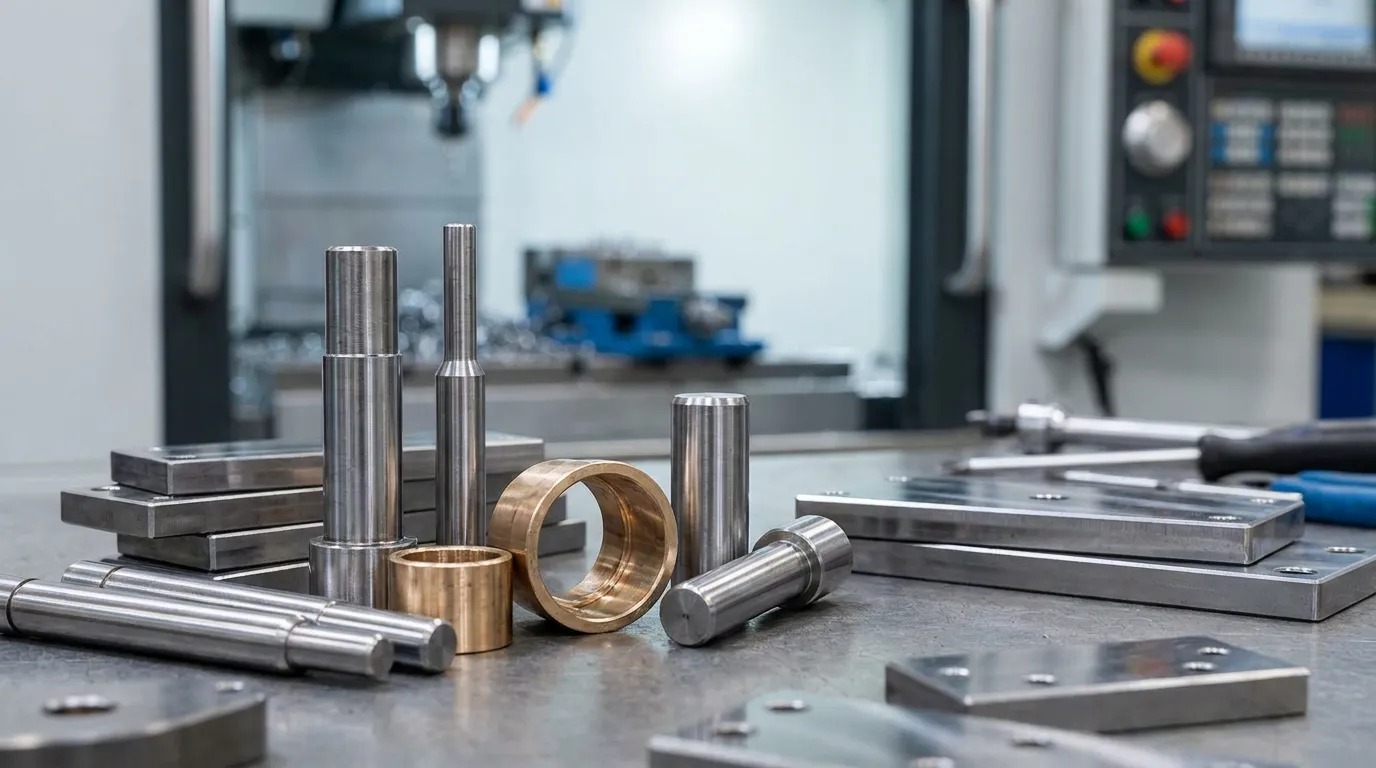
Die components are the functional parts inside a stamping die that control cutting, Alignement, guiding, et résistance à l’usure. Coups de poing, Poteaux guides, Silents, and wear plates work together to maintain precision and repeatability during production.
Every stamping die relies on several interacting parts. Punches shape or cut the material, guide systems maintain alignment, and wear components protect the tooling from friction and repeated impact. If one component drifts out of tolerance, the entire die can lose accuracy.
Manufacturers often group these parts into standard tooling elements and custom-machined elements. Many shops use standardized replacement hardware for faster maintenance cycles. Companies that specialize in Composants de moule de précision typically focus on maintaining tight tolerances and repeatable fit across high-volume production runs.
For a broader look at tooling systems and mold architecture, le Guide complet des composants du moule covers how these systems work together across different manufacturing applications.
| Composant | Fonction principale | Risque d’usure courant |
|---|---|---|
| Coups de poing | Matériau de taille ou de forme | Usure des bords, Ébréchage |
| Poteaux guides | Maintenir l’alignement | Score en surface |
| Silents | Réduire la friction et guider le mouvement | Usure au dégagement |
| Plaques d’usure | Protéger les surfaces de contact | Dégâts par friction |
| Plaques de stripteau | Retirer le matériau du poinçonner | Fatigue du ressort |
Références industrielles de Le Fabricant show that alignment and wear management are among the most important factors in long-term die performance.
Which die components wear out most often?
Coups de poing, Silents guides, wear plates, and stripper components usually wear out first because they experience repeated friction, Impact, and alignment stress. Monitoring these parts early helps prevent expensive die damage and unplanned downtime.
Punch tips face the highest impact load in many stamping operations. Au fil du temps, edges round off or chip, especially when working with abrasive materials or poor lubrication. Bushings and guide elements also wear gradually as the die cycles through repeated motion.
Wear problems rarely stay isolated. A loose guide bushing can increase punch side loading, which then accelerates punch wear and damages surrounding surfaces. Shops that ignore early wear signs often end up replacing multiple components instead of one.
Table de priorité d’usure des composants de la puce
| Composant | Cause principale de l’usure | Symptôme courant d’échec | Fréquence d’inspection | Priorité de remplacement |
|---|---|---|---|---|
| Pointes de poing | Impact répété | Meules sur bords estampés | Quotidien | Haut |
| Silents guides | Frottement et désalignement | Alignement des matrices lâches | Hebdomadaire | Haut |
| Plaques d’usure | Friction par contact de surface | Pointage ou démonstration | Hebdomadaire | Moyen |
| Ressorts de décapage | Fatigue de compression | Démontage incomplet | Mensuelle | Moyen |
| Poteaux guides | Mauvaise lubrification | Vibration ou dérive | Mensuelle | Moyen |
A progressive die line running automotive brackets may replace guide bushings after dimensional drift appears during inspection. Replacing the bushings during scheduled maintenance can prevent a multi-hour production stop later in the week.
For replacement inventory and wear-related tooling support, many manufacturers keep dedicated Pièces de moule de remplacement available to reduce downtime.
Conseils supplémentaires sur l’usure de U-NEED Précision highlights how friction and poor alignment often accelerate wear across several connected parts at the same time.
What does each major die component do?
Different die components perform different mechanical jobs. Some parts cut material, while others guide movement, Force d’absorption, or protect the die from wear. Understanding each role makes troubleshooting much easier during production problems.
Perforations et goupilles de dés
Punches are the cutting or forming elements inside the die. They push through sheet material to create holes, shapes, or bends. Die pins may help position or align material depending on the tooling design.
Repeated regrinding can extend punch life, but it is not always the safest long-term option. Regrinding changes punch geometry over time, which may increase alignment risk in high-precision tooling.
High-volume production lines often prefer standardized punches because replacements are easier to source quickly. Shops looking for consistent replacement tolerances commonly use Pièces de puces de précision to simplify maintenance planning.
Poteaux guides et bagues
Guide posts and bushings control alignment between upper and lower die sections. Even minor clearance changes can affect cutting accuracy and punch wear.
Bushings reduce friction during repeated die movement. Proper lubrication and hardness matching are important because excessive friction quickly damages both surfaces.
Plaques d’usure et systèmes de décapage
Wear plates protect high-contact surfaces from repeated sliding movement. Stripper systems remove material from the punch after each cycle and help maintain stable part release.
Harder materials are not always better for these components. Extremely hard tooling may resist wear longer, but it can also become brittle and chip under high-impact loads.
Matériel de référence tiré de Moeller Punch et Le Fabricant shows how specialty wear and alignment components improve consistency in demanding stamping applications.
How do guide posts and bushings affect die accuracy?
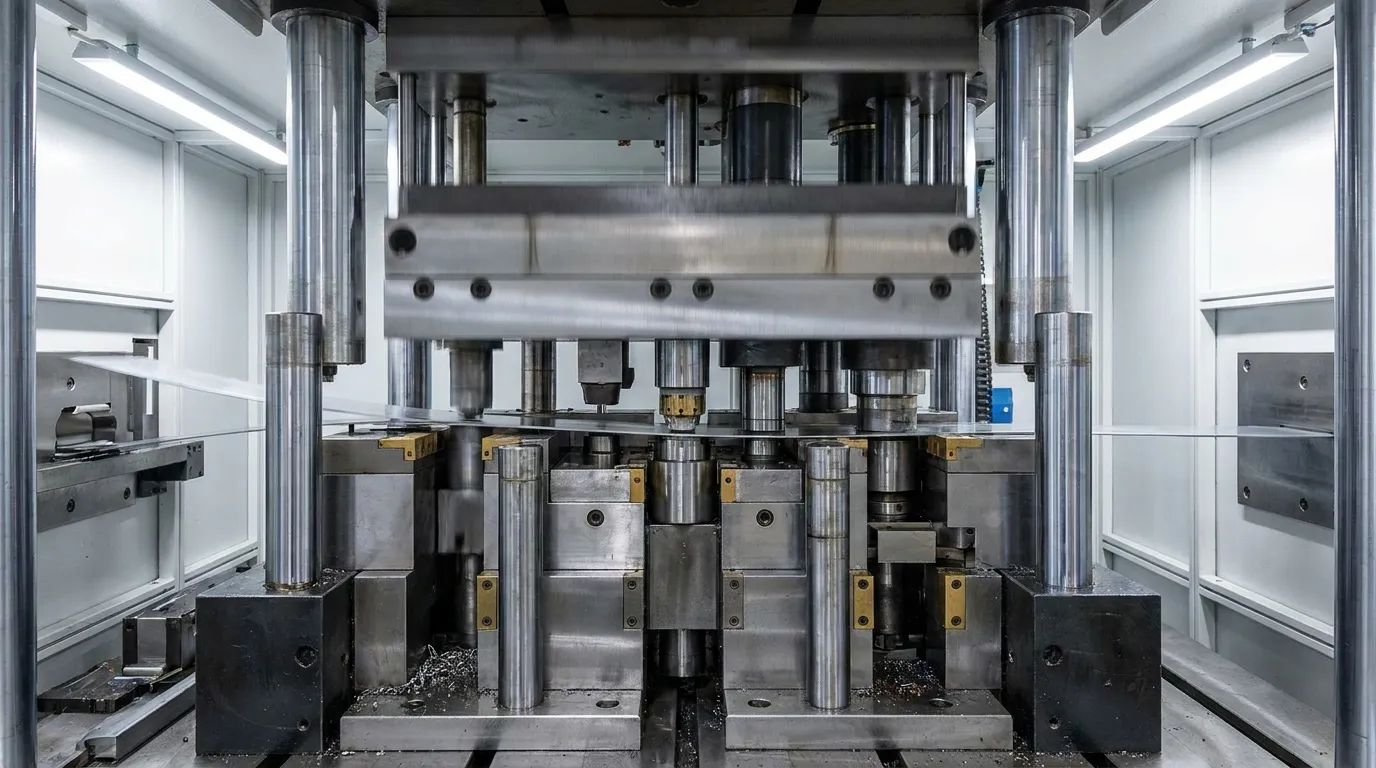
Guide posts and bushings keep upper and lower die sections aligned during every press stroke. Even small alignment errors can increase punch wear, damage cutting edges, and reduce dimensional consistency in stamped parts.
Alignment systems are often overlooked until problems appear on finished parts. En réalité, guide components affect almost every stage of die movement. If bushings wear unevenly, the punch may enter the die block slightly off-center, increasing friction and edge stress.
A medical device tooling project may require custom guide pins to maintain micron-level consistency across thin metal parts. Dans ces cas, standard components may not provide enough positional control for stable production.
Signes courants de problèmes d’alignement
- Usure inégale de la poinçon
- Vibrations accrues
- Formation de meules
- Rayures sur les pièces embouties
- Écaillage prématuré des bords
Standardized alignment hardware is still the best option for many production lines because replacement is simpler and faster. Shops sourcing Silents guides often prioritize repeatable fit and quick inventory access during maintenance shutdowns.
Références à la disposition des composants depuis Technologie Prête show how guide systems support die stability during repetitive press cycles.
Standard vs custom die components: which should you use?
Standard die components reduce lead time and simplify replacement, while custom components solve unique geometry, Dégagement, or production challenges. The best choice depends on tooling complexity, Exigences de tolérance, et fréquence de remplacement.
Standard components work well for many production environments because they are widely available and easier to replace quickly. They also simplify inventory management across multiple tooling systems.
Custom components become more important when the die includes unusual shapes, Tolérances strictes, or difficult forming conditions. Automotive and medical tooling often require custom-machined alignment or wear solutions.
Table de décision standard vs tableau de décision sur composant personnalisé
| Facteur | Composants standards | Composants personnalisés |
|---|---|---|
| Délai d’exécution | Plus vite | Plus longtemps |
| Vitesse de remplacement | Plus facile | Plus lent |
| Coût | Lower upfront | Plus haut en avance |
| Flexibilité des tolérances | Limité | Précision supérieure |
| Meilleur cas d’utilisation | Maintenance à fort volume | Outillage spécialisé |
Standard components are not always the best choice. They work well when tooling geometry follows common industry dimensions, but custom parts are safer when alignment tolerances are unusually tight or clearance requirements vary between stations.
Les fabricants comparant les options d’approvisionnement examinent souvent Composants standard de la puce alongside custom tooling requirements before finalizing a maintenance strategy.
What causes die component failure and misalignment?
Most die component failures come from misalignment, Mauvaise lubrification, excessive side loading, or incorrect material hardness. Small alignment problems often accelerate wear across punches, Silents, and cutting surfaces at the same time.
Many failures begin with small setup issues that gradually worsen during production. A punch operating under side load may still function temporarily, but repeated stress can crack edges or damage bushings over time.
Poor lubrication is another common issue. Friction increases heat buildup, which damages contact surfaces and accelerates scoring. In high-cycle stamping operations, lubrication consistency matters just as much as component hardness.
Causes courantes de défaillance de la puce
- Silents usés
- Dégagement de la matrice inadéquat
- Chargement latéral
- Contamination par des débris
- Traitement thermique incorrect
- Mauvaise lubrification
- Rectification excessive des poinçons
An automotive stamping line may lose two hours of production because of progressive alignment drift caused by worn bushings. Replacing those bushings during preventive maintenance would usually cost far less than emergency downtime and scrap material losses.
A separate issue appears when tooling is hardened too aggressively. Harder materials resist wear longer, but brittle punches are more likely to chip during impact-heavy operations. Material balance matters more than maximum hardness alone.
Les fabricants recherchant des remplacements à haute durabilité comparent souvent différentes Pièces de puce résistantes à l’usure based on operating load and production volume.
Observations supplémentaires de maintenance U-NEED Précision show how lubrication and alignment problems frequently appear together in failed tooling systems.
How should die components be maintained and replaced?
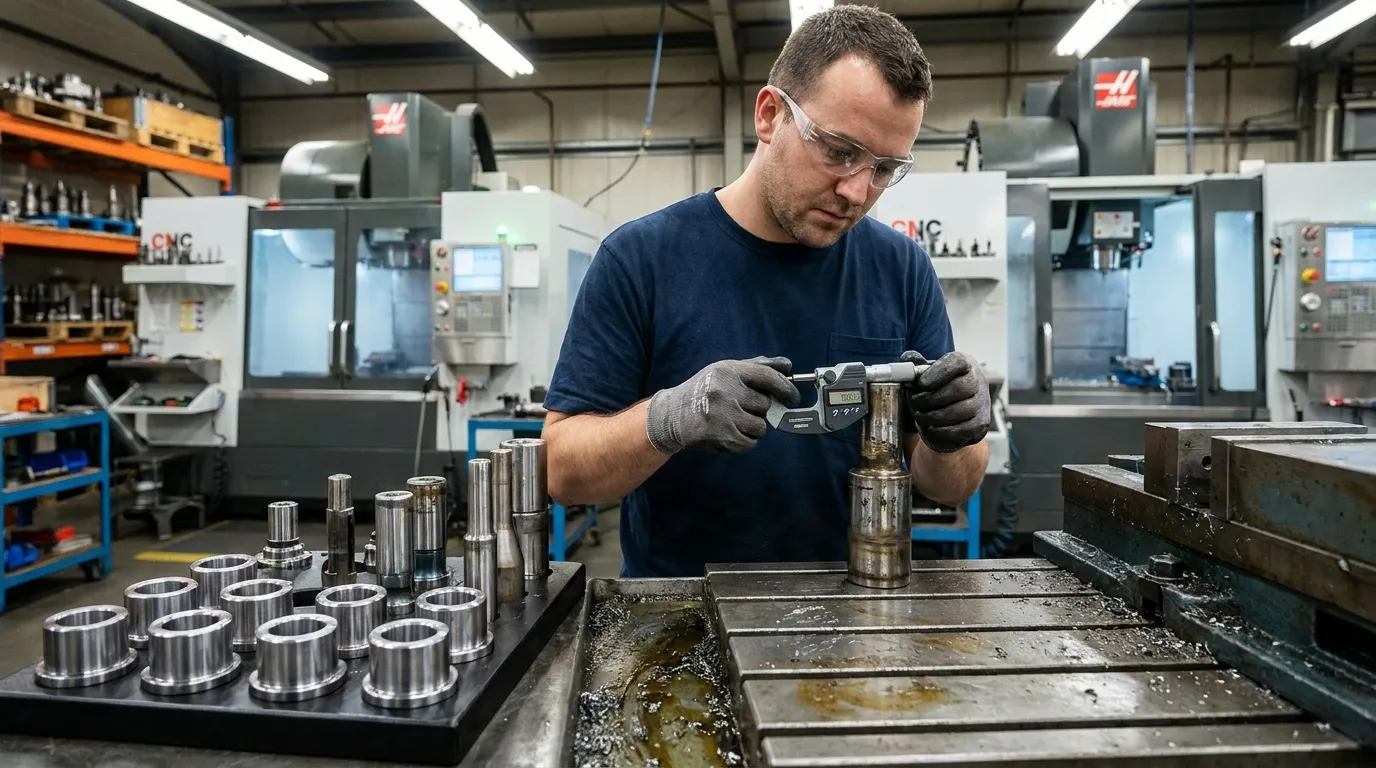
Regular inspection and planned replacement cycles help prevent major die failures. Most shops monitor punches, Silents, and wear surfaces closely because these parts usually fail before larger structural sections.
Maintenance schedules depend on material type, Vitesse de production, and tooling complexity. High-volume progressive dies often require more frequent punch inspections than lower-cycle forming operations.
Liste de contrôle de maintenance de base
- Inspect punch edges for chipping or burr formation.
- Check bushings for excess clearance or scoring.
- Verify lubrication consistency across moving surfaces.
- Monitor stripper spring compression and return movement.
- Remove debris buildup inside die cavities.
- Measure alignment drift during scheduled maintenance.
- Replace high-wear components before adjacent damage appears.
A simple downtime calculation shows why preventive replacement matters. If a press line loses two hours of production during emergency punch failure, labor and production losses can easily exceed the cost of scheduled replacement parts.
Les ateliers gérant des systèmes d’outillages sur mesure s’appuient souvent sur Composants d’outillages personnalisés to maintain consistent tolerances after repeated maintenance cycles.
For readers who want a broader understanding of tooling systems beyond stamping dies, le Guide pour moule d’injection plastique explains how different mold structures support manufacturing accuracy across industries.
Réussir la prochaine étape
Choosing the right die components is about more than replacing worn parts. Stabilité de l’alignement, Sélection des matériaux, Lubrification, and maintenance timing all affect production quality and tool life. A well-maintained stamping die usually costs less over time because it reduces scrap, Temps morts, and emergency repairs.
If your tooling setup includes frequent punch wear, alignment drift, or inconsistent part quality, start by reviewing the wear-priority components first. Standard replacement parts work well in many cases, but complex tooling often benefits from custom-machined solutions built around tighter tolerances and specific production loads.
Questions fréquemment posées
What are the main components of a stamping die?
The main stamping die components include punches, die blocks, Poteaux guides, Silents, stripper plates, wear plates, and springs. Each part supports cutting accuracy, Alignement, or material control during the stamping cycle.
What is the difference between a punch and a die?
A punch is the male component that pushes through material, while the die is the matching female section that receives the punch. Together, they create the required cut or formed shape.
Which die components wear out fastest?
Pointes de poing, Silents guides, wear plates, and stripper components usually wear out first because they face repeated friction and impact. Regular inspection helps prevent expensive die damage and unexpected downtime.
What causes die misalignment?
Die misalignment is commonly caused by worn bushings, poor setup, Chargement latéral, debris buildup, or damaged guide components. Even small alignment errors can reduce part accuracy and increase tool wear.
Are standard die components better than custom parts?
Standard components are usually faster and cheaper to replace, while custom parts are better for unusual tooling designs or tight tolerances. The best choice depends on production requirements and maintenance strategy.
How often should die components be replaced?
Le délai de remplacement dépend du volume de production, Type de matériau, lubrication quality, and tooling setup. High-wear parts should be inspected regularly and replaced before they damage nearby tooling surfaces.
Partager:


Écrit par Sunshine
Au soleil, Nous sommes un fabricant et fournisseur professionnel de composants de moule de précision, proposant une large gamme de produits pour les applications de stampage et de moulage par injection. Notre objectif principal est le poinçage des coins, Goupilles et manchons d’éjection, et poteaux guides et bagues. Avec un usinage CNC avancé, Contrôle qualité strict, et de fortes capacités de production, Nous garantissons une fiabilité, Pièces de haute précision, ainsi que des composants standards en stock pour un approvisionnement mondial rapide et efficace.
ACTUALITÉS
OBTENIR UN SERVICE
Avec des pièces de qualité adaptées à tous les budgets et un personnel accueillant formé pour rendre votre visite informative et sans tracas.
