



Composants de moule de matrice: Guide de sélection pour les outils d’emboutissage durables
Die mold components control stamping accuracy, Stabilité de l’alignement, and tooling lifespan. Choosing the right guide posts, Silents, coups de poing, and wear-resistant materials helps reduce downtime and improve repeatable production. Most early tooling failures come from poor alignment, incorrect material selection, or weak maintenance planning. Standard components work well for many production lines, while custom parts are better for specialized tolerances or high-load applications.
Stamping tools fail faster when components are mismatched to production conditions. A guide system with poor alignment can wear out punches early, while overly hard tooling materials may crack under repeated impact. Buyers need more than a parts catalog. They need a selection framework that balances durability, sourcing speed, Entretien, and repeatable performance.
What are die mold components and why do they affect stamping durability?
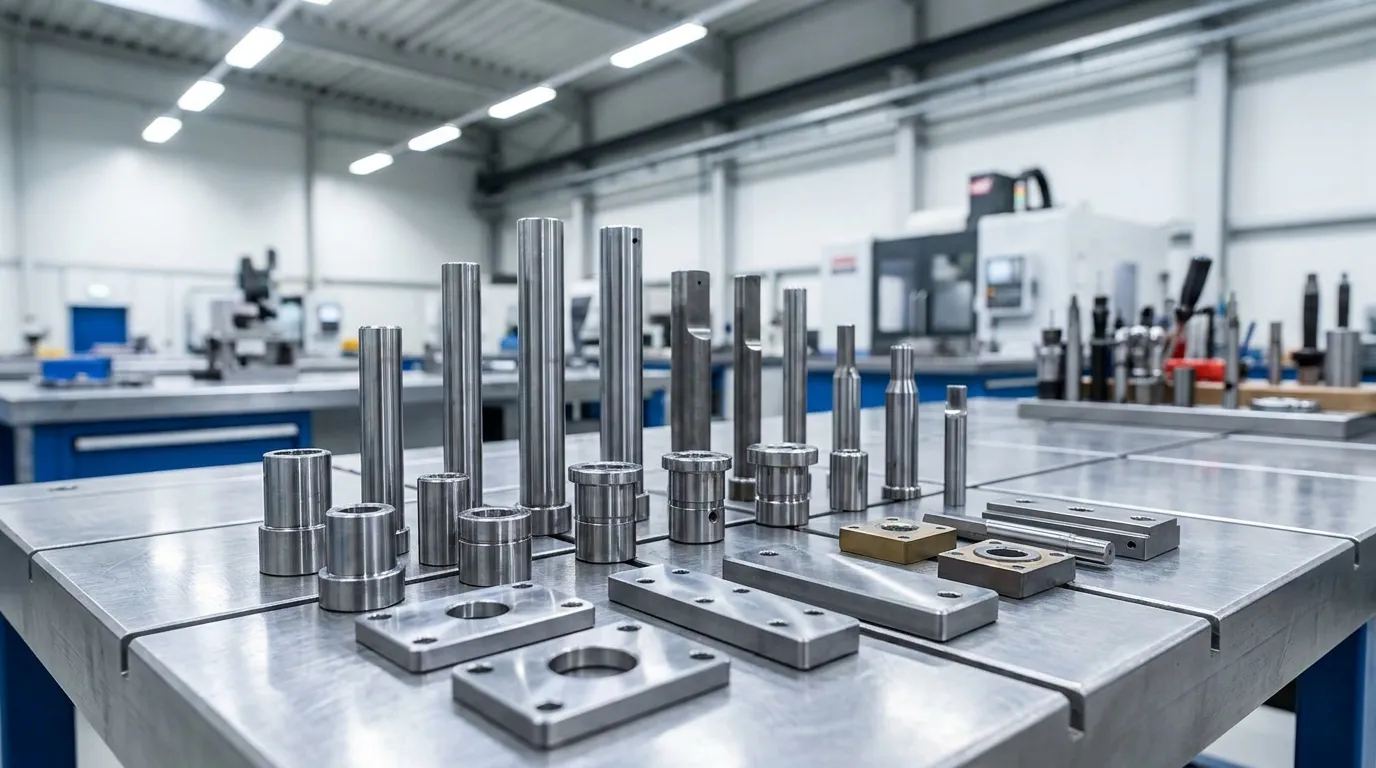
Die mold components directly affect stamping accuracy, Résistance à l’usure, and tooling lifespan. Systèmes de guidage, coups de poing, and bushings must work together to maintain alignment and repeatable production under high-cycle operation.
Die mold components are the precision parts inside a stamping tool that guide movement, control alignment, and shape material during production. Common examples include punches, Ceci, Poteaux guides, Silents, Systèmes d’éjection, Plaques d’usure, and sleeves.
When one component wears unevenly, the entire tooling system can drift out of tolerance. That creates burrs, Variation dimensionnelle, and unnecessary downtime. In high-cycle stamping lines, even small alignment errors become expensive over time.
Many buyers focus only on hardness or material grade. That approach misses a bigger issue. Long-term stamping performance depends on how well components work together under load, Vitesse, et impact répété.
| Composant | Fonction principale | Impact de durabilité |
|---|---|---|
| Coups de poing | Forme ou matériau coupé | Exposition à une forte usure |
| Poteaux guides | Maintenir l’alignement | Éviter une usure inégale |
| Silents | Réduire la friction | Améliorer la stabilité des mouvements |
| Plaques d’usure | Protection des surfaces | Prolongation de la durée de vie de l’outil |
| Systèmes d’éjection | Retirer les pièces embouties | Réduire les interruptions de production |
For a broader overview of tooling structures and systems, Regarde ça Guide des composants du moule et explorer des informations connexes Systèmes de composants de la puce.
Which die mold components have the biggest impact on tool life?
Poteaux guides, Silents, coups de poing, and wear-resistant inserts typically determine tool lifespan more than secondary accessories. Poor alignment or inadequate hardness increases friction, Dérive dimensionnelle, and premature failure during repeated stamping cycles.
Guide systems usually have the biggest effect on long-term durability because they control movement accuracy. If alignment drifts even slightly, punches and dies begin wearing unevenly. That shortens service life and increases replacement frequency.
Punch material also matters, especially in high-volume stamping. Harder materials improve wear resistance, but higher hardness is not always better. Extremely hard punches can become brittle under repeated impact loads and may crack earlier than tougher materials with lower hardness.
A high-cycle automotive stamping line provides a good example. One manufacturer replaced guide bushings every two months because alignment tolerance was too loose. After tightening guide fit tolerances and improving lubrication control, the replacement cycle extended significantly without changing punch material.
| Composant | Cause courante de défaillance | Effet sur la durée de vie des outils |
|---|---|---|
| Poteaux guides | Désalignement | Usure inégale |
| Silents | Friction et contamination | Précision réduite |
| Coups de poing | Fragilité ou usure | Craquage et temps d’arrêt |
| Inserts d’usure | Fatigue de surface | Intervalles d’entretien plus courts |
| Sources | Fatigue de compression | Fonctionnement incohérent |
Les acheteurs comparant tolérances et résistance à l’usure devraient également examiner ces questions Composants de moule de précision for tighter production requirements.
How do you choose guide posts and bushings for repeatable alignment?
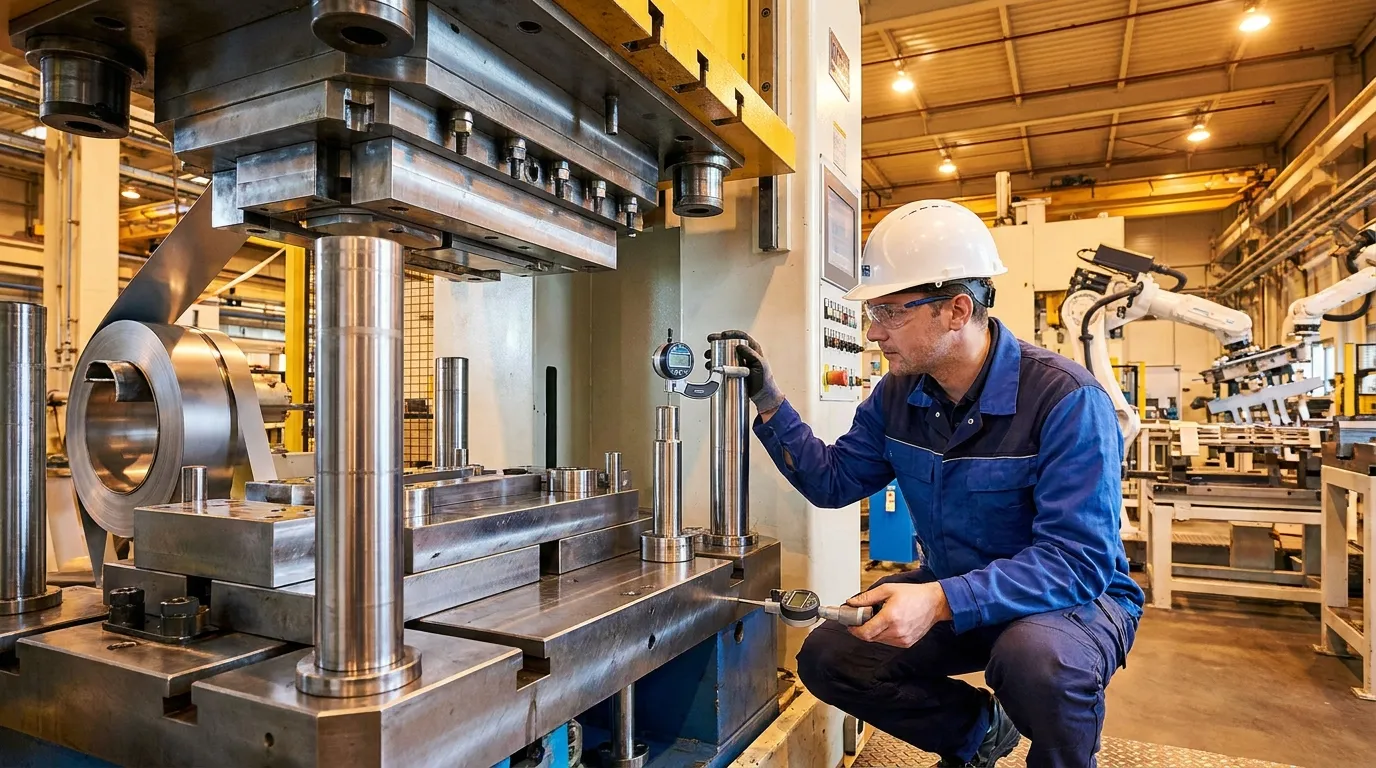
Guide posts and bushings should match production load, stamping speed, et exigences de tolérance. Tight alignment control reduces uneven wear, protects punches, and improves repeatable part accuracy over long production runs.
Guide systems should be selected based on operating conditions, not just catalog dimensions. High-speed stamping lines usually require tighter fit tolerances and smoother surface finishes to reduce friction and vibration.
Poor alignment creates a chain reaction. Bushings wear faster, punches shift slightly off-center, and stamped parts lose dimensional consistency. In severe cases, the die set can crack from uneven stress distribution.
Dégagement et tolérance d’ajustement
Tighter clearances improve alignment accuracy, but excessive tightness can increase friction and lubrication problems. The best balance depends on cycle speed, stamping load, and contamination exposure.
Standard guide systems often perform well for medium-volume production because replacement parts are easier to source. Fully custom systems are usually reserved for specialized tolerances or unusual tooling geometry.
| Conditions de production | Approche recommandée |
|---|---|
| Estampage à volume moyen | Systèmes de guidage standard |
| Production à grande vitesse | Silents d’ajustement précis |
| Charges d’impact lourdes | Matériaux guides plus résistants |
| Environnement contaminé | Conception de lubrification améliorée |
Choix des matériaux et des finitions de surface
Surface finish affects wear more than many buyers expect. Rough surfaces increase friction and accelerate bushing wear, especially during long production runs.
A manufacturer that switched from fully custom guide systems to stocked standard assemblies reduced downtime because replacement inventory became easier to maintain. Faster replacement availability often matters more operationally than small precision gains.
For commonly stocked assemblies and replacement availability, Examinez ces Pièces du système de guidage.
What materials work best for high-cycle stamping applications?
The best die mold component material depends on stamping force, Volume de production, et conditions d’usure. Harder materials improve wear resistance, but excessive hardness can increase brittleness and shorten component life under impact loads.
Tool steel remains the most common material for punches, Ceci, and wear components because it balances hardness, Robustesse, et stabilité de l’usinage. Heat treatment also plays a major role. Two components made from the same steel can perform very differently after processing.
Many buyers assume maximum hardness guarantees maximum durability. Ce n’est pas toujours le cas. A stamping operation using extremely hard punch materials experienced repeated cracking because the tooling absorbed heavy impact loads during each cycle.
Table de décision de sélection des composants de la puce
| Production Volume | Charge de mise à pied | Focus sur le matériel recommandé | Standard ou personnalisé |
|---|---|---|---|
| Faible volume | Lumière | Acier à outils général | Standard |
| Volume moyen | Modéré | Acier d’usure traité thermiquement | Standard |
| Volume élevé | Lourd | Forte résistance à l’usure avec ténacité | Personnalisé quand nécessaire |
| Estampage de précision | Modéré | Acier à outils à tolérance serrée | Coutumes |
| Emboutissage de matériaux abrasifs | Lourd | Acier renforcé à l’usure | Coutumes |
Heat treatment quality matters as much as material grade. Poor heat treatment creates inconsistent hardness, Fatigue de surface, and uneven wear patterns.
Replacement planning also affects material decisions. Some manufacturers choose slightly lower hardness materials because they are easier to machine, faster to replace, and less prone to cracking.
Les acheteurs qui planifient l’entretien de l’inventaire peuvent comparer les disponibilités Pièces de moule de remplacement Avant de finaliser les spécifications.
When should you use standard components instead of custom parts?
Standard die mold components reduce sourcing time and replacement delays for most applications. Custom parts become necessary when tolerance, Géométrie, or production load requirements exceed standard component limitations.
Standard components work well in many stamping operations because they simplify sourcing, Entretien, et planification des stocks. Replacement parts are easier to stock, and production downtime is usually shorter when failures occur.
Custom components make sense when production requirements exceed standard tolerances or when tooling geometry is highly specialized. Precision electronics stamping and complex automotive applications often fall into this category.
Custom die components are not automatically higher quality. Standard parts are often the safer operational choice when replacement speed matters more than extreme precision.
Tableau de sélection standard vs personnalisé
| Situation | Meilleur choix | Raison principale |
|---|---|---|
| Estampage général | Standard | Approvisionnement plus rapide |
| Remplacements fréquents | Standard | Planification des inventaires plus simple |
| Exigences extrêmes de tolérance | Coutumes | Contrôle de précision |
| Géométrie spécialisée | Coutumes | Mieux ajusté |
| Production mondiale multi-sites | Standard | Disponibilité régulière |
Lead time is another factor. According to manufacturing timeline analysis from Ulitech Engineering, tooling revisions and component delays often extend production schedules more than buyers initially expect.
For common stocked options, compare available Pièces de moule standard.
Why do die mold components fail earlier than expected?
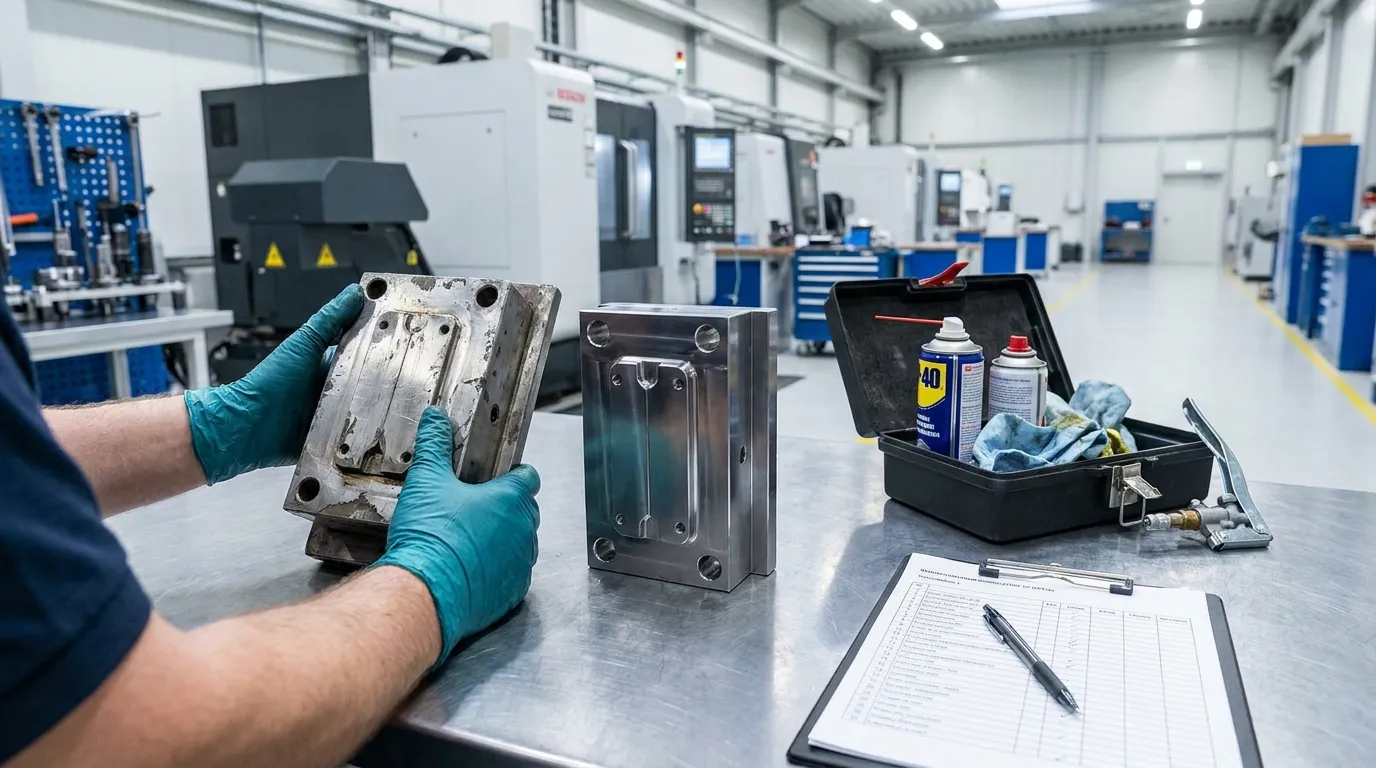
Most premature die component failures are caused by alignment problems, Lubrifiant insuffisant, Contamination, or incorrect material selection. Preventive maintenance and proper fit tolerance usually extend tool life more effectively than simply choosing harder materials.
Misalignment is one of the biggest causes of premature wear. Even small guide system movement creates uneven loading across punches and bushings. Au fil du temps, that increases friction and dimensional drift.
Contamination is another common issue. Metal particles and debris can damage bushings quickly if lubrication systems are inconsistent or poorly maintained.
Liste de contrôle du dépannage en cas de défaillance prématurée
| Symptôme de défaillance | Cause probable | Étape d’inspection | Solution recommandée |
|---|---|---|---|
| Usure inégale de la poinçon | Désalignement | Vérification de la garde des guides | Ajustez la tolérance d’ajustement |
| Écorchage des bagues | Mauvaise lubrification | Inspectez le flux de lubrification | Améliorer le planning de lubrification |
| Craquement de poing | Dureté excessive | Spécifications du matériel de révision | Augmenter l’équilibre de ténacité |
| Fatigue de surface | Contamination | Inspectez l’exposition aux débris | Améliorez la routine de nettoyage |
| Dérive dimensionnelle | Système de guidage porté | Mesure de la précision de l’alignement | Remplacer les guides usés |
Many tooling failures blamed on material quality actually start with maintenance problems. Regular inspection schedules usually prevent larger failures before production stops.
A preventive maintenance program that checks alignment, Lubrification, and surface wear at fixed intervals often reduces replacement costs more effectively than upgrading every component material.
Les opérations avec des tolérances strictes peuvent les examiner Pièces d’outillage de haute précision for improved alignment consistency.
How should buyers evaluate suppliers and lead times?
Supplier evaluation should focus on delivery consistency, inventory support, Contrôle qualité, et disponibilité de remplacement. A low component price means little if replacement delays stop production for weeks.
Global buyers also need to consider customs processing and shipping documentation. Import delays caused by incomplete paperwork can extend lead times significantly. Recent customs guidance from Coutumes du Bangladesh et analyse logistique de EximAgent AI show that documentation errors remain a major cause of shipment delays.
Questions à poser aux fournisseurs
- Do they stock replacement inventory locally?
- Can they maintain consistent tolerances across batches?
- What is the average replacement lead time?
- Do they provide inspection reports?
- How do they handle urgent replacement requests?
One manufacturer experienced several weeks of downtime because replacement guide components were unavailable during a production spike. After switching to a supplier with stocked standard assemblies, the company reduced replacement delays and stabilized scheduling.
Supplier quality control also matters during production launch. Manufacturing analysis from HH Molds Inc. highlights how inspection planning affects tooling consistency and long-term production stability.
For broader sourcing considerations and tooling categories, Révisez ceci Approvisionnement en composants outillés.
What maintenance practices extend die mold component lifespan?
Regular inspection, Contrôle de la lubrification, and planned replacement schedules extend component lifespan more effectively than reactive repairs. Most long-term tooling problems develop gradually before major failures appear.
Maintenance teams should track wear patterns instead of waiting for visible damage. Small alignment shifts can create uneven punch loading long before production defects become obvious.
Liste de contrôle recommandée pour l’entretien
- Inspecter l’alignement des guides à intervalles programmés
- Nettoyez régulièrement les débris des surfaces mobiles
- Surveillez la consistance de la lubrification
- Remplacez les bagues usées avant que la dérive de tolérance ne s’étende
- Gardez les composants de rechange en stock disponibles
- Enregistrer les habitudes de port récurrentes pour les ajustements futurs
A scheduled inspection program helped one stamping operation reduce premature punch wear after identifying uneven guide loading early. The company avoided a larger die failure because technicians corrected alignment before cracks developed.
Maintenir une sauvegarde Inventaire des outillages de rechange also shortens recovery time when failures happen unexpectedly.
Réussir la prochaine étape
Choosing the right die mold components is about balancing precision, Durabilité, sourcing speed, and maintenance practicality. Buyers who focus only on hardness or upfront cost often miss the operational factors that affect long-term tooling performance.
Start by evaluating alignment stability, Volume de production, replacement lead times, and maintenance requirements together. Standard components may provide the best long-term value for many stamping lines, especially when replacement speed matters. For tighter tolerances or specialized production demands, custom tooling can still be the better fit when managed carefully.
Questions fréquemment posées
What are die mold components?
Die mold components are the precision parts used inside stamping tools to guide movement, shape material, and maintain alignment during production. Common examples include punches, Poteaux guides, Silents, Systèmes d’éjection, and wear-resistant inserts.
What components affect stamping accuracy the most?
Poteaux guides, Silents, and punches have the biggest effect on stamping accuracy because they control alignment and dimensional consistency. Worn or poorly matched components often cause uneven wear, meules, et dérive dimensionnelle.
What material is best for stamping dies?
The best material depends on production volume, Charge d’impact, et conditions d’usure. Tool steels with proper heat treatment usually balance hardness, Robustesse, and wear resistance better than overly hardened materials.
When should custom die components be used?
Custom die components are best when standard parts cannot meet tolerance, Géométrie, or production-load requirements. They are commonly used in high-precision or specialized stamping applications.
Why do die components wear out early?
Most premature wear comes from misalignment, Mauvaise lubrification, Contamination, or incorrect material selection. Preventive maintenance and accurate fit tolerances usually improve lifespan more than increasing hardness alone.
How do you improve mold life?
Mold life improves when components are properly aligned, regularly lubricated, and inspected before excessive wear develops. Scheduled replacement planning also reduces sudden production failures.
Partager:


Écrit par Sunshine
Au soleil, Nous sommes un fabricant et fournisseur professionnel de composants de moule de précision, proposant une large gamme de produits pour les applications de stampage et de moulage par injection. Notre objectif principal est le poinçage des coins, Goupilles et manchons d’éjection, et poteaux guides et bagues. Avec un usinage CNC avancé, Contrôle qualité strict, et de fortes capacités de production, Nous garantissons une fiabilité, Pièces de haute précision, ainsi que des composants standards en stock pour un approvisionnement mondial rapide et efficace.
ACTUALITÉS
OBTENIR UN SERVICE
Avec des pièces de qualité adaptées à tous les budgets et un personnel accueillant formé pour rendre votre visite informative et sans tracas.
