



Guide des goupilles éjecteurs: Matériaux, Tailles, Revêtements, et conseils d’achat
Ejector pins are precision mold components used to push finished plastic parts out of injection molds. Buyers should compare material grade, Dureté, Revêtement, Tolérance, and sizing before ordering. H13 and nitrided pins work well for high-temperature production, while through-hard pins are safer for heavy shutoff applications. Custom sizing, coating selection, and supplier quality control all affect mold life, Stabilité en cycle, et fréquence de remplacement.
A low-cost ejector pin can turn into an expensive mold problem if the material, Dureté, or coating is wrong for the application. Marques d’usure, Pièces adhésives, broken pins, and production downtime often start with poor pin selection. This guide explains how to choose the right ejector pins based on resin type, mold conditions, and sourcing requirements, without overcomplicating the buying process.
What are ejector pins and why do they matter in mold performance?
Ejector pins push molded parts out of the mold after cooling. The right pin material, Dureté, and placement reduce wear, prevent surface defects, and improve cycle consistency in injection molding.
Ejector pins sit inside the ejection system of an injection mold. After the plastic part cools, the pins move forward and release the part from the mold cavity. Without proper ejection, parts can stick, Distorsion, or crack during removal.
Pin selection directly affects mold reliability. Poorly matched pins may wear quickly, leave visible marks, or bend under pressure. Selon Protolabs, ejector pin placement also affects cosmetic quality and force distribution during ejection.
If you need a broader overview of mold systems and component roles, Ceci Guide des composants du moule explains how ejector systems fit into complete mold assemblies. You can also explore Fonction de goupille d’éjection in more detail for operational basics.
Which ejector pin materials are best for different molding conditions?
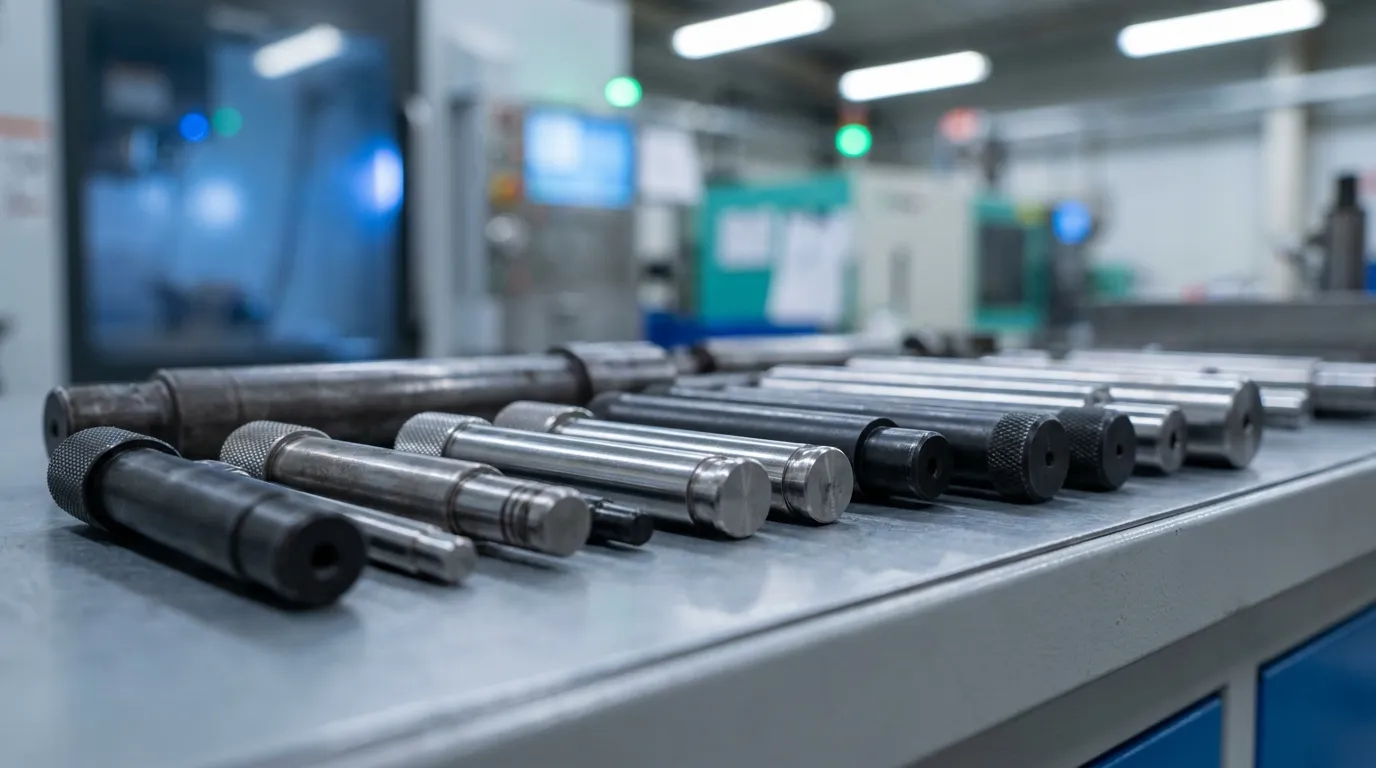
H13 and nitrided tool steels are common for high-temperature molding, while stainless steel options help reduce corrosion risks. Material choice should match resin type, Volume de cycle, and mold temperature.
Most ejector pins are made from hardened tool steels because they handle repeated movement, Chaleur, and pressure. The right material depends on how aggressive the molding environment is. High-volume automotive molds need different pin properties than low-volume consumer product molds.
H13 vs acier inoxydable
H13 tool steel is one of the most common choices for injection molds. It handles heat well and maintains hardness during repeated production cycles. Stainless steel ejector pins are useful in medical or corrosive environments where moisture resistance matters more than maximum hardness.
| Matériel | Meilleure utilisation | Principal avantage | Limitation |
|---|---|---|---|
| Acier à outillage H13 | Moulage à haute température | Résistance à la chaleur | Coût plus élevé |
| Acier inoxydable | Environnements médicaux ou humides | Résistance à la corrosion | Résistance à l’usure plus faible |
| Acier à outillage trempé | Production générale | Équilibre entre coûts et durabilité | Peut s’user plus rapidement dans les résines abrasives |
| Acier nitruré | Moulage à haut cycle | Meilleure dureté de surface | La couche de surface peut s’écailler sous l’impact |
A medical mold producing sterile plastic housings may use stainless ejector pins to reduce corrosion risk during frequent cleaning cycles. An automotive mold running glass-filled nylon usually benefits more from H13 or nitrided steel because abrasive resins increase wear.
This is where material selection becomes practical instead of theoretical. The cheapest ejector pins usually increase replacement frequency and downtime. Lower upfront cost often creates higher long-term maintenance costs.
For related tooling materials, Matériaux de moule de précision can help compare other hardened mold components used in production tooling.
Through-hard or nitrided ejector pins: which should you buy?
Through-hard ejector pins are safer for steel shutoff applications because hardness runs through the full pin. Nitrided pins improve surface wear resistance but can fail faster in certain impact-heavy conditions.
This is one of the most common buying mistakes in mold component sourcing. Buyers often assume nitrided pins are automatically better because the surface hardness is higher. Ce n’est pas toujours le cas.
Nitrided ejector pins use a hardened outer layer to improve wear resistance and reduce friction. They perform well in high-cycle production and abrasive resin applications. Selon L’homme de religieuse, nitrided pins can achieve high surface hardness levels that improve wear life.
Through-hard pins are different because the hardness extends through the entire pin body. This makes them more resistant to cracking or chipping under repeated impact. PT Online notes that through-hard pins are often preferred in steel shutoff conditions where side loading and impact stress are higher.
| Type de goupille | Meilleur pour | Principal avantage | Risque principal |
|---|---|---|---|
| À travers - Difficile | Applications d’arrêt intensif | Meilleure résistance structurelle | Plus d’usure au fil du temps |
| Nitruré | Moulage abrasif à haut cycle | Dureté supérieure en surface | Dégâts à la couche de surface sous impact |
Custom molds with repeated side pressure often perform better with through-hard pins. A thin nitrided surface can fail faster if the mold experiences constant impact loading.
What coatings improve ejector pin lifespan?
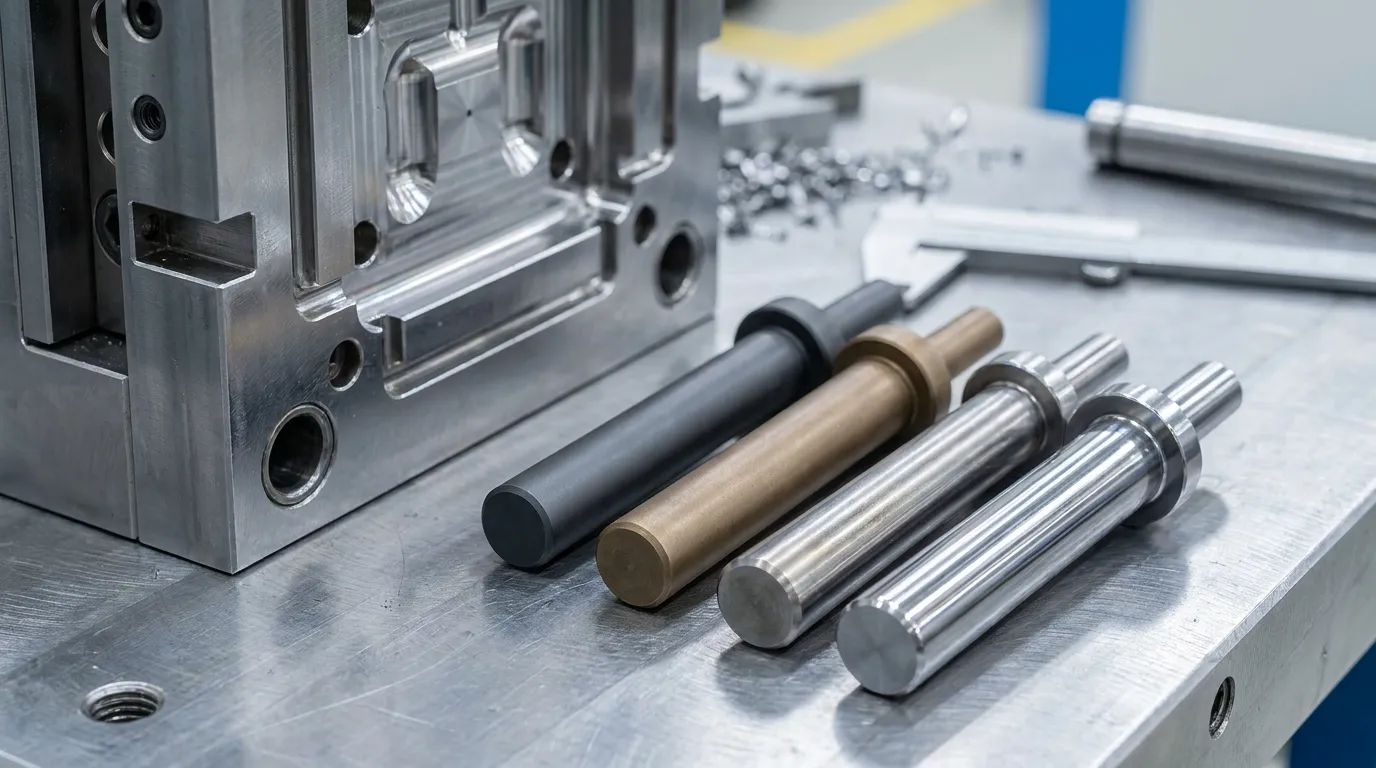
Coatings reduce friction and wear during repeated ejection cycles. DLC and nitrided finishes are commonly used when molds run abrasive resins or high-cycle production schedules.
Surface coatings help ejector pins survive longer under demanding production conditions. They reduce friction between the pin and mold surface, which lowers heat buildup and wear during repeated cycles.
DLC (diamond-like carbon) coatings are common in high-cycle molds because they improve hardness and reduce sticking. PVD coatings are also used when buyers want smoother movement and lower friction. HASCO lists several coating and heat-treatment options designed for different molding environments.
| Revêtement | Meilleure application | Principal avantage |
|---|---|---|
| DLC | Moules à haut cycle | Faible frottement |
| PVD | Moulage de précision | Mouvement plus fluide |
| Finition nitrurée | Moulage en résine abrasive | Dureté de surface |
| Oxyde noir | Applications générales | Protection de base contre la corrosion |
A high-cycle automotive mold producing reinforced plastic clips may switch from standard hardened pins to DLC-coated pins after repeated wear problems. The higher coating cost often pays off through fewer shutdowns and lower replacement frequency.
Custom coatings are not necessary for every mold. Standard hardened pins are usually enough for low-volume production or softer resins.
How do you choose the correct ejector pin size?
Choosing the wrong ejector pin size can create sticking, Maîtrise, or visible marks on molded parts. Diamètre, stroke length, and tolerance all need to match the mold design and part geometry.
Standard ejector pins are faster and more cost-effective for most molds. Custom sizes make sense when the mold has unusual cavity depth, restricted space, or specialized ejection requirements.
Broches éjecteurs standard vs personnalisées
Standard pins reduce lead time and replacement cost because they follow common industry dimensions. Custom ejector pins may require additional machining, Revêtement, or grinding work before shipment.
Table de sélection de broches d’éjection
| Condition d’application | Type de broche recommandé | Dureté suggérée | Option de revêtement |
|---|---|---|---|
| Résine haute température | Broche éjectrice H13 | 58-62 HRC | Nitruré |
| Résine abrasive remplie de verre | Acier dur traversant | 60-64 HRC | DLC |
| Moulage médical | Goupille éjectrice en inox | 50-55 HRC | PVD |
| Pièces grand public générales | Acier trempé standard | 54-58 HRC | Aucun ou de l’oxyde noir |
Use this checklist before ordering:
- Confirmez la tolérance de diamètre avec le dessin du moule
- Ajustez la longueur de la quille au coup requis
- Vérifiez la dureté auprès du fournisseur
- Vérifiez si les revêtements affectent la tolérance dimensionnelle
- Demandez si les goupilles de remplacement respectent la taille standard
For dimensional basics and ejection setup examples, Ce guide sur Dimensionnement des goupilles éjecteurs explains how sizing affects mold performance. Buyers working on larger mold systems may also benefit from these Bases des moules d’injection plastique before finalizing specifications.
Why do ejector pins leave marks or break?
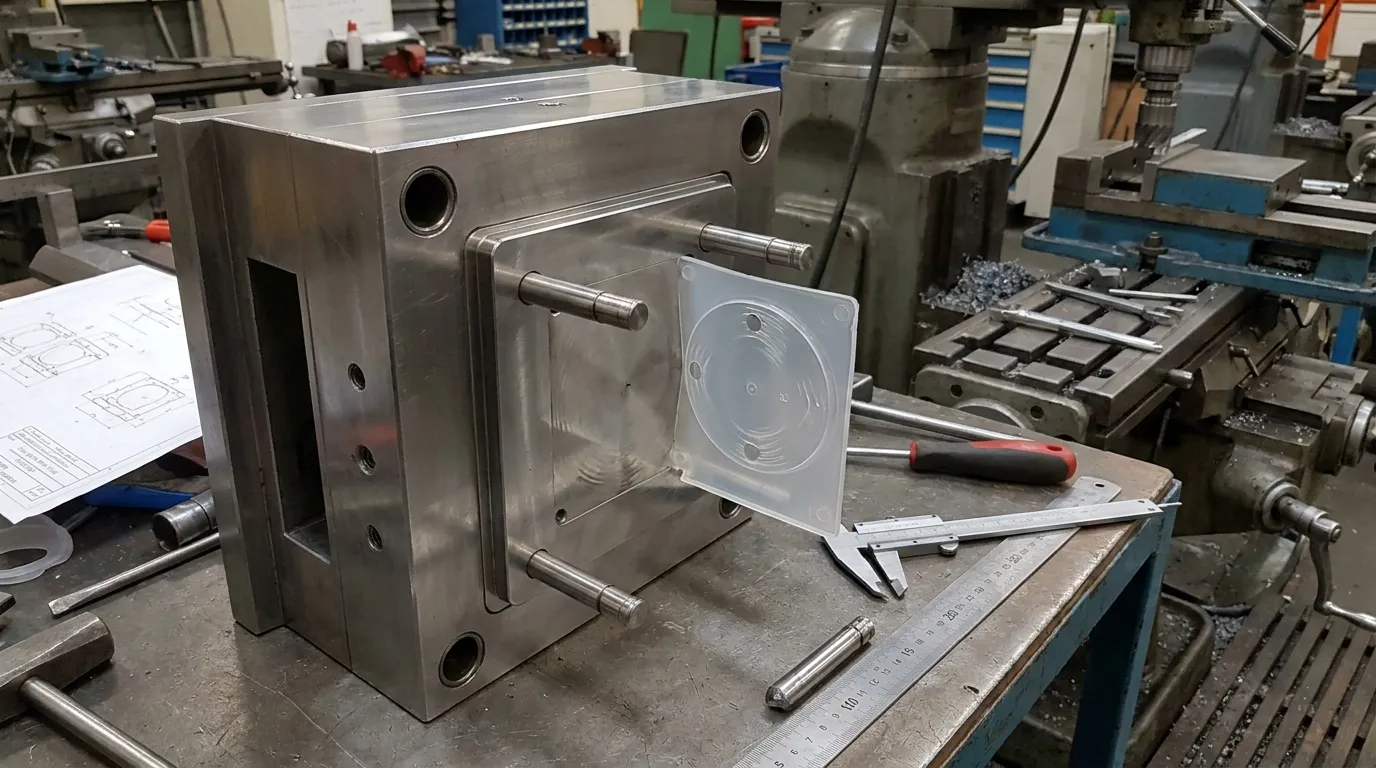
Ejector pin marks and breakage usually result from incorrect placement, Force inégale, excessive friction, or poor hardness selection. Matching pin design to part geometry helps reduce cosmetic and structural defects.
Visible ejector pin marks are common when force concentrates on thin plastic surfaces. Mauvais équilibre de refroidissement, weak support areas, or incorrect pin diameter can also increase marking. Selon Protolabs, proper pin placement helps spread force more evenly during part ejection.
Breakage usually comes from misalignment or excessive side loading. A pin designed for straight pressure may fail quickly if the mold creates lateral stress during ejection. PT Online also highlights steel shutoff conditions as a major failure source.
| Problème | Cause probable | Solution recommandée |
|---|---|---|
| Marques visibles | Pression excessive | Augmenter la surface de soutien |
| Goupilles cassées | Chargement latéral | Utiliser des broches dures à travers |
| Usure rapide | Résine abrasive | Ajouter un revêtement DLC |
| Pièces adhésives | Mauvais alignement | Revérifier les tolérances du moule |
A thin-wall electronics housing is a good example. If ejector pins push directly against unsupported cosmetic surfaces, circular marks often appear after cooling. Moving the pins closer to structural ribs usually reduces visible defects.
If you are troubleshooting recurring tooling wear, ceux-ci Problèmes d’usure des outils show how stress and alignment problems affect other precision tooling systems too.
What should buyers ask suppliers before ordering ejector pins?
Buyers should confirm material grade, hardness range, coating method, Tolérance dimensionnelle, and production lead time before placing ejector pin orders. These details directly affect mold life and replacement frequency.
Many ejector pin problems begin before production starts. Suppliers may use different steel grades, hardness processes, or tolerance standards even when the pin dimensions look identical on paper.
Ask suppliers for material certification whenever the application involves high temperatures or abrasive resins. Hardness range also matters because overly brittle pins can fail under repeated impact loading.
Liste de contrôle pour l’évaluation des fournisseurs
| Question | Pourquoi c’est important |
|---|---|
| What steel grade is used? | Confirme la résistance à la chaleur et à l’usure |
| What hardness range is guaranteed? | Prévient une défaillance précoce |
| Is the coating outsourced or in-house? | Affecte la cohérence |
| What tolerance standard is followed? | Réduit les problèmes d’ajustement |
| What is the MOQ? | Impact sur la flexibilité du remplacement |
| What is the lead time? | Évite les retards de production |
Custom ejector pins are not necessary for every mold. Standard sizes are usually faster and more cost-effective unless the geometry truly requires customization.
For broader sourcing considerations across tooling systems, Approvisionnement en composants de moule explains how buyers evaluate precision manufacturing suppliers.
How do customs delays and shipping issues affect ejector pin orders?
International ejector pin orders can create unexpected downtime if customs paperwork or lead times are not handled properly. Small mold components are easy to overlook during procurement planning, but delayed replacement pins can stop an entire production line.
Incorrect HS code classification is one common problem. Selon FreightAmigo, classification issues can slow customs processing and create extra inspection requests.
A supplier shipment delayed by incomplete HS code documentation can extend mold downtime by days or even weeks. Buyers handling custom ejector pins should also allow extra production time for grinding, Revêtement, or non-standard machining.
Use this checklist before shipment:
- Confirmer l’exactitude du code HS
- Vérifier les certificats de matériaux
- Vérifier la documentation sur le revêtement
- Ajouter du temps tampon pour le dédouanement
- Commandez des goupilles de rechange pour moules à haut cycle
If your mold program involves multiple production industries, ceux-ci Applications dans les moules d’injection show how sourcing requirements change between sectors like automotive, Électronique, and medical manufacturing.
Réussir la prochaine étape
The right ejector pins improve mold reliability, reduce visible defects, and lower replacement costs over time. Qualité des matériaux, Dureté, Revêtement, and sizing should all match the actual production environment, not just the mold drawing.
Start by reviewing resin type, Volume de cycle, and operating temperature. Then compare standard and custom pin options based on wear risk and lead time. If your molds experience repeated impact loading or abrasive resins, it is usually worth investing in better steel grades or coatings early instead of replacing failed pins later.
Questions fréquemment posées
What is an ejector pin used for?
Ejector pins push molded parts out of the mold cavity after cooling. They help maintain production speed and reduce damage during part removal.
Which material is used to make ejector pins?
Ejector pins are commonly made from H13 tool steel, Acier inoxydable, and hardened alloy steels. The right material depends on mold temperature, wear conditions, et volume de production.
How much temperature can an ejector pin withstand?
Temperature resistance depends on the steel grade and coating. H13 and nitrided pins are commonly selected for high-temperature molding because they maintain hardness during repeated thermal cycles.
Pourquoi les goupilles éjectrices laissent-elles des marques sur les pièces moulées.?
Ejector pin marks appear when force distribution, Placement, or cooling conditions are not optimized. Proper pin sizing and positioning help reduce visible surface defects.
Why do ejector pins break?
Ejector pins often break due to misalignment, Force excessive, improper hardness, or repeated side loading. Material selection and mold alignment both affect lifespan.
Are coated ejector pins worth the cost?
Coated ejector pins can improve wear resistance and reduce friction in high-cycle production. They are usually more valuable in abrasive resin or high-temperature applications.
Partager:


Écrit par Sunshine
Au soleil, Nous sommes un fabricant et fournisseur professionnel de composants de moule de précision, proposant une large gamme de produits pour les applications de stampage et de moulage par injection. Notre objectif principal est le poinçage des coins, Goupilles et manchons d’éjection, et poteaux guides et bagues. Avec un usinage CNC avancé, Contrôle qualité strict, et de fortes capacités de production, Nous garantissons une fiabilité, Pièces de haute précision, ainsi que des composants standards en stock pour un approvisionnement mondial rapide et efficace.
ACTUALITÉS
OBTENIR UN SERVICE
Avec des pièces de qualité adaptées à tous les budgets et un personnel accueillant formé pour rendre votre visite informative et sans tracas.
