



Finition de surface du moule d’injection: Normes, Options, et impact sur les coûts
Injection mold surface finish controls the texture, Gloss, and roughness transferred to plastic parts during molding. SPI finishes are commonly used for polished cosmetic surfaces, while VDI finishes work well for matte and textured parts. The right finish affects appearance, Éjection, scratch visibility, Usure du moule, et le coût des outillages, so finish selection should balance cosmetic goals with manufacturability and production efficiency.
A mold surface finish does more than change how a part looks. It can affect release force, scratch resistance, polishing time, and even how long the mold lasts in production. Choosing the wrong finish often leads to higher tooling cost or avoidable cosmetic problems. This guide explains how SPI and VDI finishes work, when to use them, and how to match the finish to your product and production goals.
What is an injection mold surface finish?
Injection mold surface finish defines the texture and roughness transferred from the mold cavity to the plastic part. The selected finish affects product appearance, scratch visibility, ejection performance, Usure du moule, et le coût des outillages.
Every molded plastic part copies the condition of the mold cavity surface. A highly polished cavity creates a glossy appearance, while a textured cavity creates a matte or patterned finish. Surface finish also changes how the part interacts with the mold during ejection.
Smooth finishes often look premium, especially for consumer products. They also make scratches and fingerprints easier to see. Textured finishes usually hide wear better and improve grip, which is why they are common in automotive interiors and industrial housings.
Finish selection also affects manufacturing time. Mirror-polished surfaces require more machining, Polissage, et travaux d’inspection. That increases tooling cost and maintenance requirements over the mold's lifecycle.
If you want a broader overview of mold construction and tooling systems, SunshinePro Guide complet du moule d’injection plastique explains the larger mold engineering process in more detail.
Vous pouvez également consulter le Étapes de production du moule that influence final surface quality.
What do SPI and VDI surface finish standards mean?
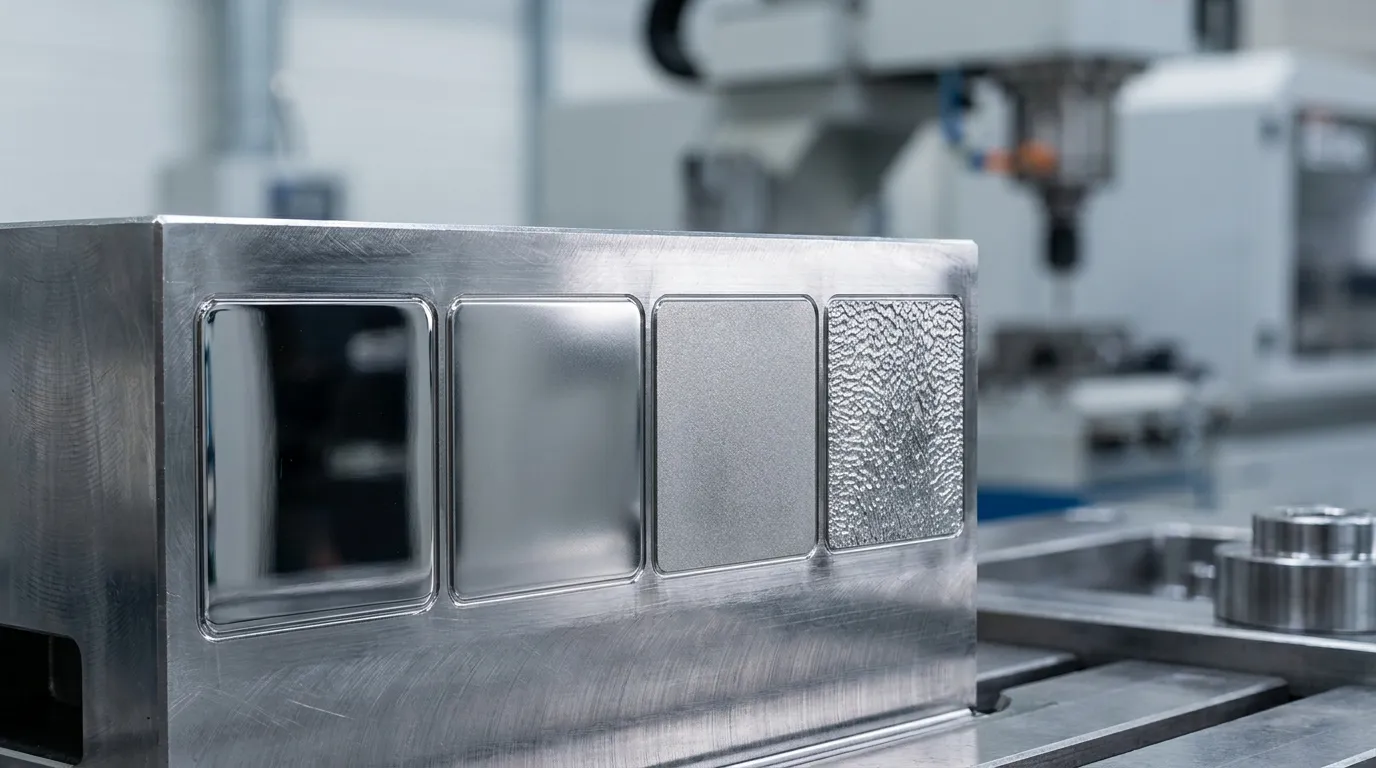
SPI standards classify polished mold finishes from high-gloss A grades to textured D grades, while VDI 3400 uses EDM texture scales for matte and textured surfaces. SPI is commonly used for polished cosmetic parts, while VDI is preferred for textured industrial finishes.
Most injection mold surface finish specifications use either SPI or VDI standards. SPI stands for Society of the Plastics Industry and focuses on polished finishes. VDI 3400 is commonly used for textured EDM surfaces.
Selon Guide de finition SPI de Fictiv et Référence de finition de surface de Engineering Product Design, SPI grades range from highly polished mirror finishes to rough textured surfaces.
Explications des notes de fin SPI
| SPI Grade | Apparence | Utilisation typique | Coût relatif |
|---|---|---|---|
| SPI A1-A3 | Brillant miroir | Optical parts, premium cosmetics | Plus haut |
| SPI B1-B3 | Semi-brillant | Logements grand public | Moyen-haut |
| SPI C1-C3 | Matte | Composants utilitaires | Moyen |
| SPI D1-D3 | Texturé | Pièces industrielles | Lower |
Mirror-polished SPI A finishes are not automatically the best option. They work well for optical clarity and premium cosmetics, but they also reveal fingerprints, rayures, and molding defects more easily.
Explications des grades de texture VDI
| Gamme VDI | Niveau de texture | Application typique |
|---|---|---|
| VDI 12-18 | Fin mat | Produits grand public |
| VDI 21-27 | Texture moyenne | Finition automobile |
| VDI 30-45 | Texture épaisse | Logements industriels |
VDI textures are often created through EDM, ou usinage à décharge électrique. These finishes work well when products need grip, reduced glare, or better scratch masking.
How does surface finish affect appearance, Friction, et éjection?
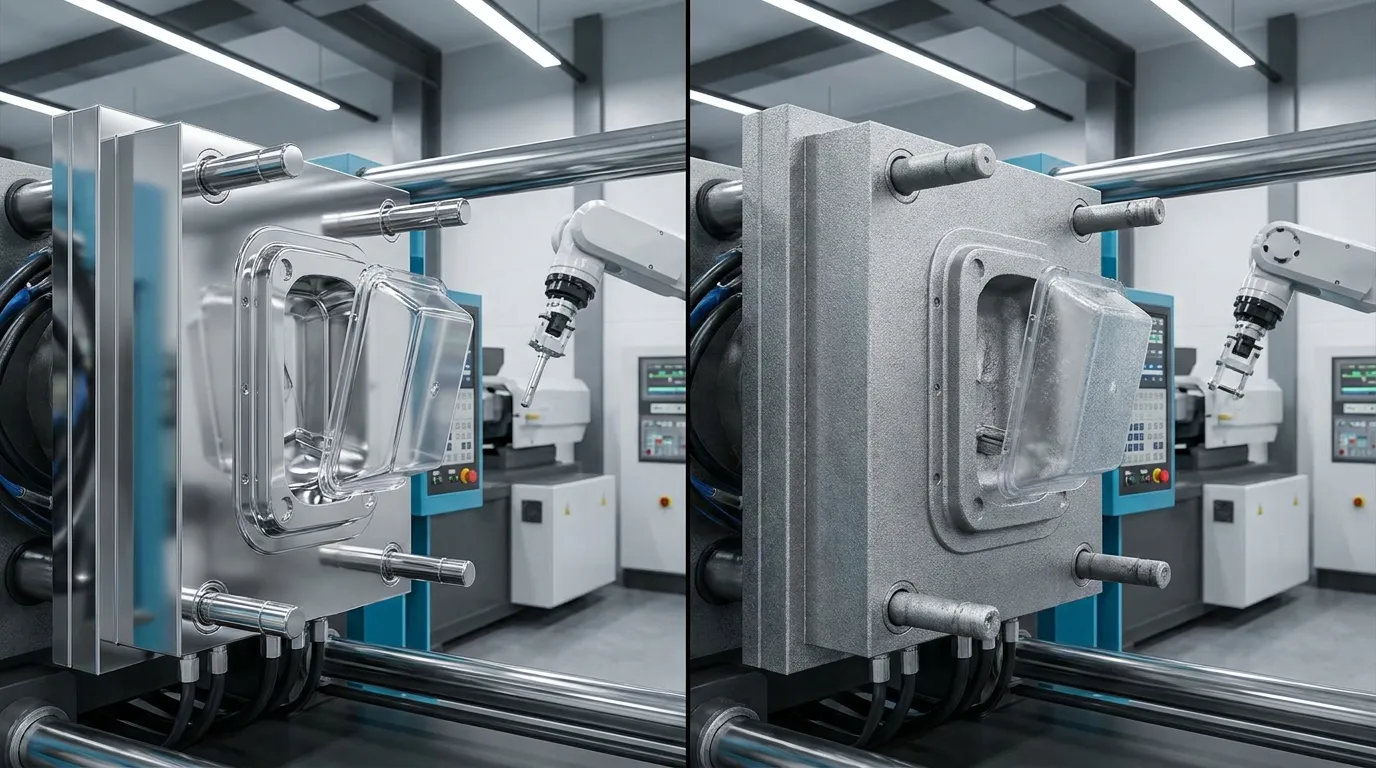
Surface finish affects more than appearance. High-gloss finishes can increase sticking and reveal scratches, while textured finishes may improve grip and hide defects but often require larger draft angles for smooth ejection.
Surface finish changes how the molded part behaves inside the cavity. Smooth polished surfaces create more contact area between the plastic and steel. In some materials, that increases friction during ejection.
Textured surfaces break up contact points and can help reduce visible drag marks. They also hide sink marks, fingerprints, and minor cosmetic defects better than polished surfaces. This is one reason automotive interiors often use textured finishes instead of mirror gloss.
Selon Aperçu de la finition de surface de Nicolet Plastics, finish selection should match both appearance goals and molding performance requirements.
Pourquoi les surfaces texturées nécessitent un angle de tirage plus important
Textured molds usually require more draft because the plastic grips the cavity surface more aggressively during ejection. Deeper textures create more mechanical resistance, especially with softer materials.
| Type de finition | Besoin typique de draft | Risque d’éjection |
|---|---|---|
| Finition très élevée | Tirant d’eau plus faible possible | Risque de blocage |
| Texture claire | Conscription modérée | Équilibré |
| Texture profonde | Un tirant d’eau plus élevé requis | Traces de traînée possibles |
A nylon-filled industrial housing is a good example. One manufacturer selected an aggressive texture to improve grip, but the original draft angle was too low. Parts started sticking during ejection, which caused visible drag marks and slower cycle times. Increasing the draft solved the issue without changing the resin.
If you're evaluating textured finishes, SunshinePro Lignes directrices pour l’angle de brouillon can help you avoid release problems early in the design stage.
Which finish should you choose for different product types?
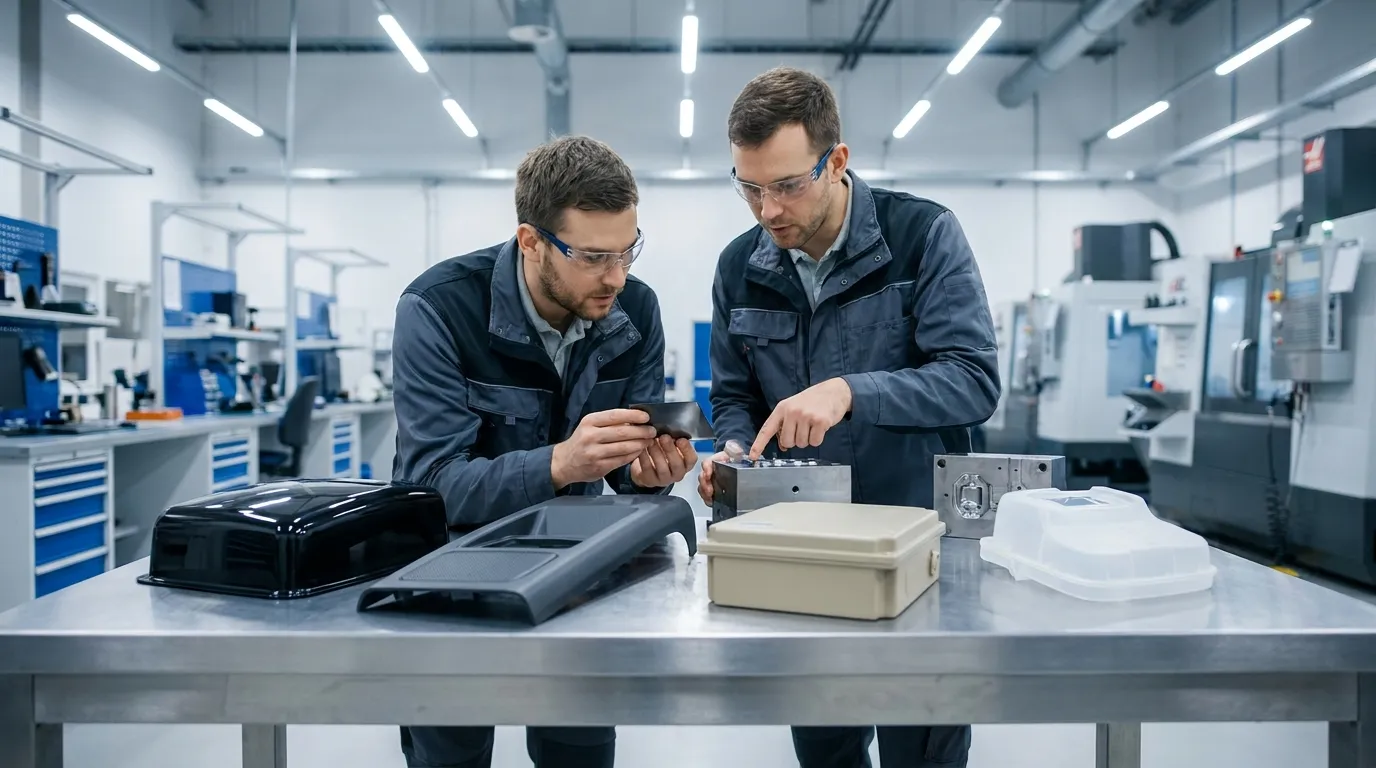
The best injection mold surface finish depends on the product’s appearance requirements, handling conditions, and production goals. High-gloss SPI A finishes suit cosmetic consumer products, while textured VDI finishes often work better for grip, scratch resistance, and industrial durability.
The right finish depends on how the product is used after molding. A cosmetic electronics housing needs different surface behavior than an industrial bracket or medical enclosure.
Textured finishes are often the safer choice for frequently handled products because they hide cosmetic wear better and reduce visible handling marks over time.
Sélection de la finition par type de produit
| Type de produit | Finition recommandée | Raison principale |
|---|---|---|
| Électronique grand public | SPI A2 ou B1 | Apparence cosmétique premium |
| Garniture intérieure automobile | VDI 24-30 | Réduction de l’éblouissement et de la masquage des rayures |
| Enclos médicaux | Arrivée SPI B | Nettoyage plus facile avec un brillant modéré |
| Logements industriels | Texture VDI | Durabilité et adhérence |
| Pièces structurelles internes | Arrivée SPI C | Coût d’outillage plus bas |
A consumer electronics company provides a common example. Their first housing design used a mirror-polished SPI A finish because the product needed a premium look. After production launch, fingerprint complaints increased. The manufacturer switched to a fine VDI texture that reduced visible smudges without changing the mold geometry.
For broader manufacturability planning, SunshinePro Décisions du DFM guide explains how cosmetic choices affect tooling and production efficiency.
How much does surface finish increase mold cost?
Surface finish can significantly change mold cost because high-polish cavities require additional machining, hand polishing, Inspection, and maintenance. Mirror finishes usually increase tooling time and should only be specified when appearance or optical clarity truly requires it.
High-gloss polishing adds labor at several stages of mold production. Toolmakers often need multiple polishing passes, finer abrasives, and extra inspection work to remove small surface defects.
Selon Guide de finition de surface du moulage par injection du groupe BEC, finish-related manufacturability decisions can strongly affect tooling cost and lead time.
Pourquoi le polissage par miroir augmente le temps d’outillage
Mirror polishing is slow because every small machining mark must be removed manually. Highly polished cavities also require careful maintenance to preserve surface quality during long production runs.
| Type de finition | Temps relatif d’outillage | Demande de maintenance |
|---|---|---|
| Polish à miroir SPI A | Plus haut | Haut |
| SPI B semi-brillant | Modéré | Moyen |
| SPI C matte | Lower | Lower |
| Texture VDI | Modéré | Moyen |
Many manufacturers over-specify high-gloss finishes even when the part is rarely visible. Dans ces cas, a lower-cost matte finish often improves manufacturability without affecting product value.
An industrial bracket project shows this clearly. The original design specified a polished finish for hidden internal components. Après la révision, the tooling team switched to a matte SPI C finish. That reduced polishing labor and shortened mold delivery time without changing part performance.
If you are comparing tooling budgets, SunshinePro Facteurs de coût des outillages article explains how mold complexity, finish level, and cavity design influence pricing.
Which finishes work best with different plastic materials?
Different plastics respond differently to polished and textured surfaces. Resin behavior affects gloss consistency, scratch visibility, and release performance.
| Matériel | Meilleurs types de finition | Préoccupation commune |
|---|---|---|
| ABS | SPI A ou B | Empreintes digitales sur des surfaces brillantes |
| Polycarbonate (PC) | SPI A | Exigences de clarté optique |
| Polypropylène (PP) | SPI B ou VDI | Netteté des détails de surface inférieure |
| Nylon | SPI C ou texture | Résistance à l’éjection |
| Résines remplies de verre | Mat ou texture | Usure du moule due aux charges abrasives |
Filled materials deserve extra attention. Glass-filled plastics can wear polished cavities faster because the reinforcement fibers are abrasive. In many industrial applications, matte or textured finishes hold up better over long production runs.
Medical equipment housings often use semi-gloss finishes instead of mirror polish. The moderate gloss level keeps surfaces easier to clean without adding unnecessary polishing cost.
Erreurs courantes de finition de surface qui augmentent les défauts et le coût
Many mold finish problems start with over-specification. Choosing a high-gloss finish without considering resin behavior, draft angle, or production wear can increase tooling cost while creating avoidable cosmetic and ejection issues.
The most common mistake is selecting a finish based only on appearance. Cosmetic goals matter, but finish selection also affects mold release, Entretien, et stabilité de production.
Another frequent problem is choosing texture too late in the design process. Adding texture after draft angles are finalized can create sticking issues or visible drag marks during ejection.
Liste de contrôle pour la finition de surface
- Niveau d’arrivée en correspondance avec la visibilité réelle du produit
- Augmenter l’angle de tirage pour les surfaces texturées
- Vérifiez la compatibilité des résines avant d’approuver le niveau de polish
- Évitez le polissage miroir sauf si l’apparence l’exige
- Envisagez un entretien et une usure à long terme
- Confirmez les zones de priorité esthétique sur les plans
A textured automotive trim panel is a practical example. The original design used a polished finish that reflected sunlight strongly inside the vehicle cabin. Switching to a medium VDI texture reduced glare and hid scratches from daily use.
Vous pouvez tester les SunshinePro Processus d’examen des outillages to understand how finish decisions should be evaluated before tooling approval.
How should you specify mold surface finish on engineering drawings?
Clear finish specifications reduce supplier confusion and help maintain cosmetic consistency across production runs. The drawing should identify both the finish standard and the exact surface areas where the finish applies.
Most manufacturers use SPI or VDI callouts directly on the engineering drawing. Cosmetic priority zones should also be labeled clearly so the mold maker knows where appearance matters most.
Liste de contrôle des spécifications de finition de surface
- Spécifiez directement la note de finition SPI ou VDI sur le dessin
- Marquez clairement les surfaces cosmétiques
- Identifiez séparément les zones texturées et polies
- Confirmez les exigences de draft pour les surfaces texturées
- Vérifiez la compatibilité des résines avant l’approbation finale
- Alignez les attentes de finition avec le budget d’outillage
A good specification process prevents expensive revisions later. Small changes in texture depth or gloss level can affect polishing time, Effort de maintenance, et la cohérence de la production.
For broader mold planning guidance, SunshinePro Examen des spécifications du moule resource explains how design decisions affect tooling performance and manufacturability.
Réussir la prochaine étape
The best injection mold surface finish balances appearance, production efficiency, et durabilité à long terme. A polished surface may improve cosmetic appeal, but it can also increase tooling cost and reveal scratches more easily. Textured finishes often perform better in high-contact applications where grip and wear resistance matter more than gloss.
Before approving a finish, review the resin type, product visibility, draft angle, and tooling budget together. A practical finish decision early in the design stage usually prevents expensive mold revisions and production problems later.
Questions fréquemment posées
What is SPI finish in injection molding?
SPI finish is a standardized mold surface classification system used for injection molded parts. The grades range from high-gloss polished finishes to textured matte finishes, helping manufacturers define cosmetic and functional surface requirements clearly.
What is the difference between SPI and VDI finishes?
SPI finishes mainly describe polished surface quality, while VDI finishes are commonly used for textured EDM surfaces. SPI is often selected for cosmetic gloss, while VDI works better for matte textures and industrial products.
Does textured finish require more draft angle?
Oui, textured finishes usually require larger draft angles to help parts release cleanly from the mold. Deeper textures create more surface resistance, which increases the risk of drag marks during ejection.
Which injection molding finish hides scratches best?
Matte and textured finishes generally hide scratches, fingerprints, and small cosmetic defects better than mirror-polished surfaces. Highly polished parts tend to show handling wear more easily during daily use.
Do polished molds cost more?
Oui, polished molds usually cost more because they require additional machining, hand polishing, Inspection, and maintenance work. Mirror-polished cavities can also increase tooling lead time and long-term maintenance effort.
What finish is best for consumer electronics?
Consumer electronics often use SPI A or SPI B finishes when a premium cosmetic appearance matters most. Fine VDI textures may work better when fingerprint resistance and grip are higher priorities than high gloss.
Partager:



Écrit par Sunshine
Au soleil, Nous sommes un fabricant et fournisseur professionnel de composants de moule de précision, proposant une large gamme de produits pour les applications de stampage et de moulage par injection. Notre objectif principal est le poinçage des coins, Goupilles et manchons d’éjection, et poteaux guides et bagues. Avec un usinage CNC avancé, Contrôle qualité strict, et de fortes capacités de production, Nous garantissons une fiabilité, Pièces de haute précision, ainsi que des composants standards en stock pour un approvisionnement mondial rapide et efficace.
ACTUALITÉS
OBTENIR UN SERVICE
Avec des pièces de qualité adaptées à tous les budgets et un personnel accueillant formé pour rendre votre visite informative et sans tracas.
